{View Larger} {View the PDF} {View Black & White} {View the Black & White PDF}
{More Poppets Paper Dolls}
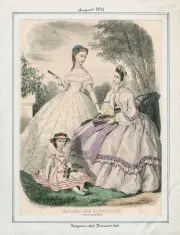
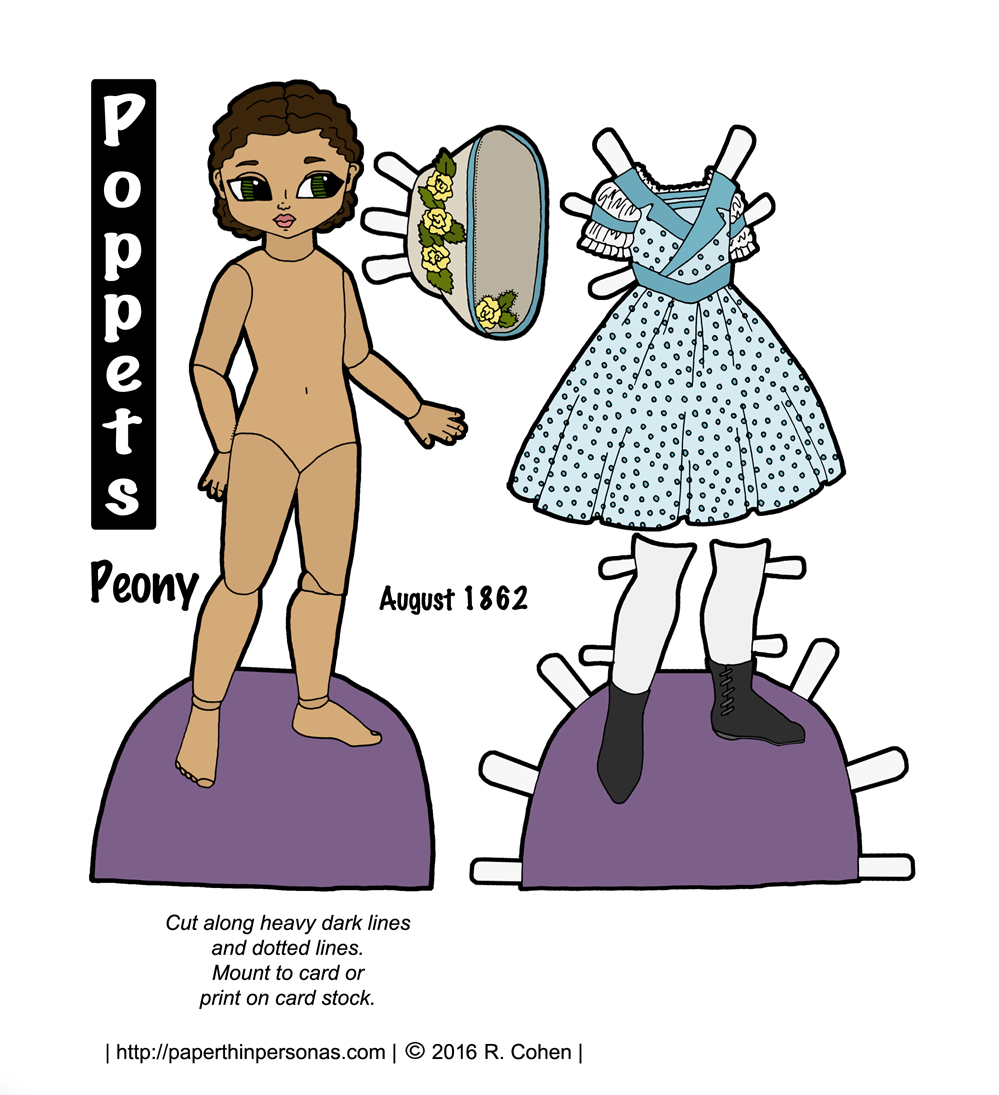 This week I’m diving into civil war children’s clothing with the help of the Casey Fashion Plate Index from the Los Angeles Public Library. This fantastic resource has literally hundreds of fashion plates. Today’s Poppet dress comes from Magasin des Demoiselles, a French fashion magazine of the 19th century.
I named today’s Poppet paper doll Peony. I thought I was out of P flower names, but I never did a Peony, so Peony it is! Then I’ll have to decide what to do about Poppet paper dolls and their P names.
Despite what I was once told in a costume history class, children of the 19th century didn’t dress like miniature adults. There were, in fact, many complex social rules governing how children were dressed.
While adult women did not expose their arms unless they were attending a ball (or swimming, sometimes), children could have short sleeves, especially in the heat of summer. Today’s dress is and example of this from August 1862. I simplified some of the trimming and chose blue tonal color scheme over the red and black scheme of the original Civil War children’s clothing dress design.
Alternatively, you can download the black and white version from the links at the top of the post.
Peony’s hat is trimmed in contrasting yellow roses and matching blue ribbon. Her boots are flat soled and side lacing, which was typical for civil war era shoes. Side laced and button up boots were both worn in the 1860s, but by the end of the decade button boots were much more popular. Her stockings should really be tights or held up by a garter belt, but in the interest of making things simpler, I decided to ignore that particular fact of history.
Should you be worried about her going commando, than fear not- she’ll get some proper undergarments on Accessory Thursday.
If you need another set of dolls to wear this clothing, here’s more of the Poppet family, just be sure to print them from the PDF without fit to page and everything should work out.
Thoughts? Comments? Solutions to my “P flower names” problem? As always, I love to hear from y’all and if you like the blog, consider supporting it by becoming a Patron.
 Over the years, I have made several other
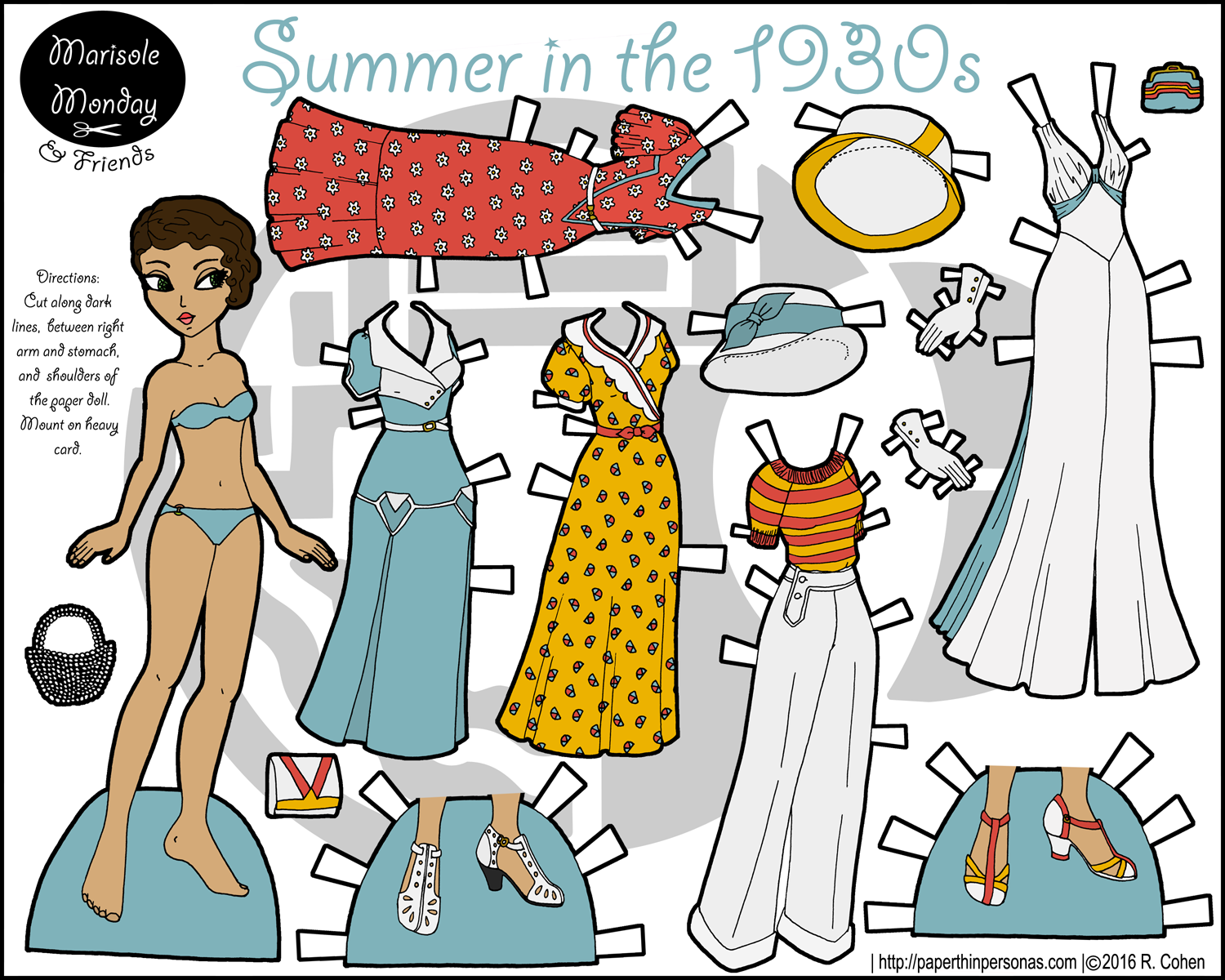
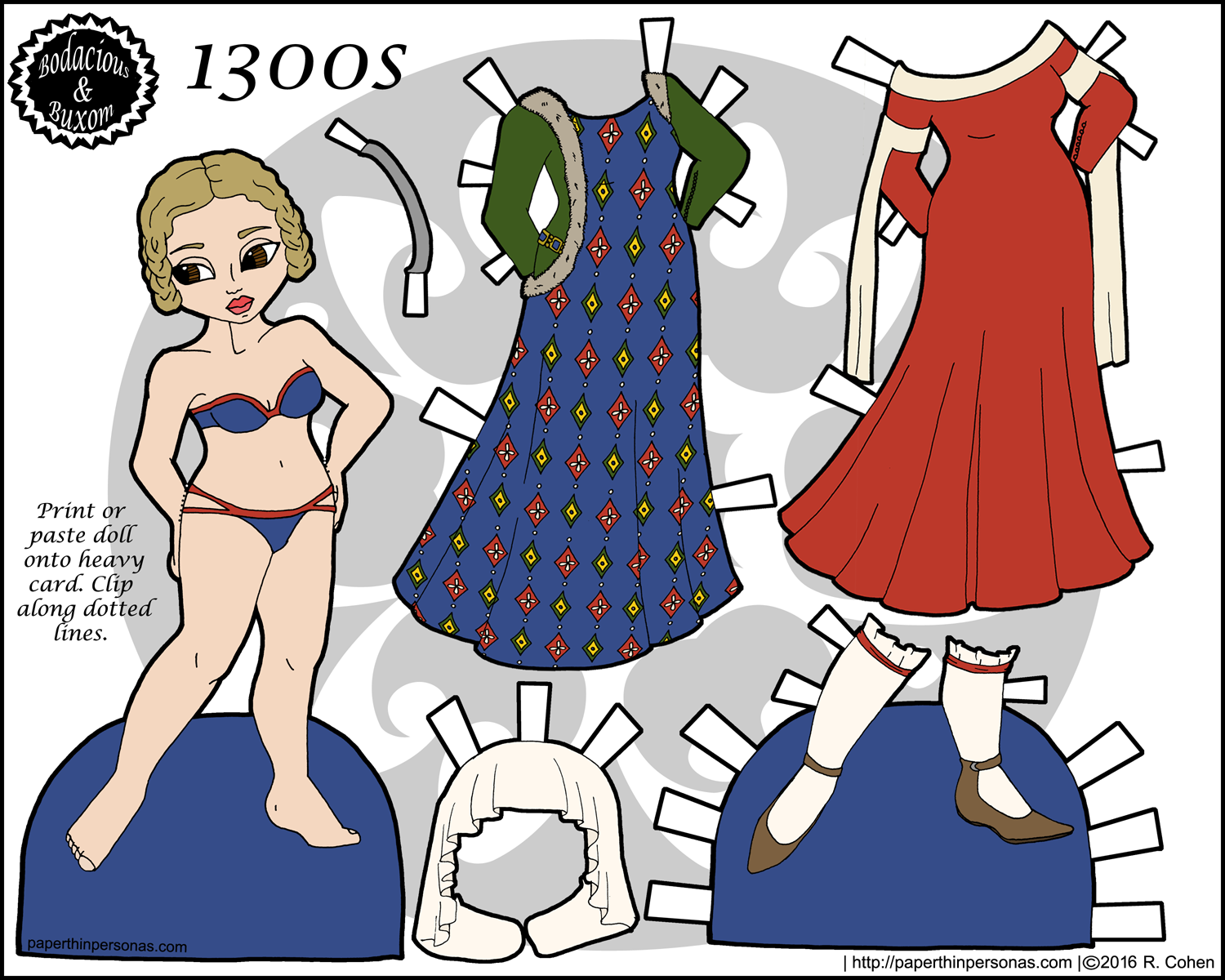
 Once again, we are dabbling in the 1300s with today’s paper doll. There’s no new sources for this one, so if you want to know what I referenced, than I would recommend returning to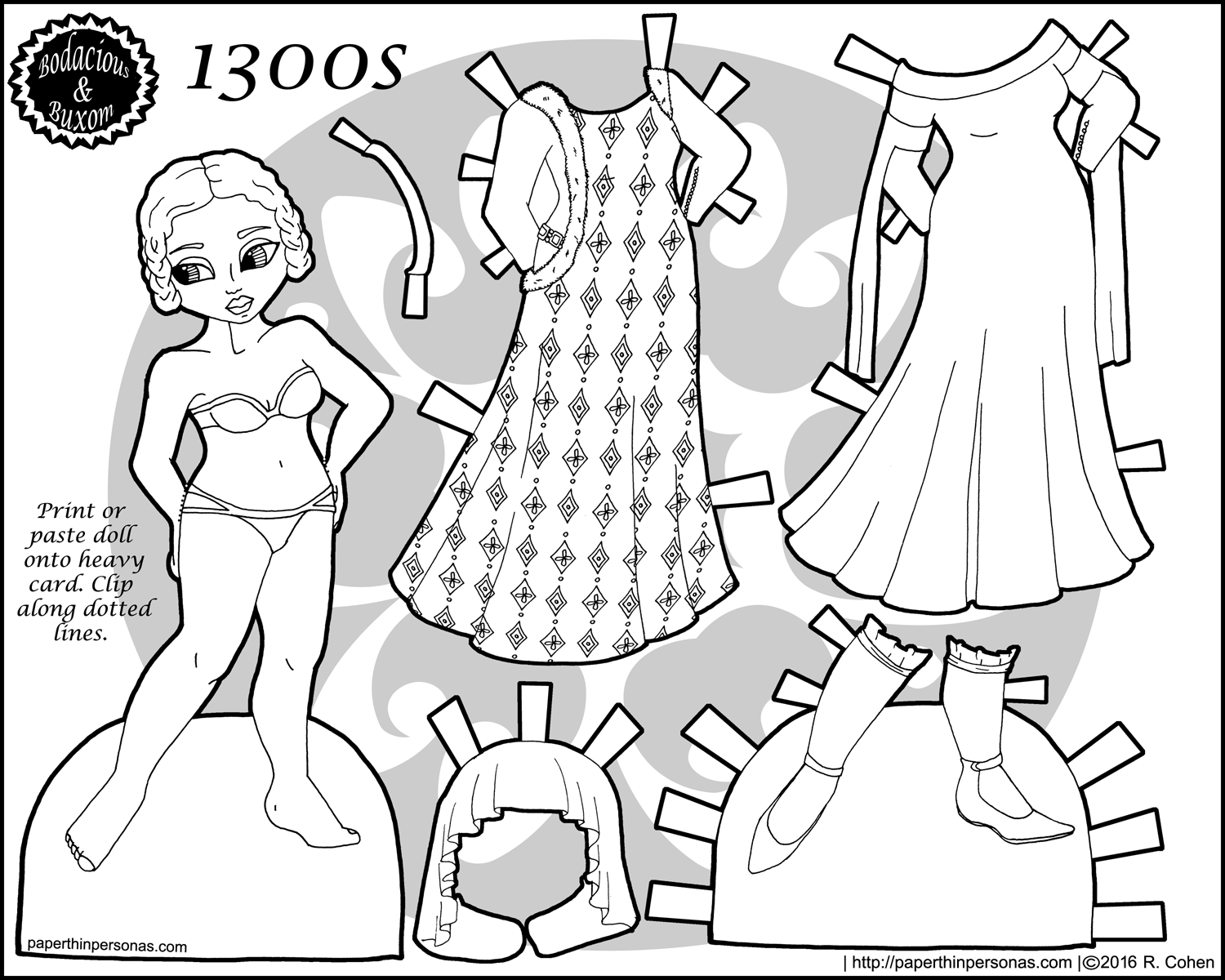
 The 1830s is an era of Western fashion that I have generally found mystifying. Poke bonnets, giant sleeves, caplets are all features of this era of historical dress and none of them have ever really appealed that deeply.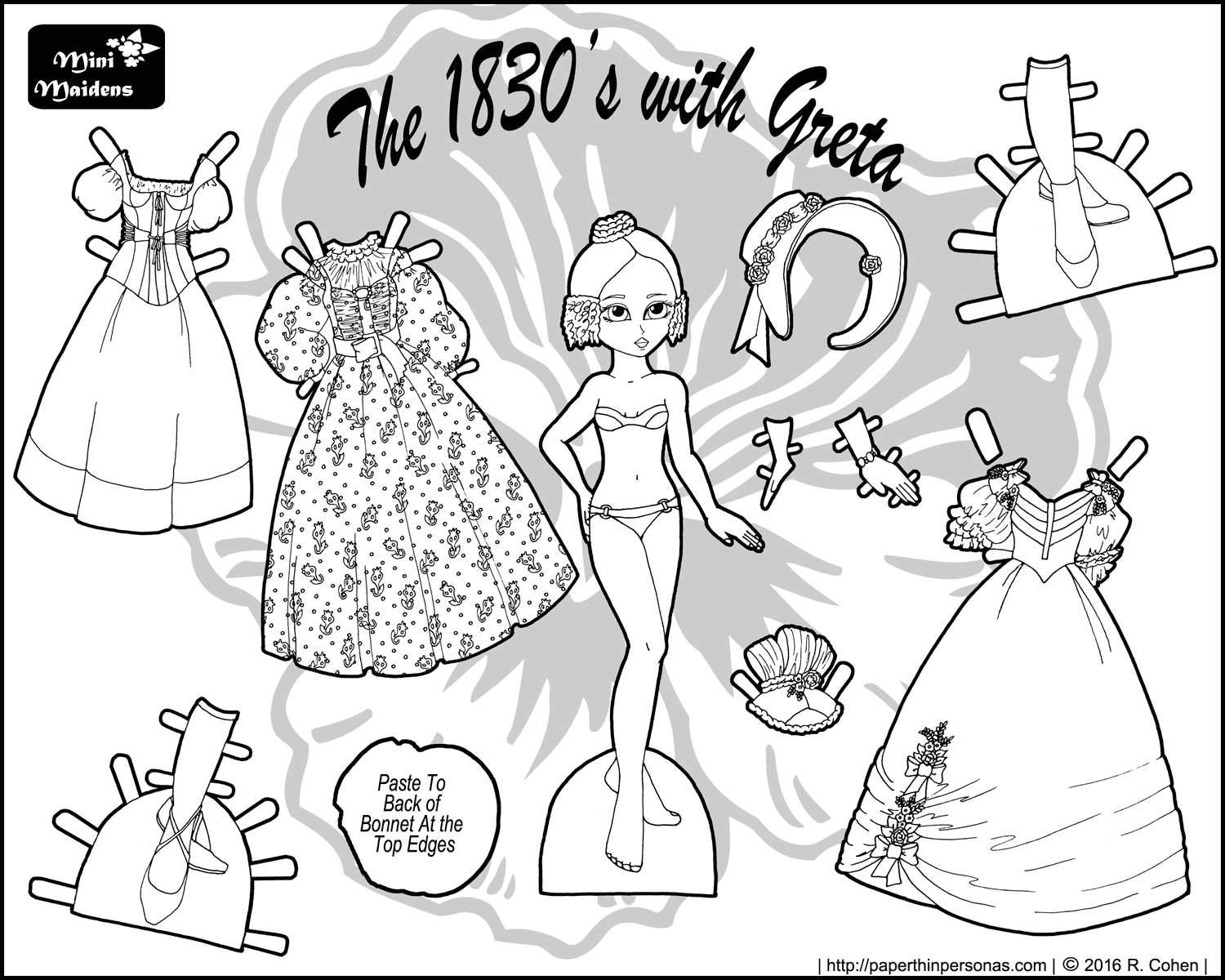
 I have, over the years, created a lot of paper doll sets and I just couldn’t believe I’ve only done one 1960s paper doll and I haven’t felt comfortable calling her historical, because I can’t verify my sources on her. So, here’s another one, giving me two 1960s paper dolls.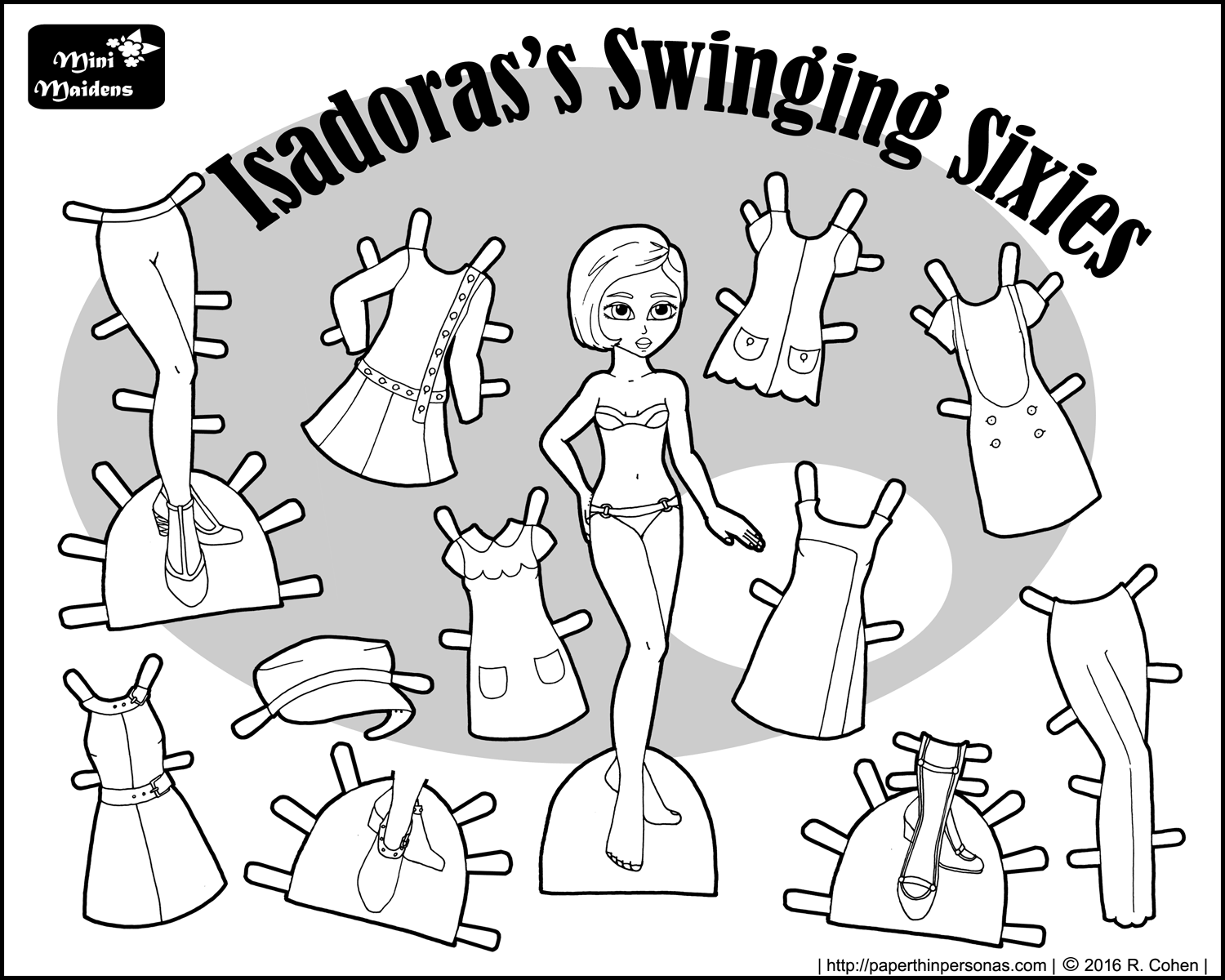
 First of all, Merry Christmas to anyone who celebrates. Today we have a completely non-thematic set of paper doll clothes. 🙂 This is what happens to me at the end of the year. I’m just all about getting the stuff I have done posted, so today we have some 1890s beachwear for the Poppets with a sailor suit and a swim suit.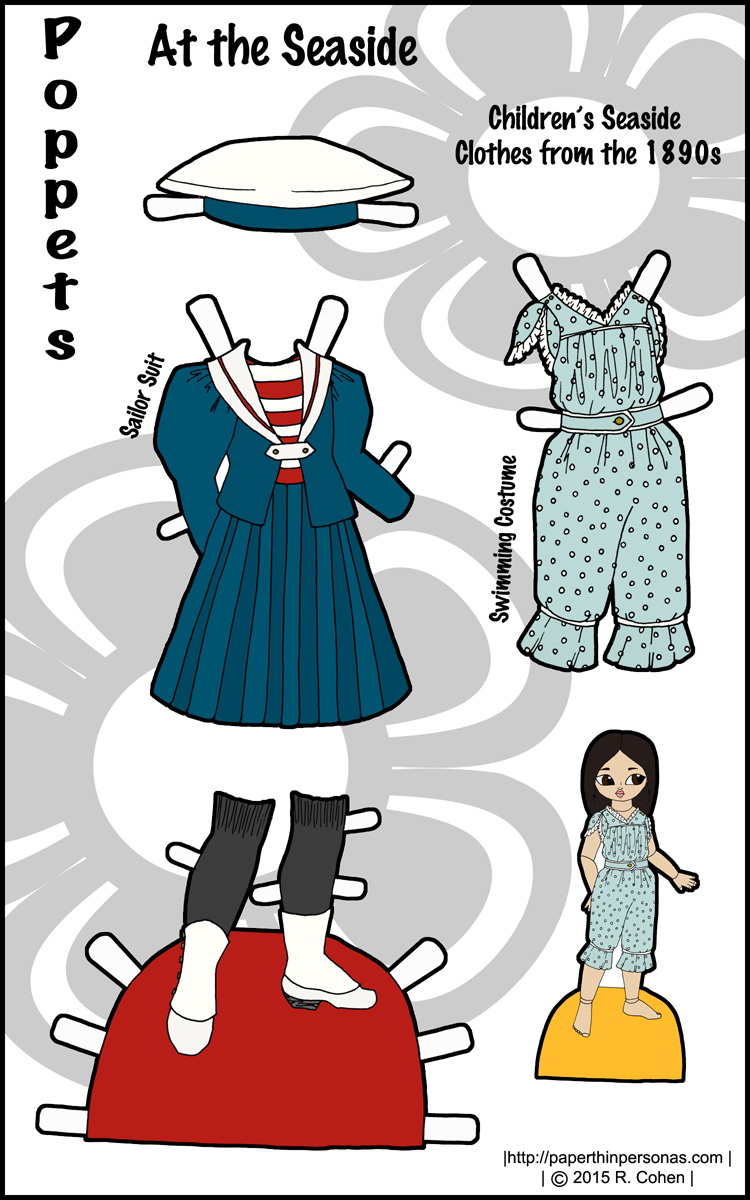
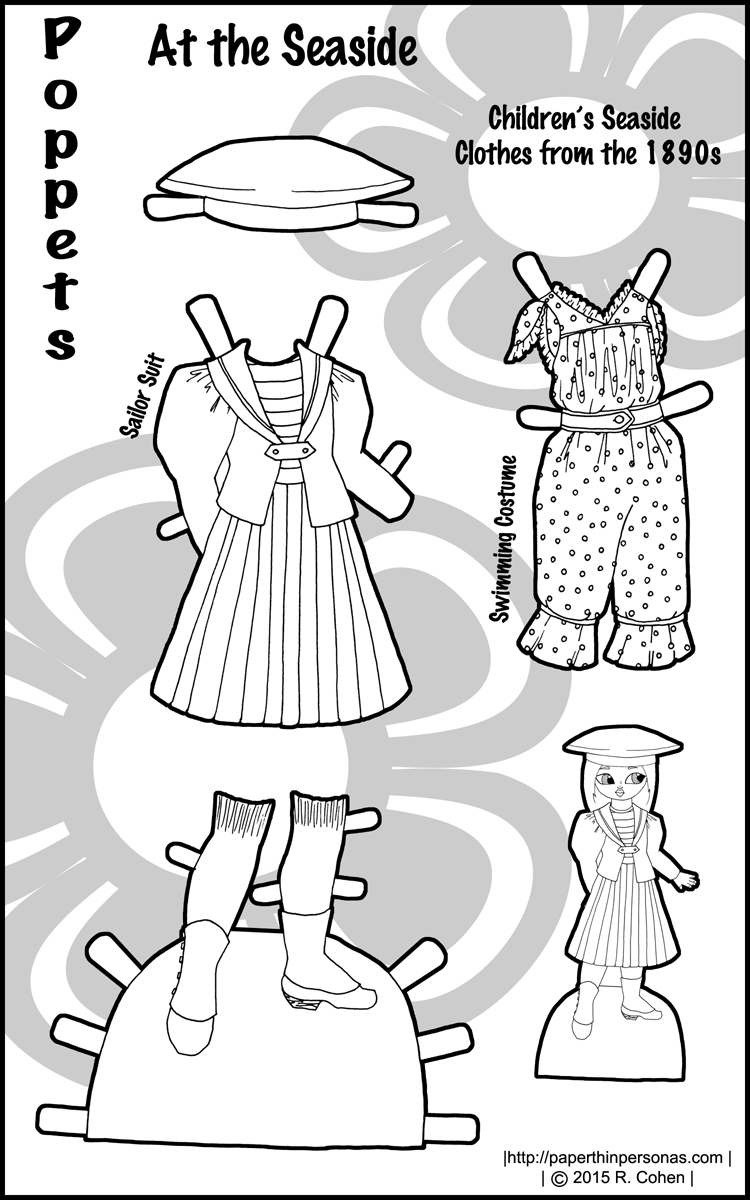
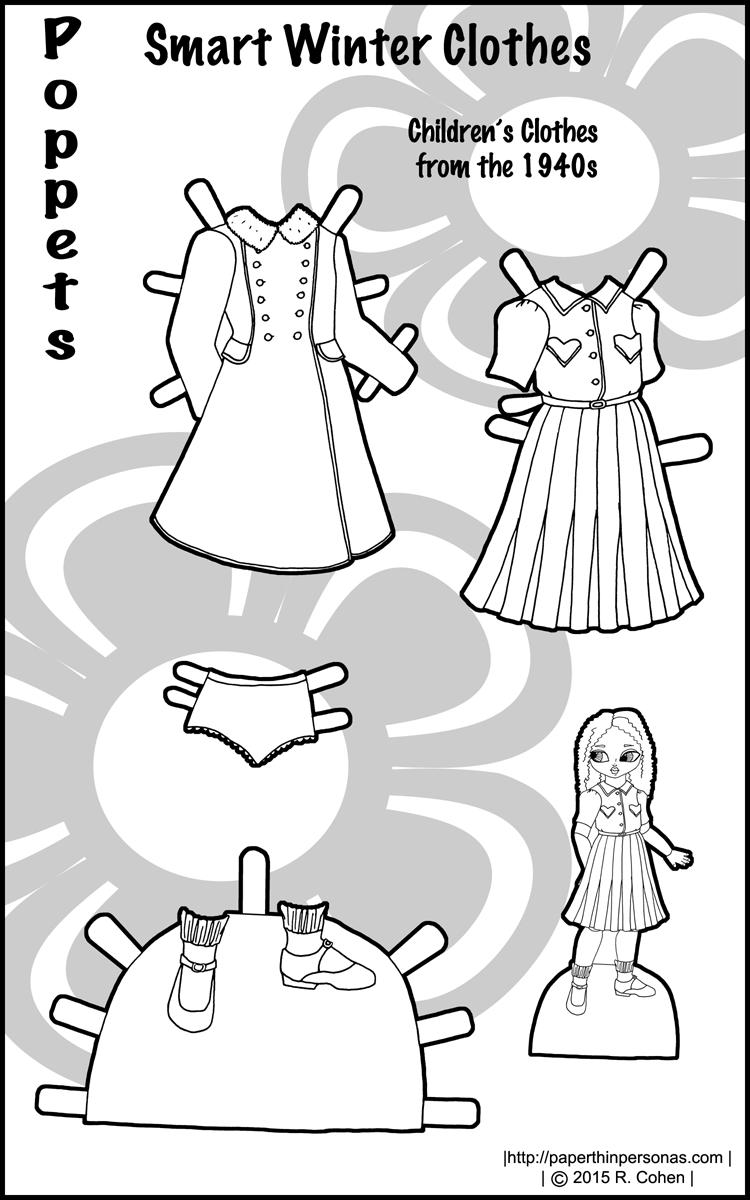
 There aren’t a lot of really good books on historical children’s clothing. I know I’ve mentioned before my pet-peeve of people making the assumption that “children dressed like adults” which is a huge over simplification of the history of childhood.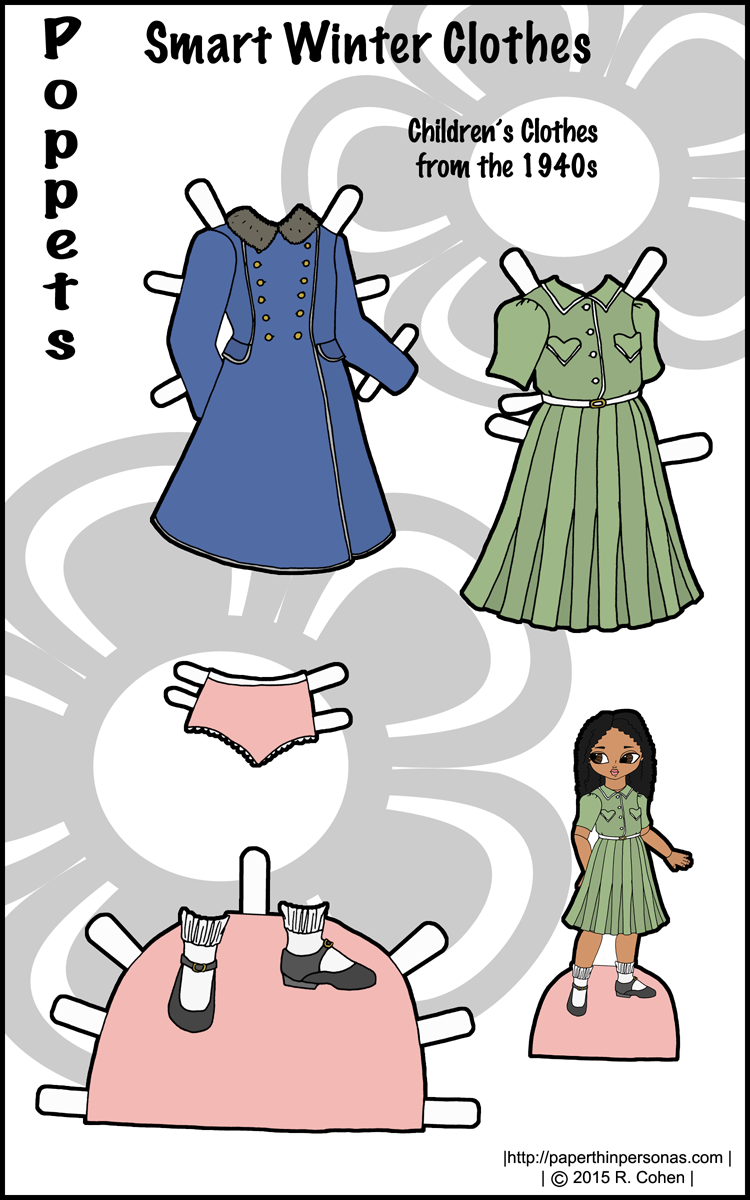
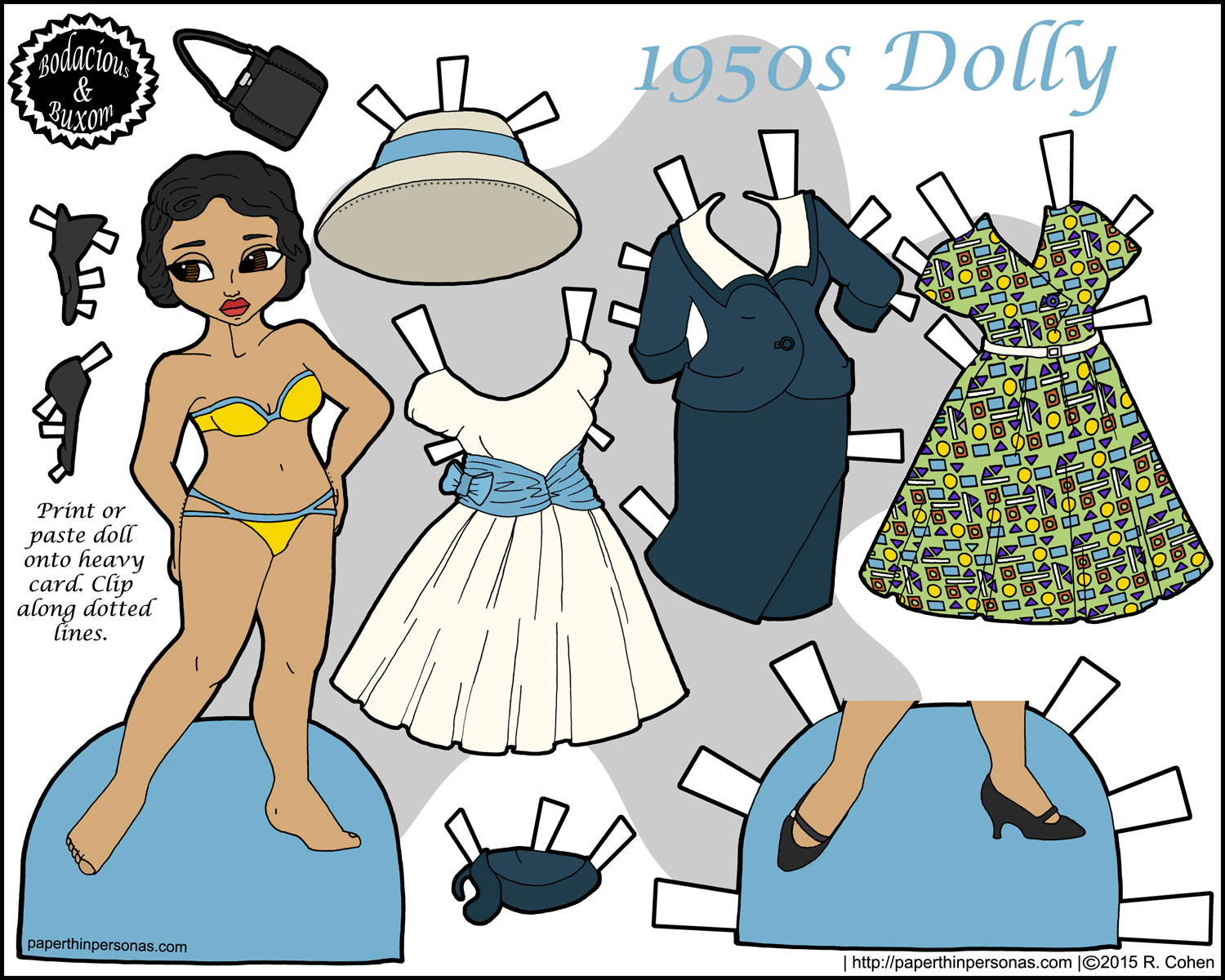
 Today’s printable paper doll has a retro flare- 1950s fashions abound. My goal was to make ten Buxom and Bodacious paper dolls before the end of 2015. I’m going to be honest, I don’t know right now if I’ll make it. My other goal was to have ten historical paper dolls by the end of 2015 and I have certainly made that goal, even if I count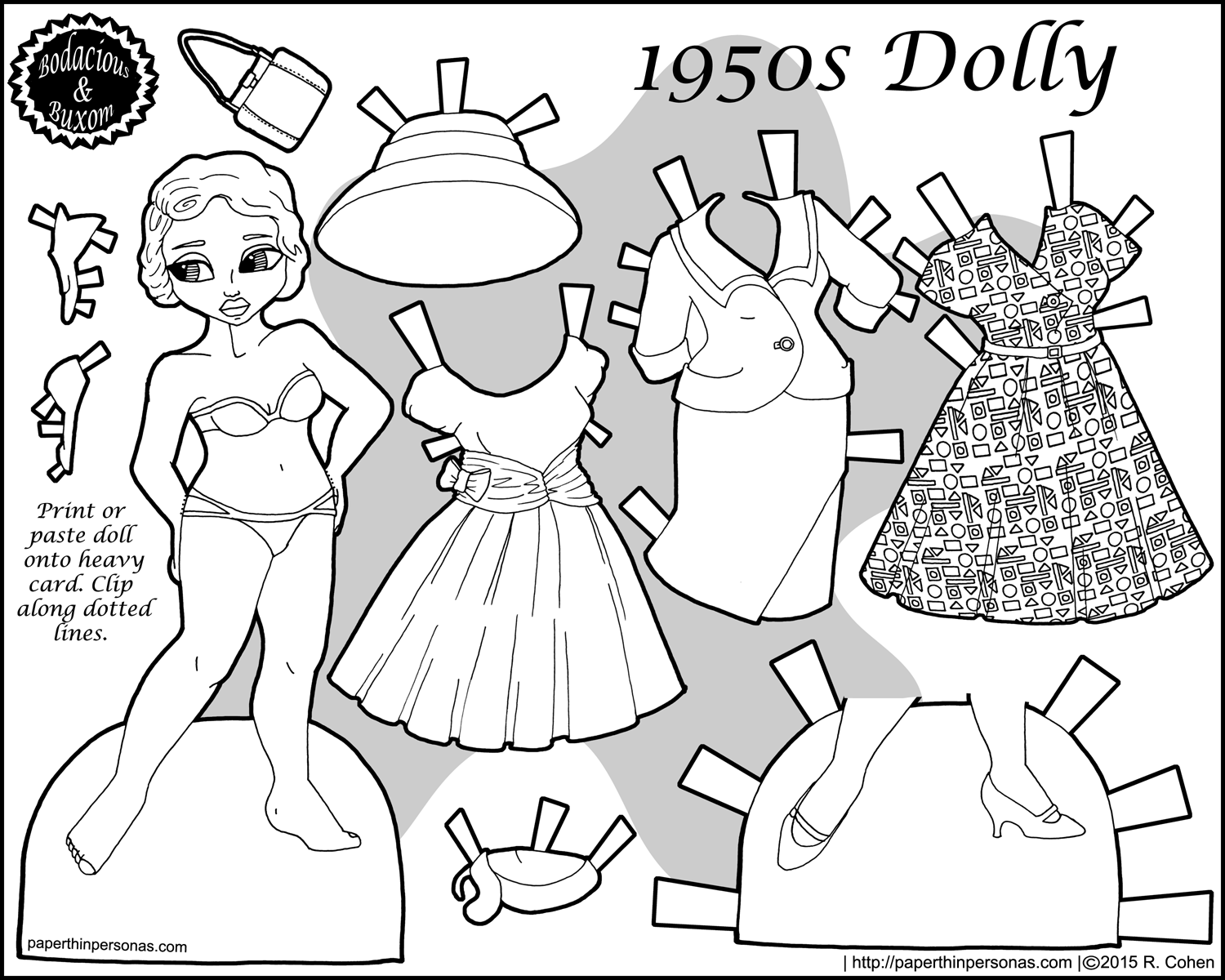
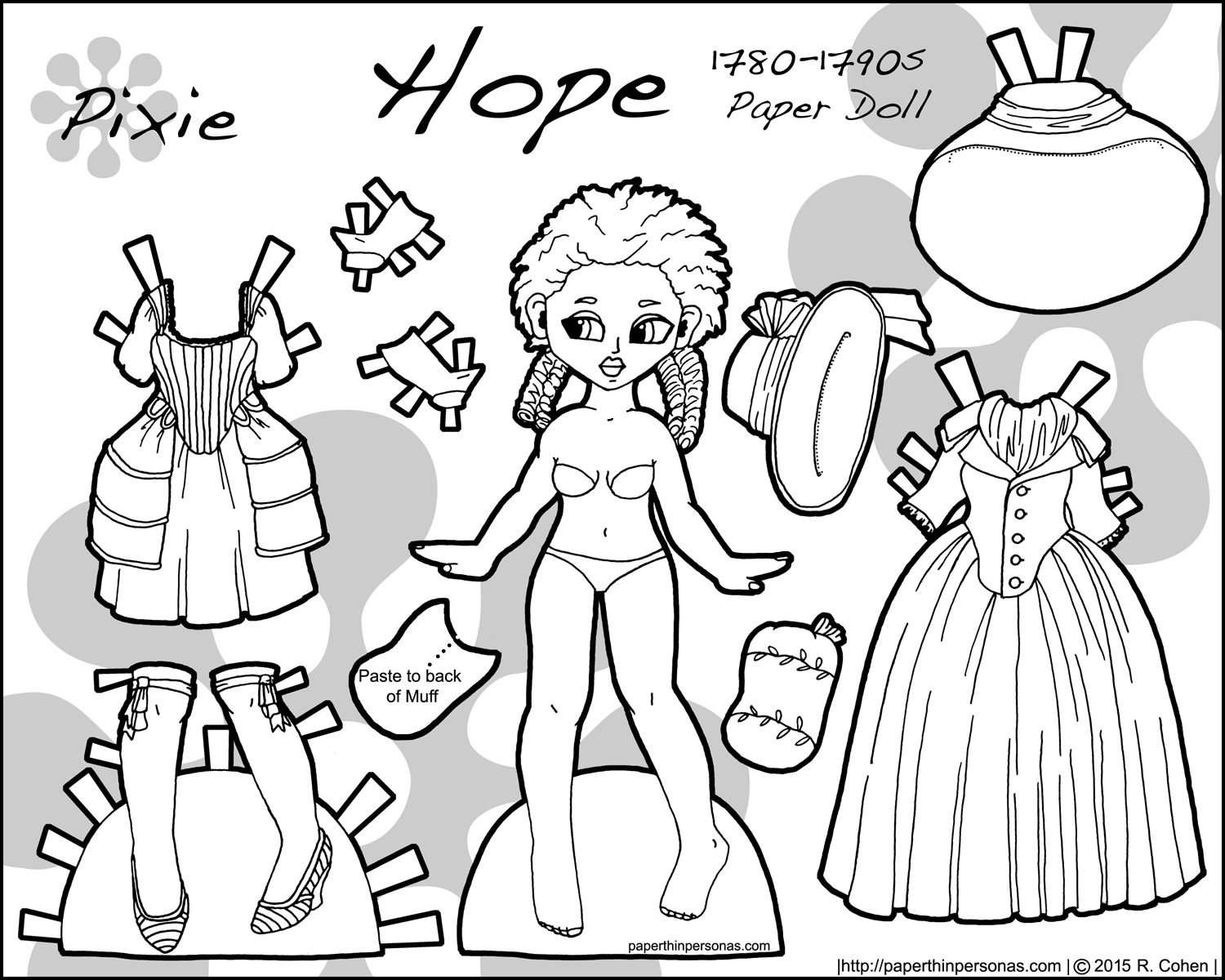
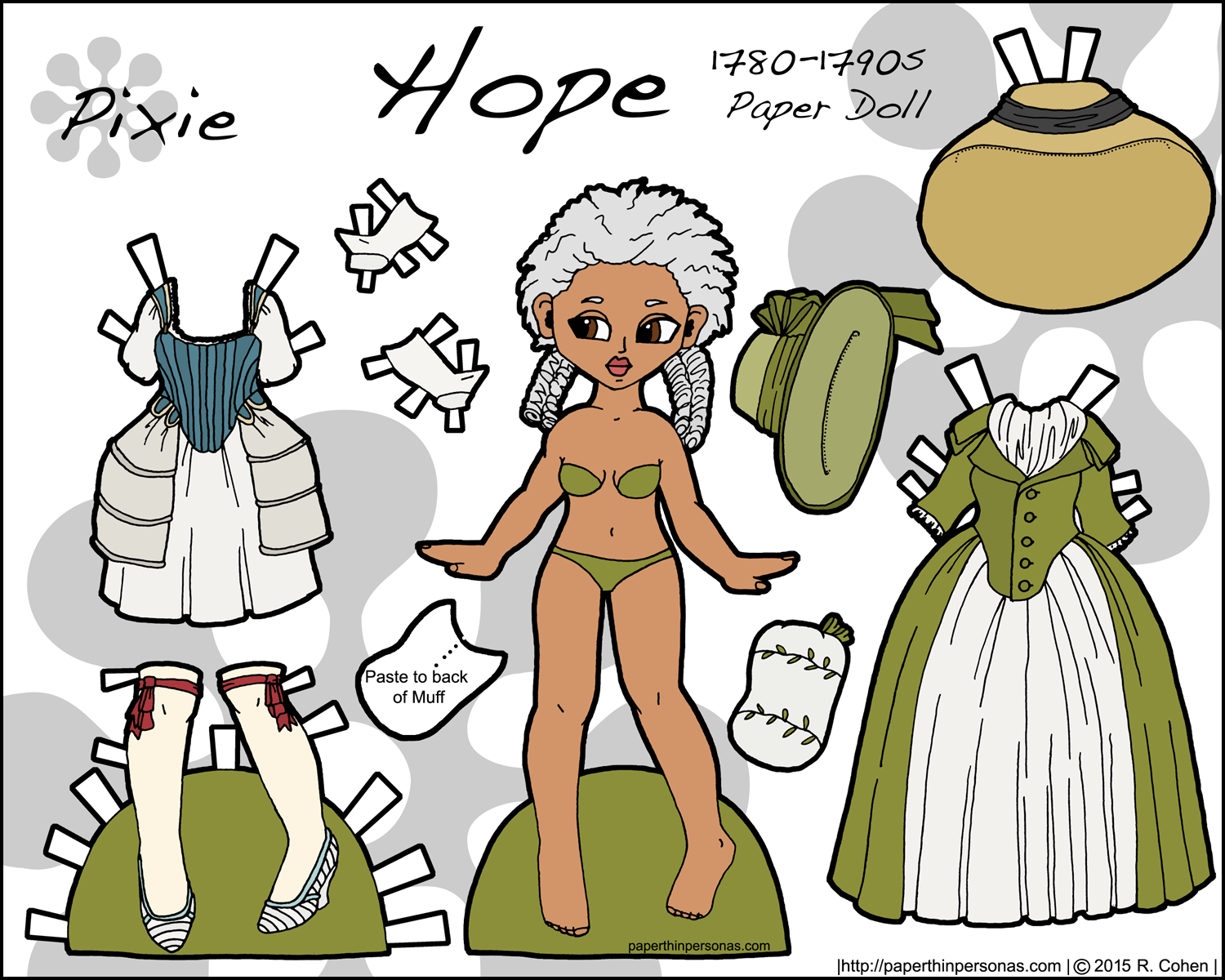
 Late 18th Century gowns before the waist begin to rise at the turn of the century are often defined by simpler lines. You can see in some of them the beginings of the aesthetic and gave rise to the Greek inspired looks of the Empire period in France and the Regency period in England.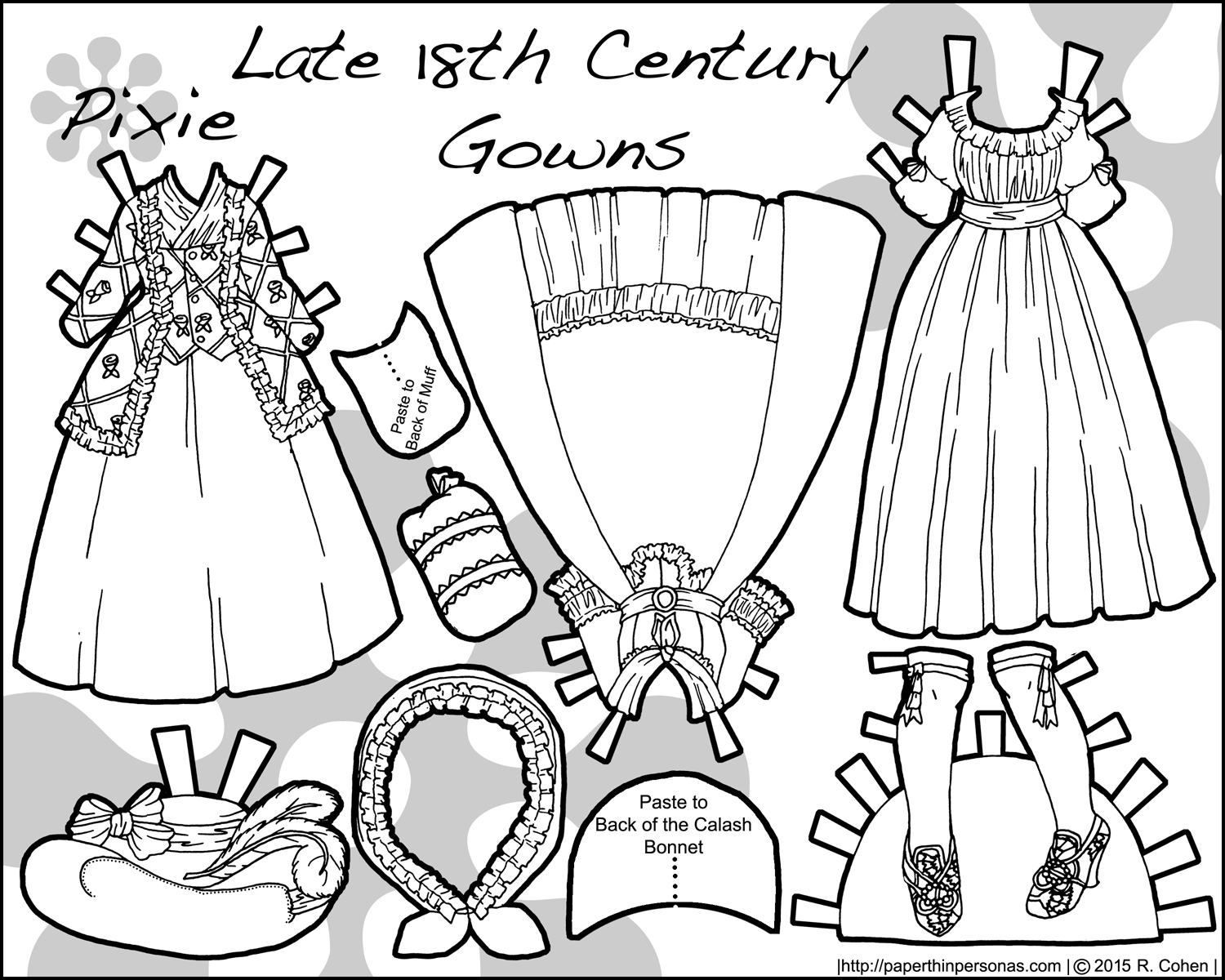
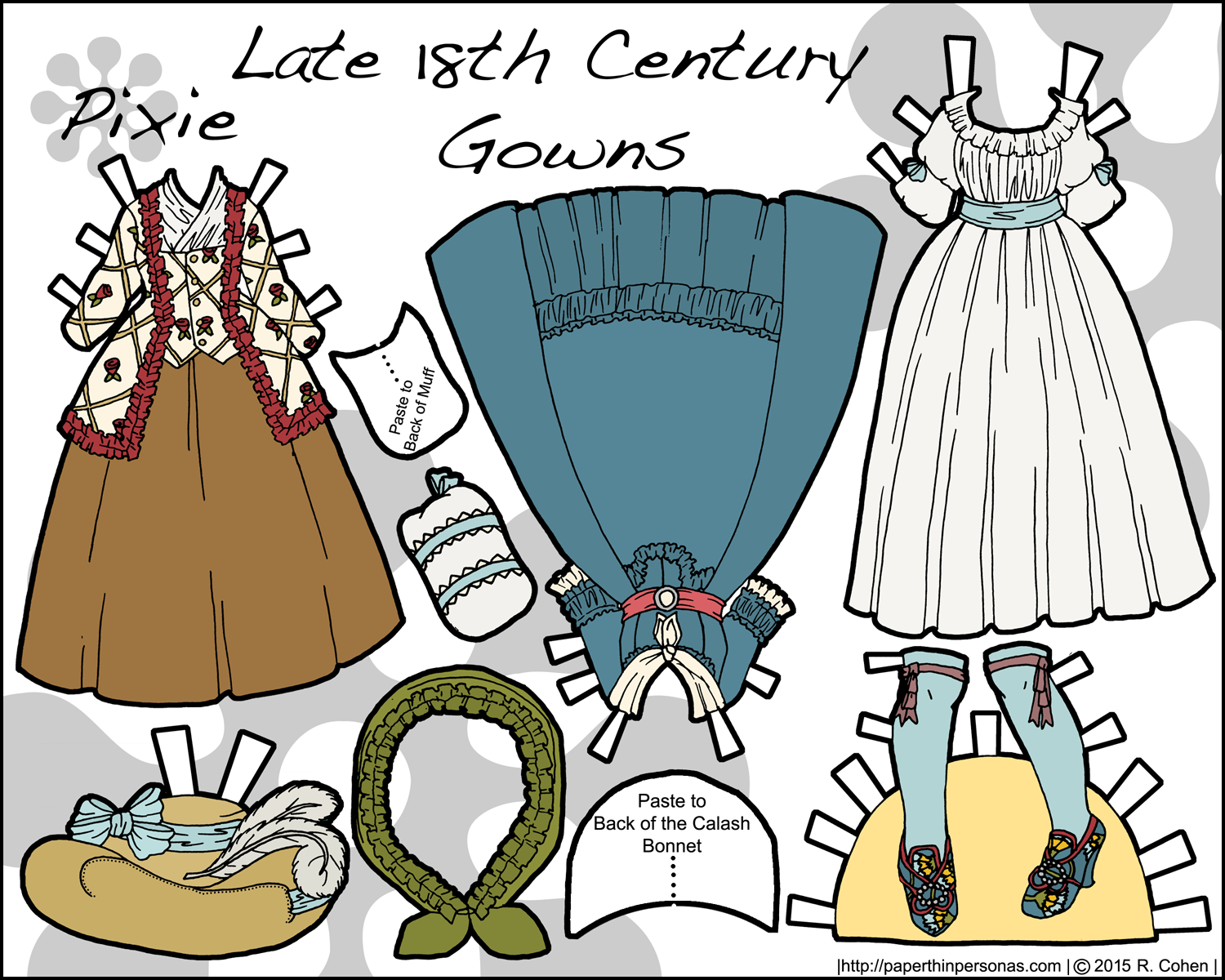
 Hope is based on the styles at the end of the 18th century. So, something major happened around the 1789 in France. It was, for those who weren’t asleep in high school history class, the French Revolution. To say that “everthing changed” wouldn’t be an understatement and the ripples of the events in France spread across Europe in dramatic ways. It is tempting when looking at the end of the 18th century to simply assume that after 1789 everyone just jumped into Empire styles and that was the end of it, but the reality is that there was a very slow evolution to the high waisted gowns we think of as “empire” or “Regency” dress.