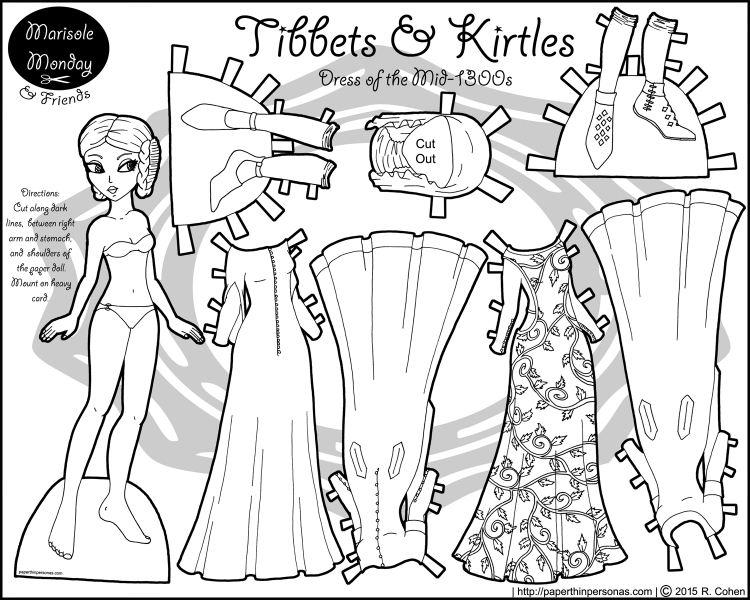
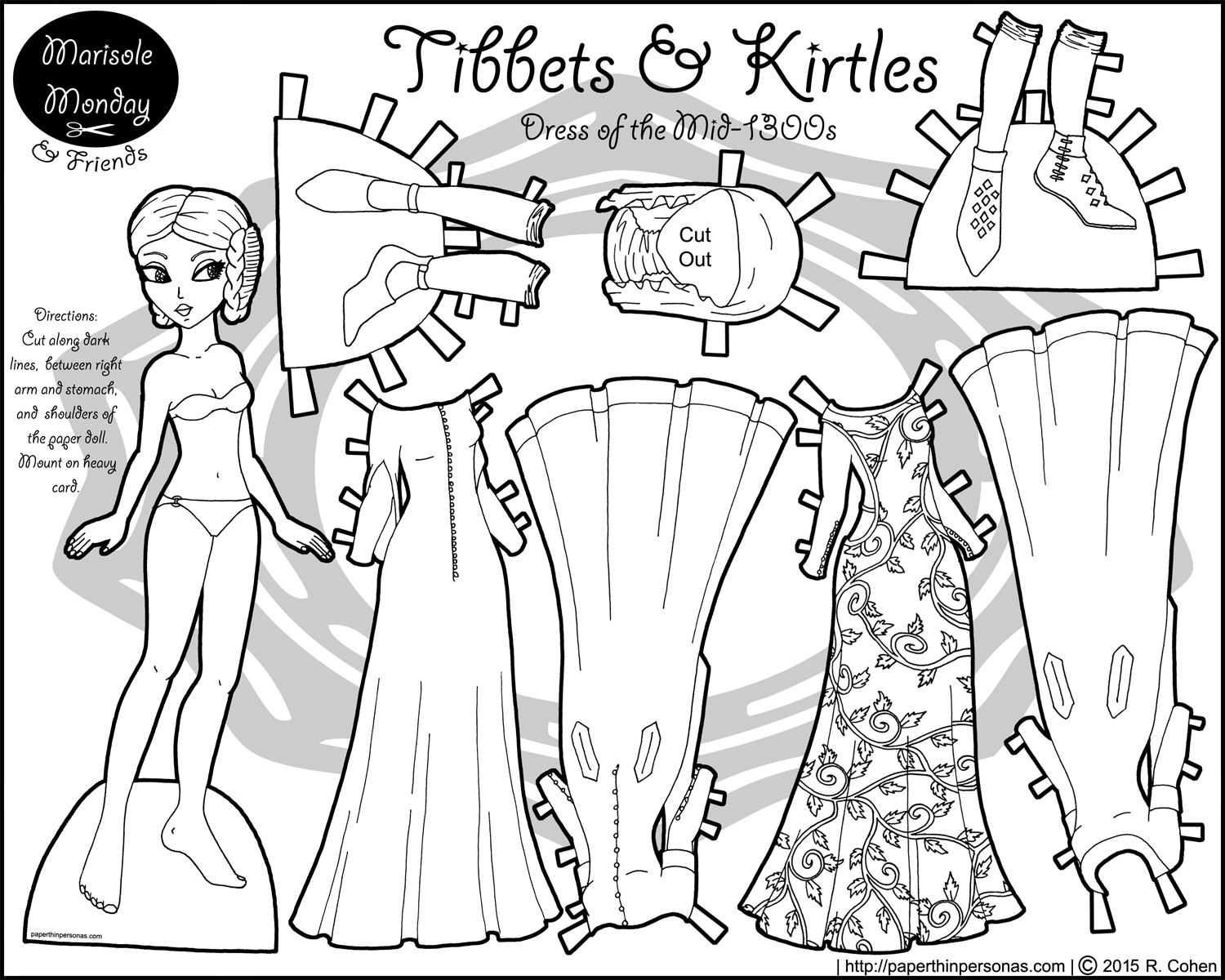
 Today’s printable paper doll is from the mid-1300s when set in sleeves came into existence and fashion was all about layers and hanging strips of fabric off sleeves called “tibbets.”
There are topics upon which I can speak authoritatively and there are topics where I know basically nothing. I would say that I am fairly knowledgeable about certain periods of Western dress, but there are others that are beyond me. As someone who just isn’t that into the medieval period in Europe (though it is growing on me), I have never spent much time doing research. After last years adventures in the 10th century, I knew I wanted to explore some more early periods and the 1300s seemed like a smart choice.
I settled on the 14th century (or the 1300s), because I’ve been wanting to illustrate that period ever since I stumbled across the entire Roman d’Alexandre digitized from the Bodleian Library which is full of illustrations of ladies in fashionable dress. As I usually do, I cobbled together my decisions about this paper doll from a variety of secondary and primary sources. One website that deserves a shout-out is Illumanu which not only posts manuscript images, actually cites them properly. Makes the librarian in me so happy.
 {Click Here for a PDF to Print} {Click Here for a PNG to Print} {Click Here for More Marisole Monday & Friends Printable Paper Dolls}
A few specific choices I should note. The pattern on the sidecut surcoat was from Romance of Alexander from the
Bodlein Library. The far left dress is based on
this casket lid from
the Met and the Romance of Alexander from the
Bodlein Library folio 181 verso. The green dress on the far left seems to have buttons down the front and hanging sleeves. The other two gowns are mixtures of literally dozens of primary and secondary sources. You can check out below some of the sources I used.
The stockings are scrunched below the knee. I wasn’t able to find any records of garters being worn in the 1300s. The shoes are both from Stepping through Time: Archaeological Footwear from Prehistoric times until 1800 which I would totally buy if I could find it for a reasonable price. I also designed a new face for this paper doll. I like it a lot, so it might become a regular member of the family. I haven’t decided yet. What do you all think?
Selected Sources:
Books:
Buren, Anne Van., and Roger S. Wieck. Illuminating Fashion: Dress in the Art of Medieval France and the Netherlands, 1325-1515. New York: Morgan Library & Museum, 2011.
Crowfoot, Elisabeth, Frances Pritchard, and Kay Staniland. Textiles and Clothing, C. 1150-1450. London: HMSO, 1992.
Goubitz, Olaf, Carol Van. Driel-Murray, and Willy Groenman-Van Waateringe. Stepping through Time: Archaeological Footwear from Prehistoric times until 1800. Zwolle: Stichting Promotie Archeologie, 2001.
Newton, Stella Mary. Fashion in the Age of the Black Prince: A Study of the Years 1340-1365. Woodbridge: Boydell, 1980.
Nunn, Joan. Fashion in Costume 1200-2000, Revised. Lanham: New Amsterdam, 2000.
Scott, Margaret. Fashion in the Middle Ages. Los Angeles: J. Paul Getty Museum, 2011.
Scott, Margaret. Medieval Dress & Fashion. London: British Library, 2007.
Manscript Illustrations:
Instructions for Kings, in French
MS M.456, 55v–56r
France, Paris(?) circa 1330–35
Morgan Library and Museum
Jacques de Longuyon, Vows of the Peacock, in French
MS G.24, 25v–26r
Belgium, Tournai circa 1345–50
Morgan Library and Museum
Speculum humanae salvationis
Hs 2505, 37r
Westphalia or Cologne, circa 1360
Technische Universität Darmstadt
Giovanni Boccaccio, De Claris mulieribus…
Français 598, 134r
Bibliothèque Nationale de France
France, circa 1403
Roman d’Alexandre
MS. Bodl. 264, 47r, 97r, 97v, 120v, 121r, 127v, 163v, 169r, 168v, 171r, 172r, 172v, 173r, 181r, 181v, 191r, 196v, 197v, 204r
Bodleian Library
Flanders, circa 1344
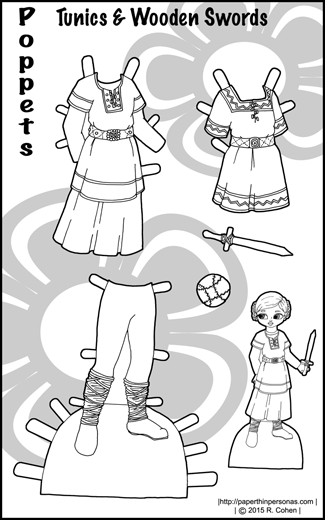
 Clearly, I’ve been on a bit of a medieval kick with Monday’s 14th century set and today’s psuedo-medieval Poppet paper doll set. Ironically, I’m not that much of a medieval fantasy fan. As far as book genres, I’m much more into urban fantasy than anything in the classic or epic fantasy genres.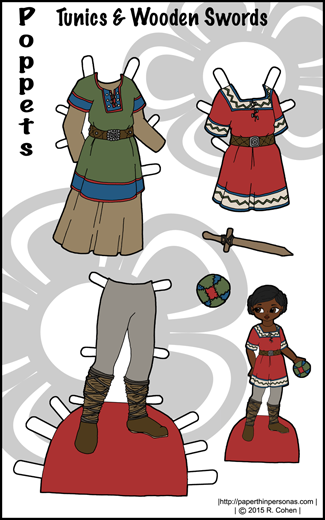
 I have had a deeply frustrating month of February. My car was in the shop for a week and I got sick. I’m getting over it, but I haven’t been as productive as I would have hoped. We had a snow day on Wednesday and I was hopeful that I would get a bunch done.
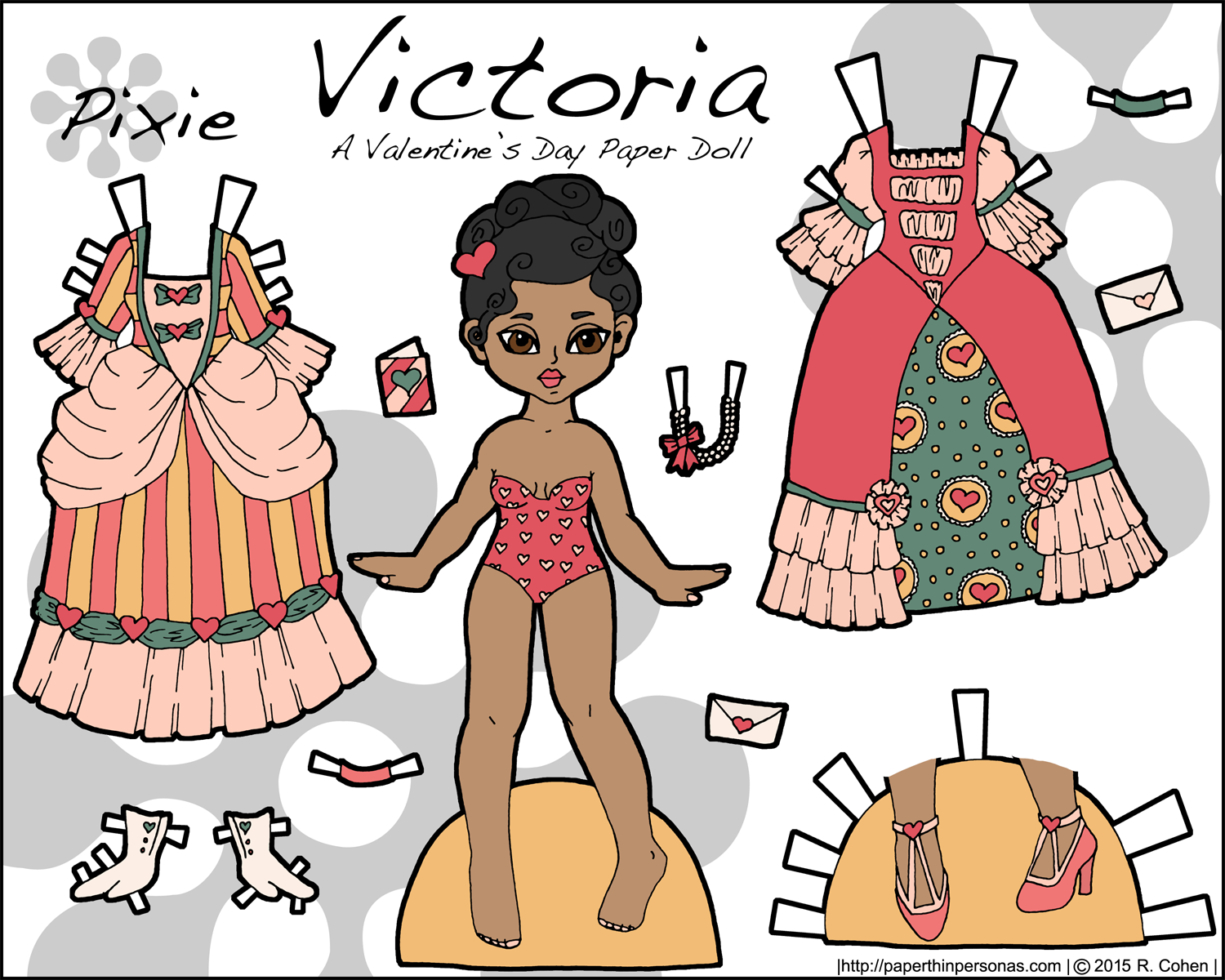
 Over the years, I have done a lot of Valentine’s Day paper dolls. I think it might be the only holiday that I reliably get a paper doll posted for. My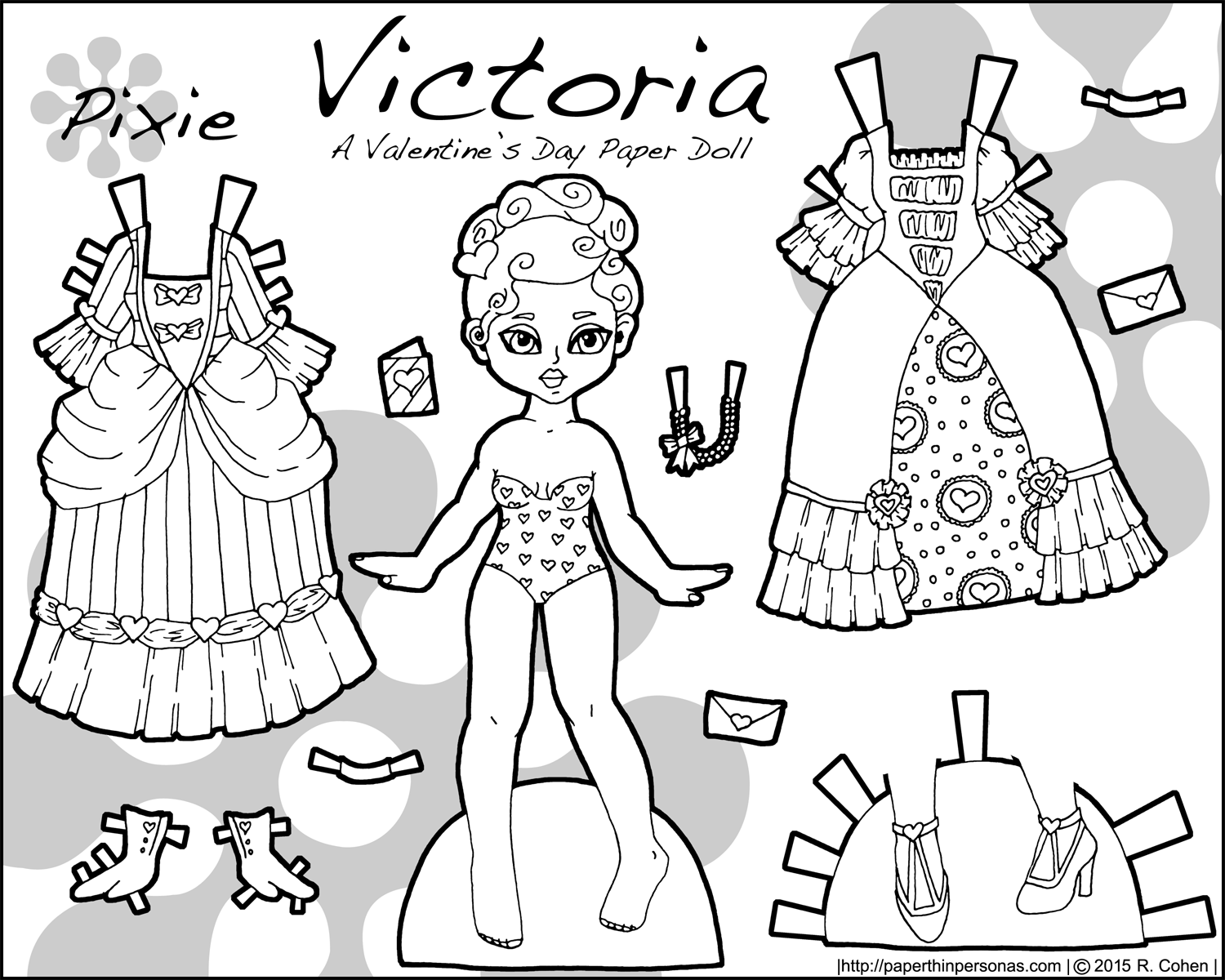
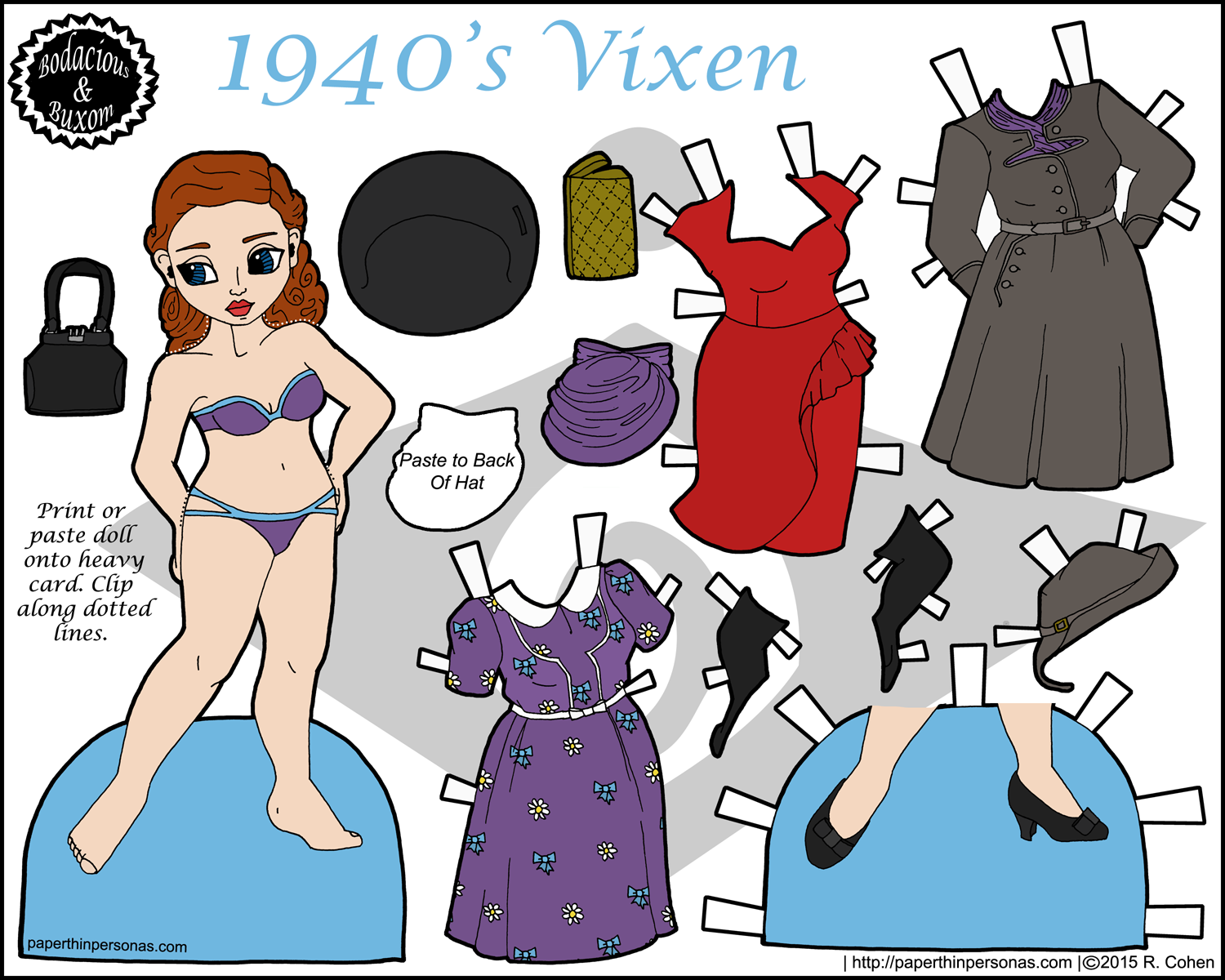
 There are some periods of fashion I’m naturally drawn too. I love the regency era and the 1870s. I have a strange soft spot for the 1920s and the mod looks of the 1960s. However, 1940’s fashions just doesn’t do so much for me. Still, one of my goals for my paper dolls in 2015 is to do more historical paper doll sets and to stretch myself into eras that I’m not naturally interested in.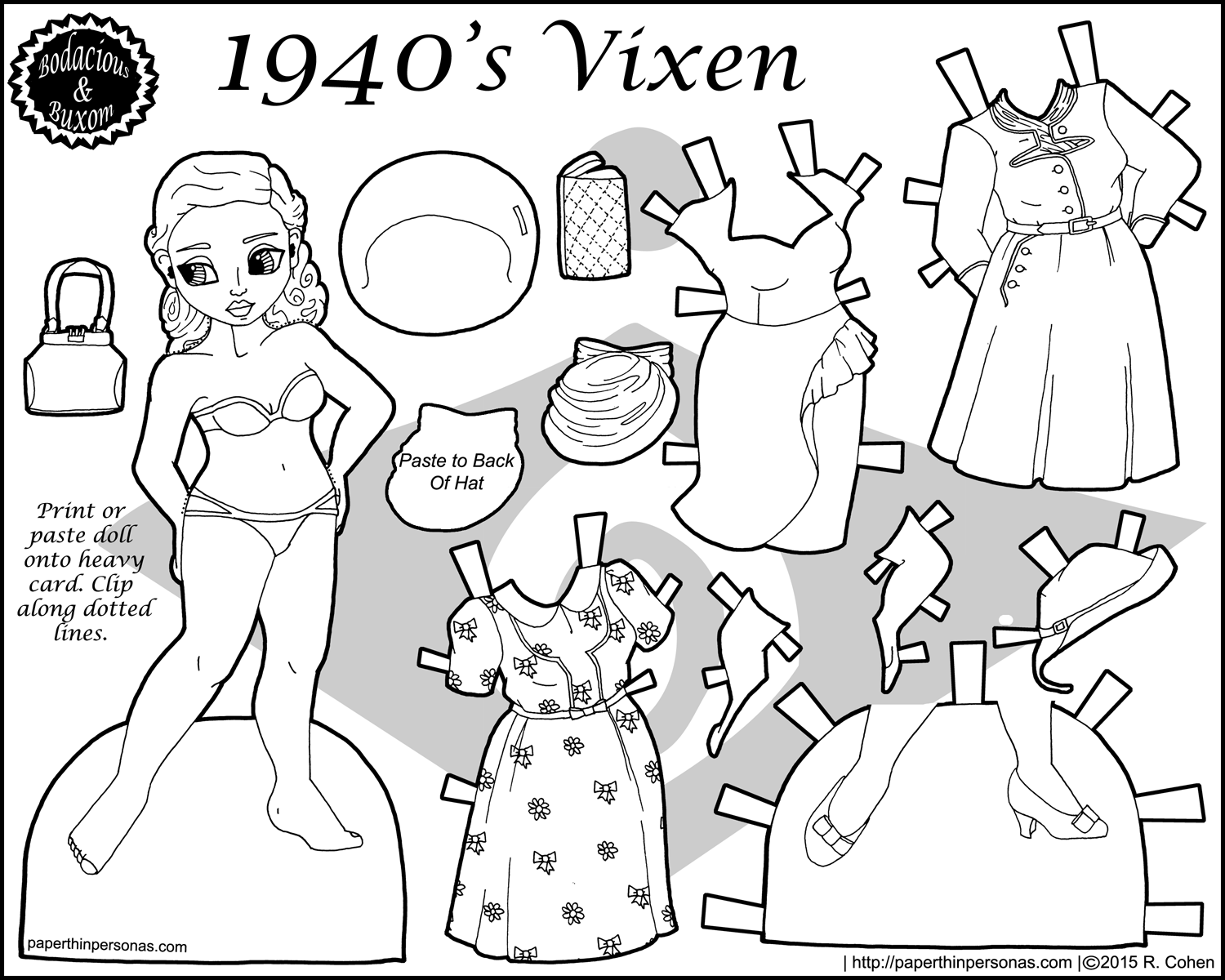
 So, I usually manage to get these paper doll sets up on schedule to post early Monday, but clearly today I wasn’t so on the ball. Never the less, I’m not technically late, just a little delayed I suppose with today’s paper doll coloring page of a princess and her four paper doll dresses- everyone needs paper doll dresses, right?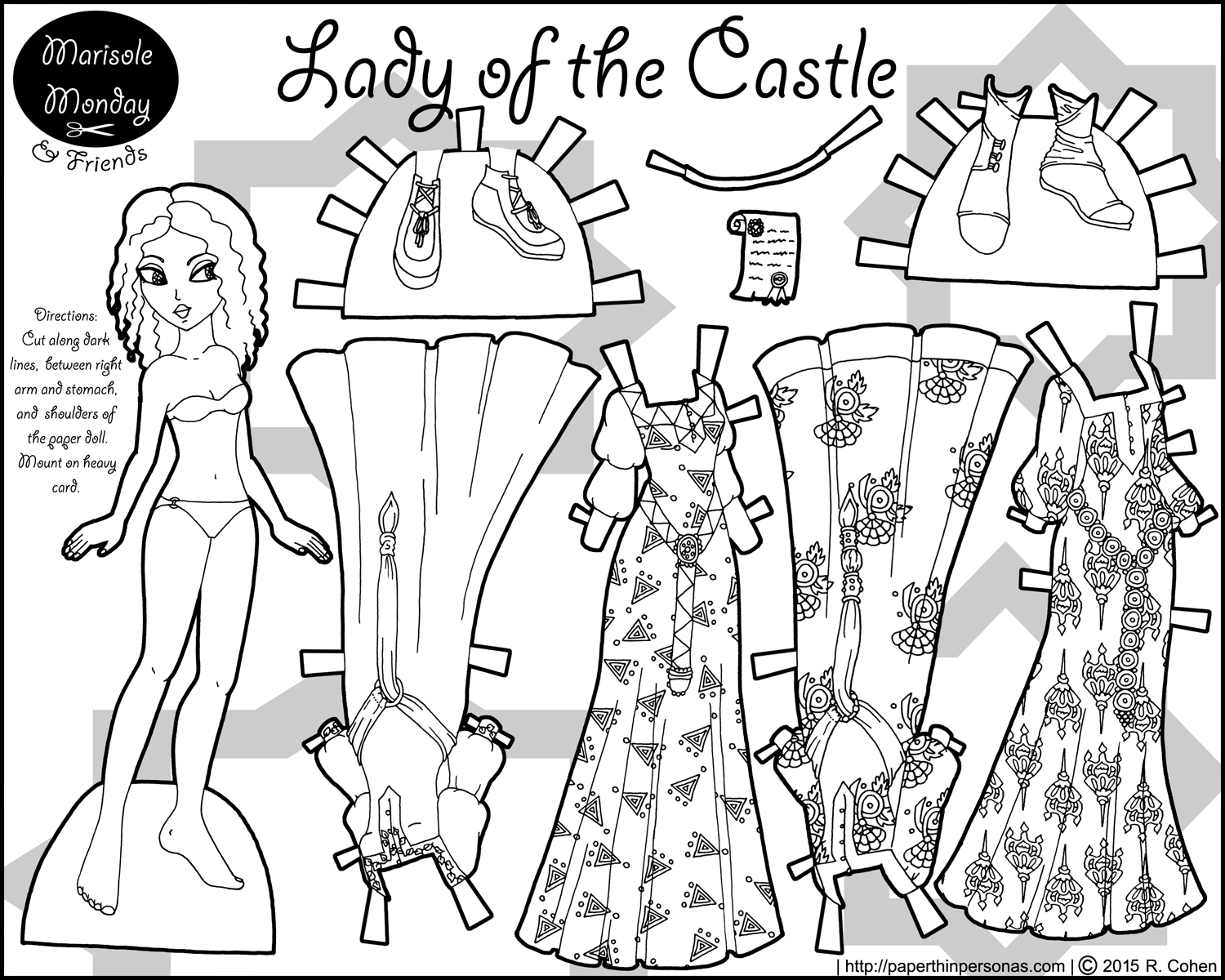
 There are a few perks of knowing me in the real world. One of those perks is that when you ask for a paper doll set, it is a lot more likely to actually happen. It might take a little while, but eventually it will happen.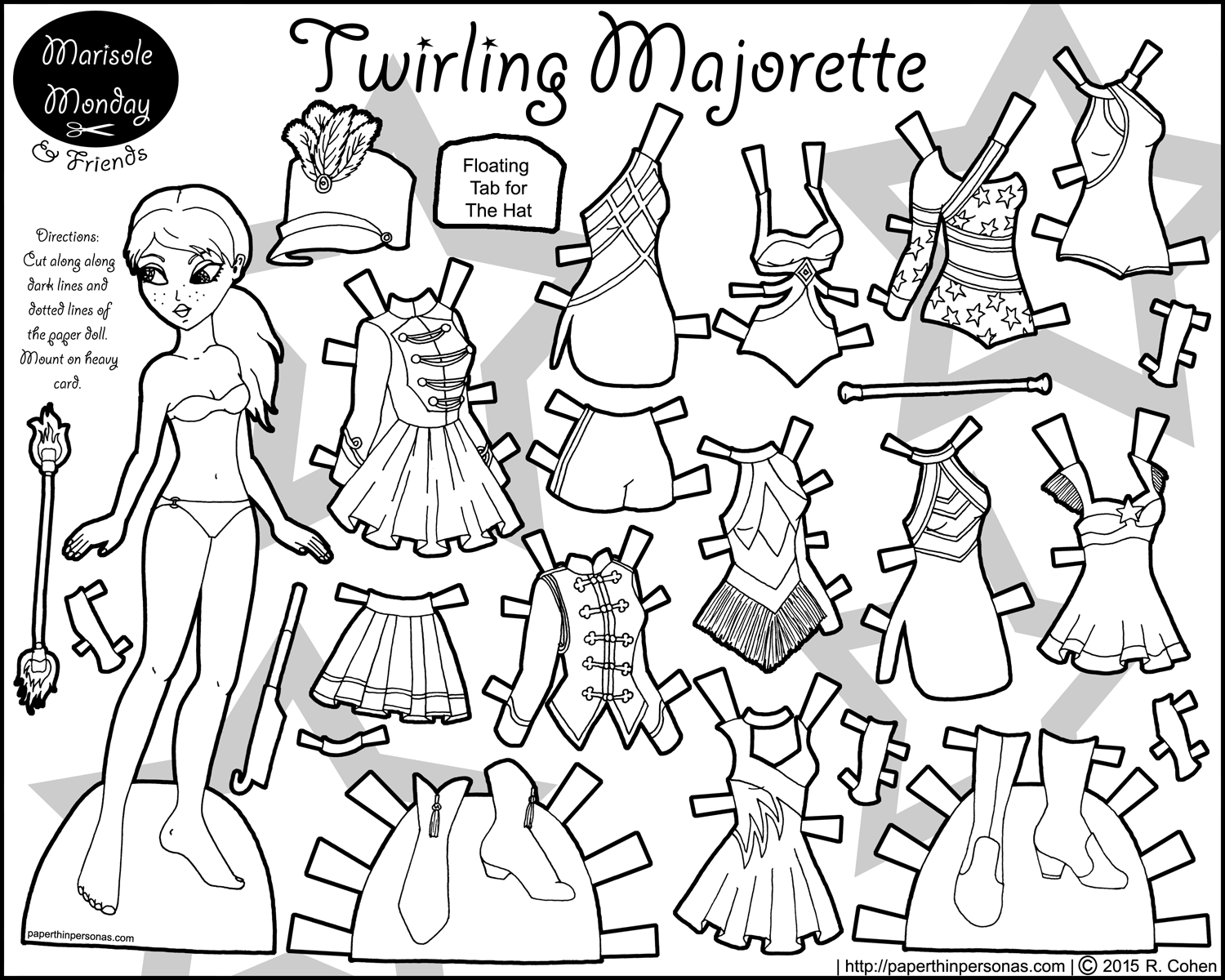
 Starting off 2015 with a Marcus 2.0 paper doll as my first Marisole Monday & Friends set. I wanted to do a Marisole doll for 2015, but I didn’t have done finished and this was finished, so up it goes. In total, there were 23 new Marisole Monday & Friends designs posted last year which I think is fairly close to a personal best. I haven’t checked my previous years to find out.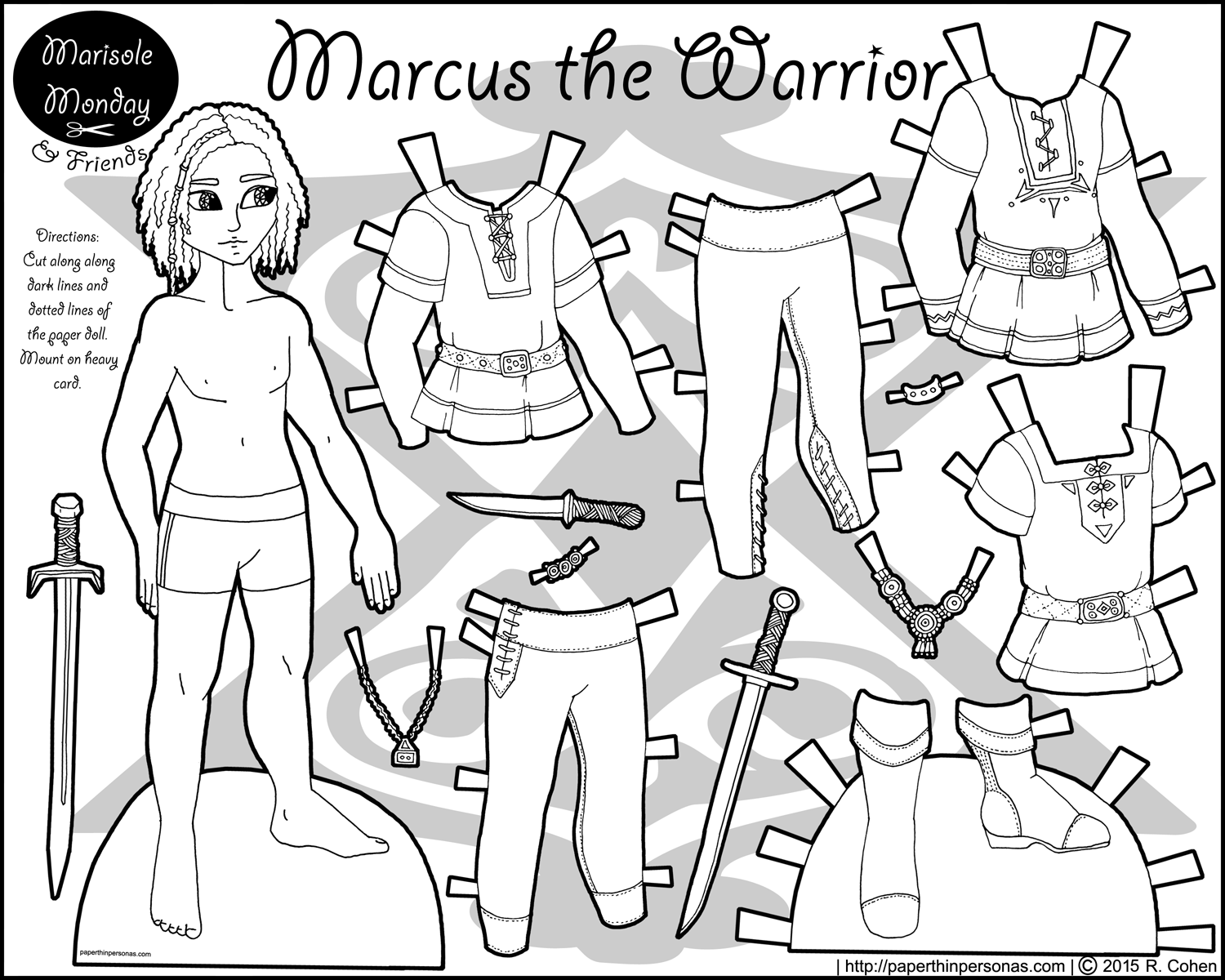
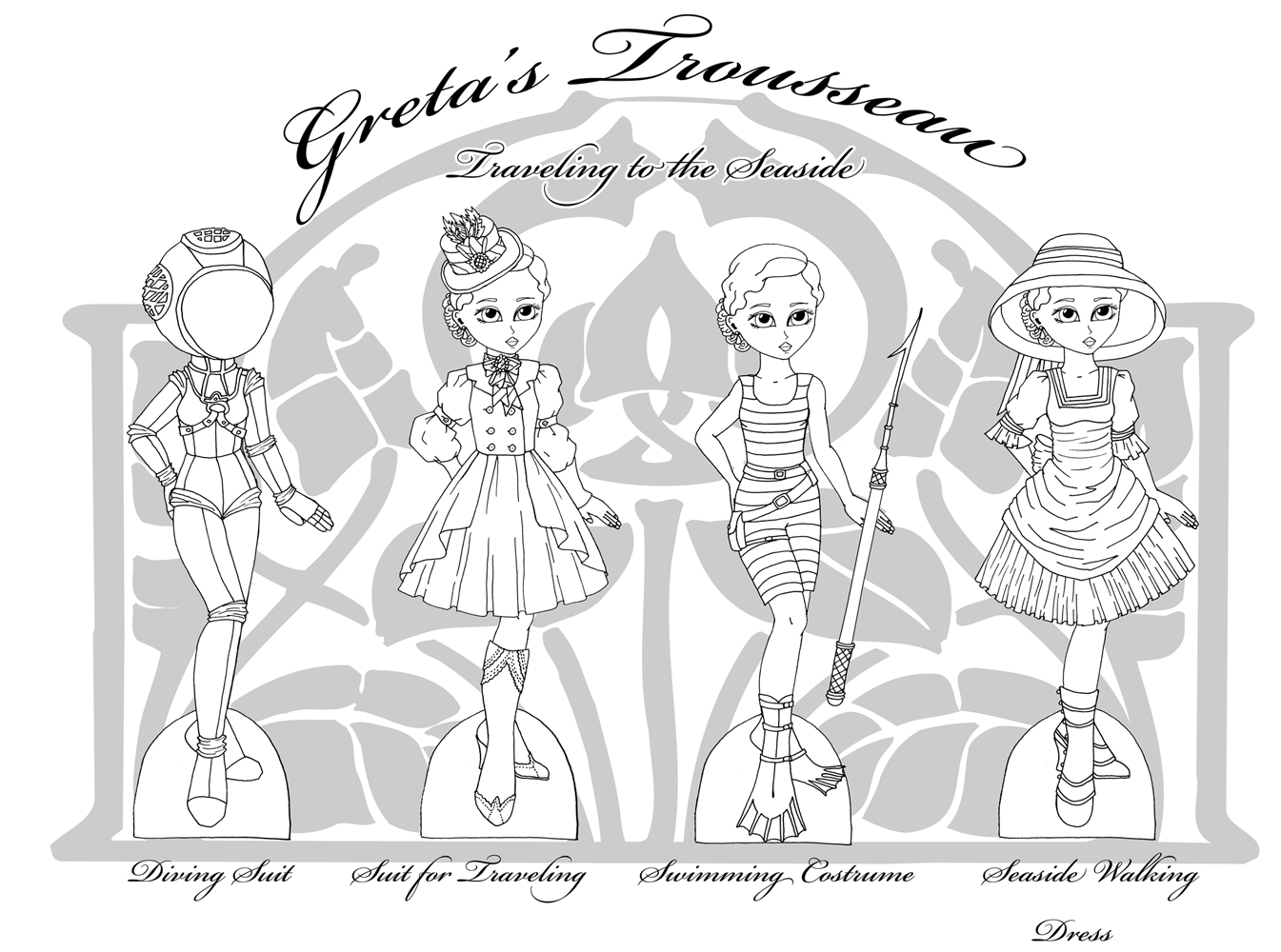
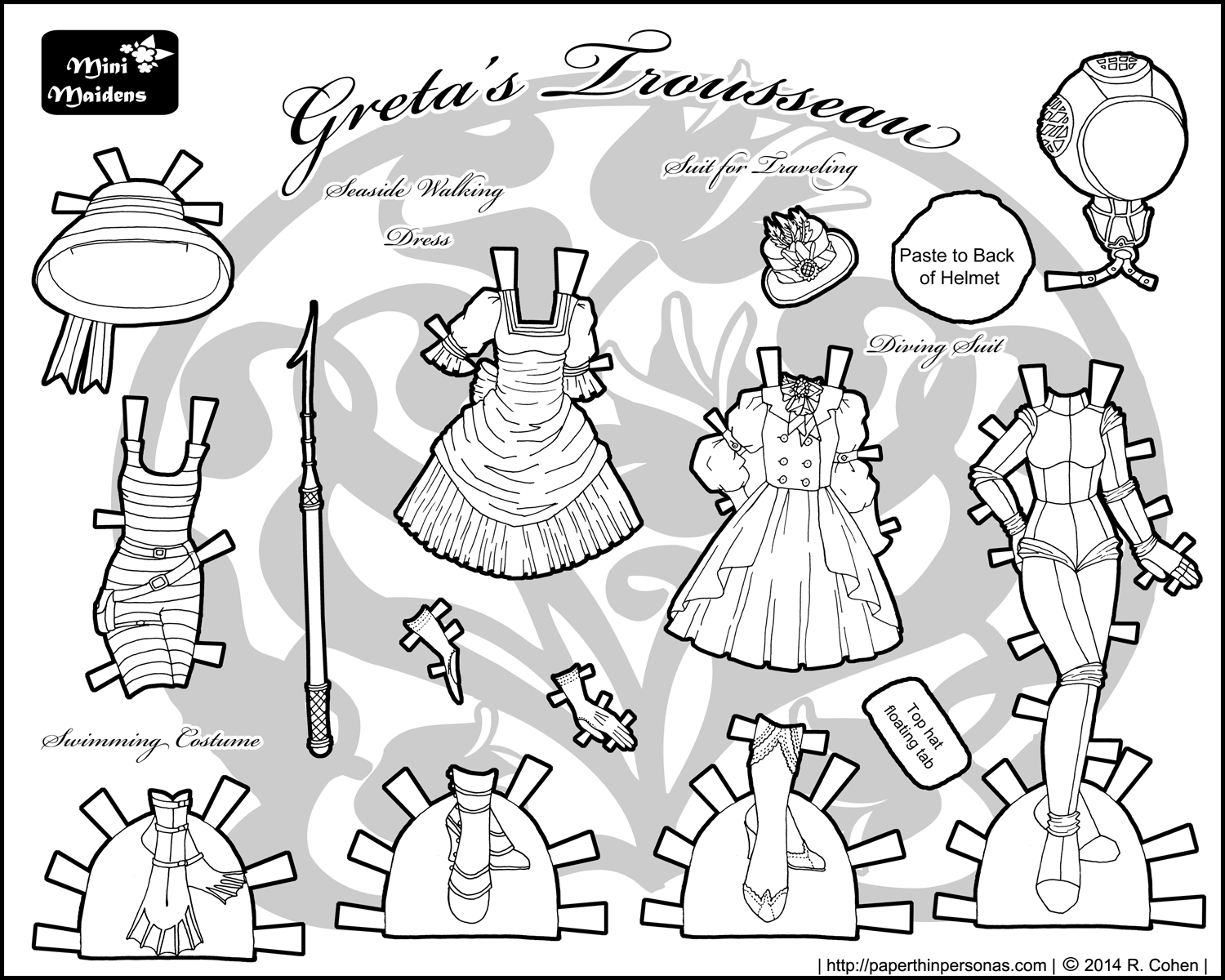
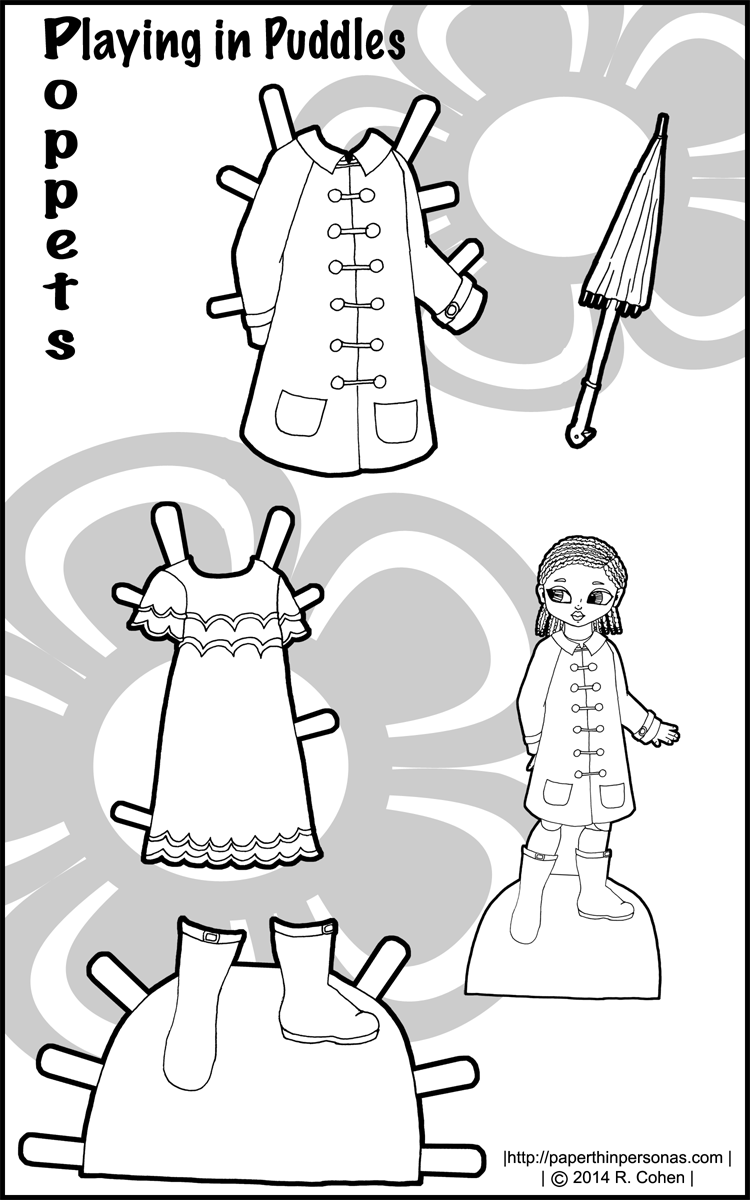
 Embarrassing confessions of a paper doll blog owner: I drew this set of clothes over a year ago. Over a year!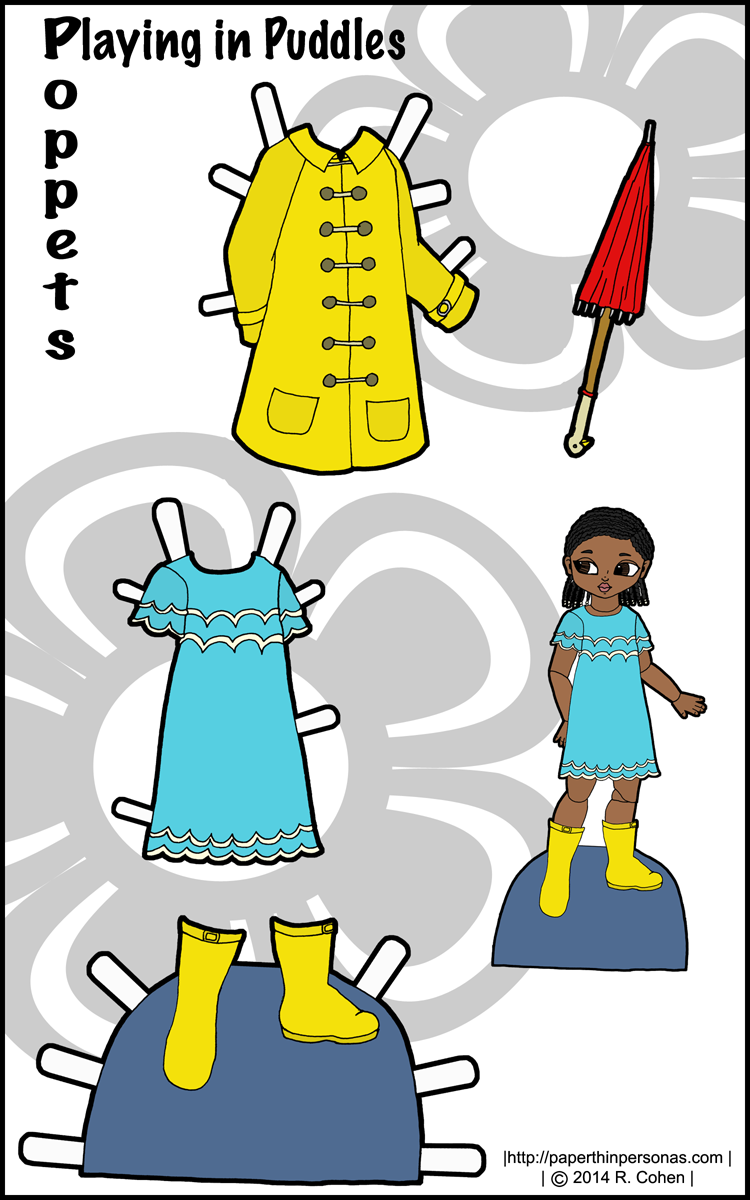
 A few random things today and then a paper doll set, of course.
 Last page of Her Ladyship today and now you can