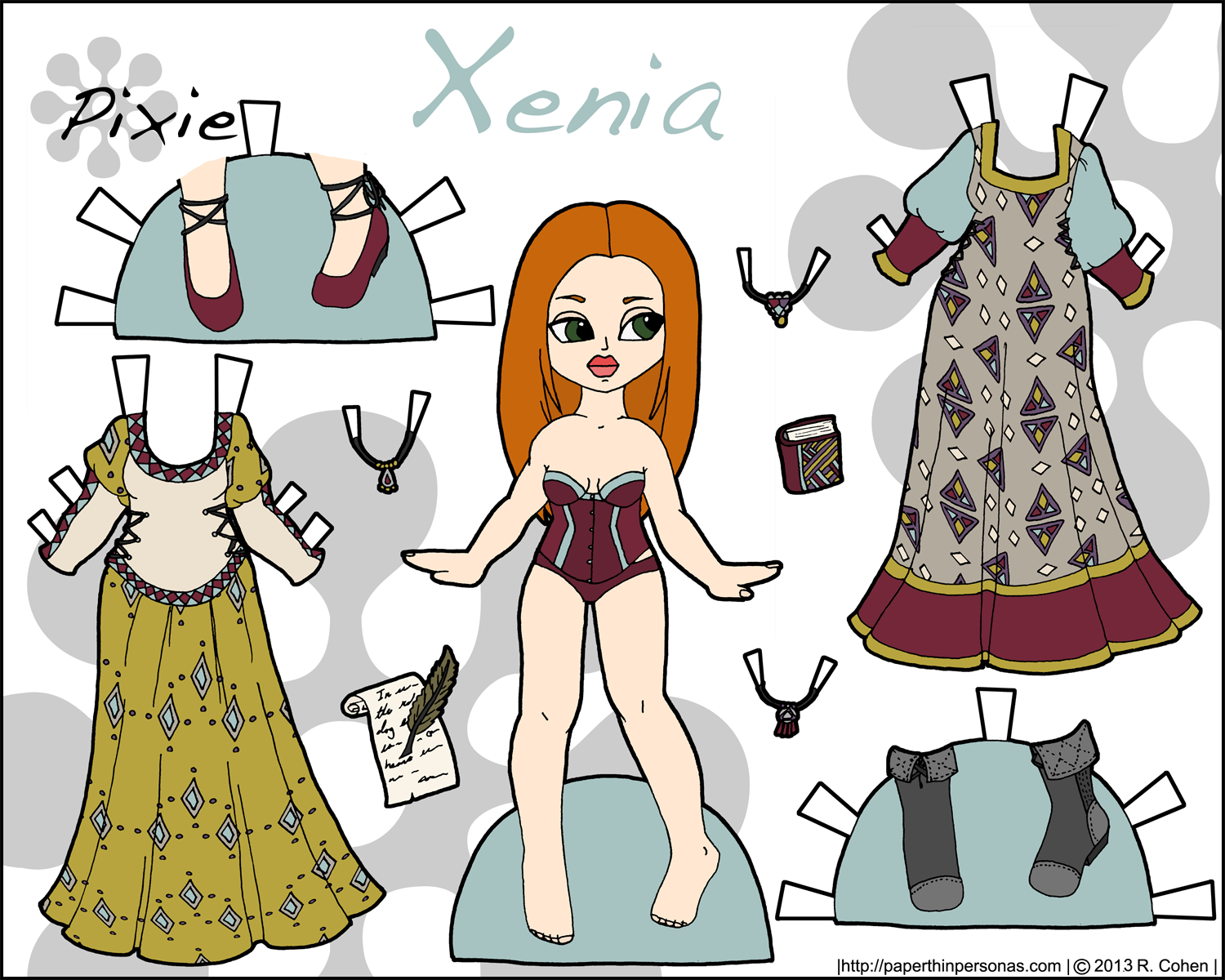
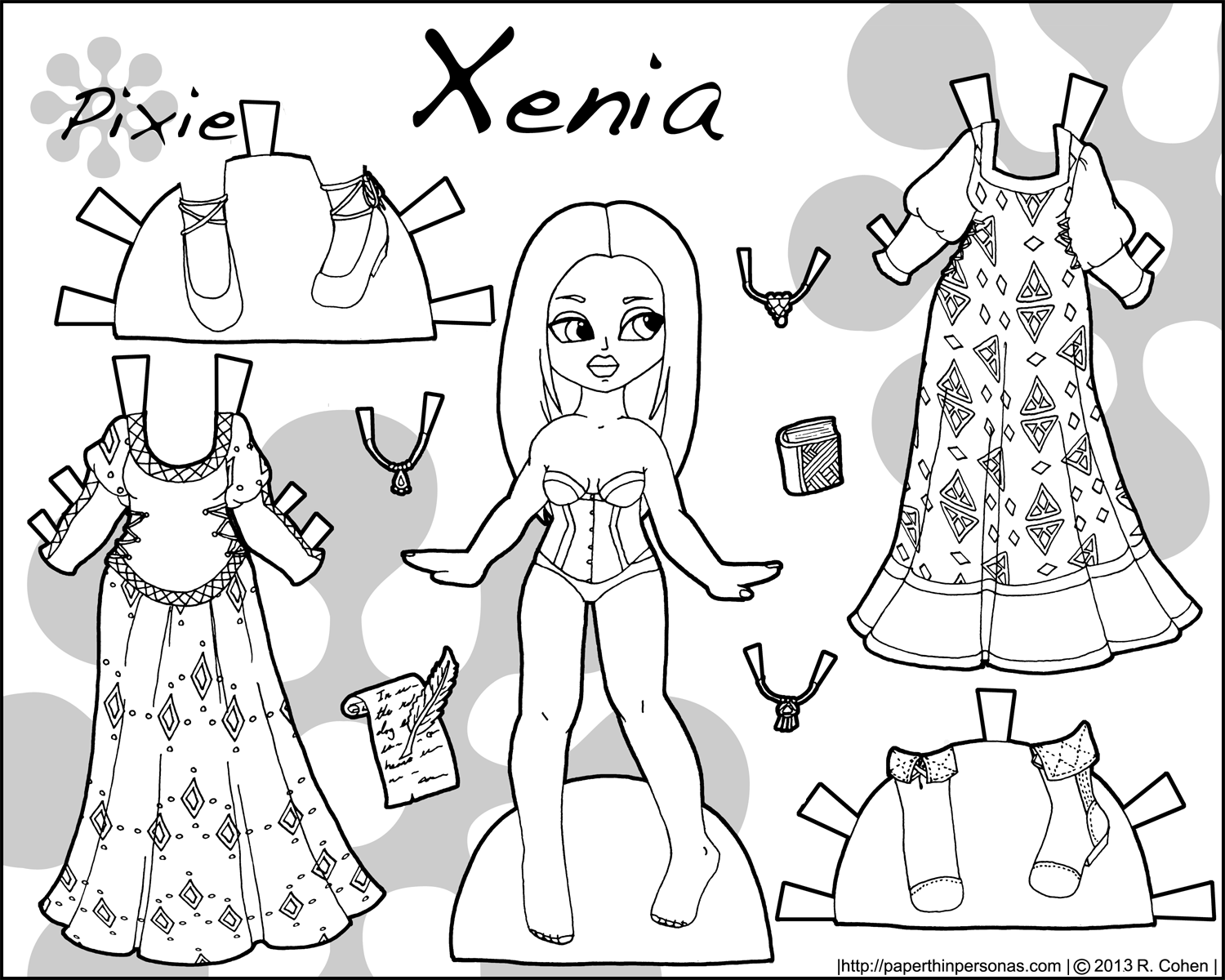
Today, we have a pair of paper doll ballgowns which were heavily influenced by wa lolita and qi lolita dresses. I showed off the rough sketches last Monday. Wa lolita and qi Lolita are substyles of the Japanese street style Lolita. F Yeah Lolita (a blog I have come to rather enjoy reading) discusses lolita in detail, but I actually think the wikipedia article is nice for people who know nothing about it.
Anyway, both Wa Lolita (influenced by Japanese traditional dress) and Qi Lolita (influenced by Chinese traditional dress) are styles I think are fascinating, because cultural fusion always interests me. However, I try to be careful about how I borrow from cultures which are not my own, because I am very aware of the problematic and complicated issues of cultural appropriation which underlie children’s toys and visual representations of culture. I could ramble on about that topic until… well, for a every long time… but I figure most people are really here for the printable paper dolls, so I’ll restrain myself.

I can’t wait to share these in color next week, though I openly confess the pattern on the left dress is giving me fits. Every-time I do a complicated pattern, I swear I will never do it again and then… well… I do it again. Isn’t insanity doing the same thing over and over again expecting different results?
Oh, and before I forget, the fast of Ramadan officially ends this evening I think, so Happy Eid al-Fitr to any of my readers who are Muslim. I don’t know much about Ramadan, but the mosque by my apartment has been busier than usual this month.