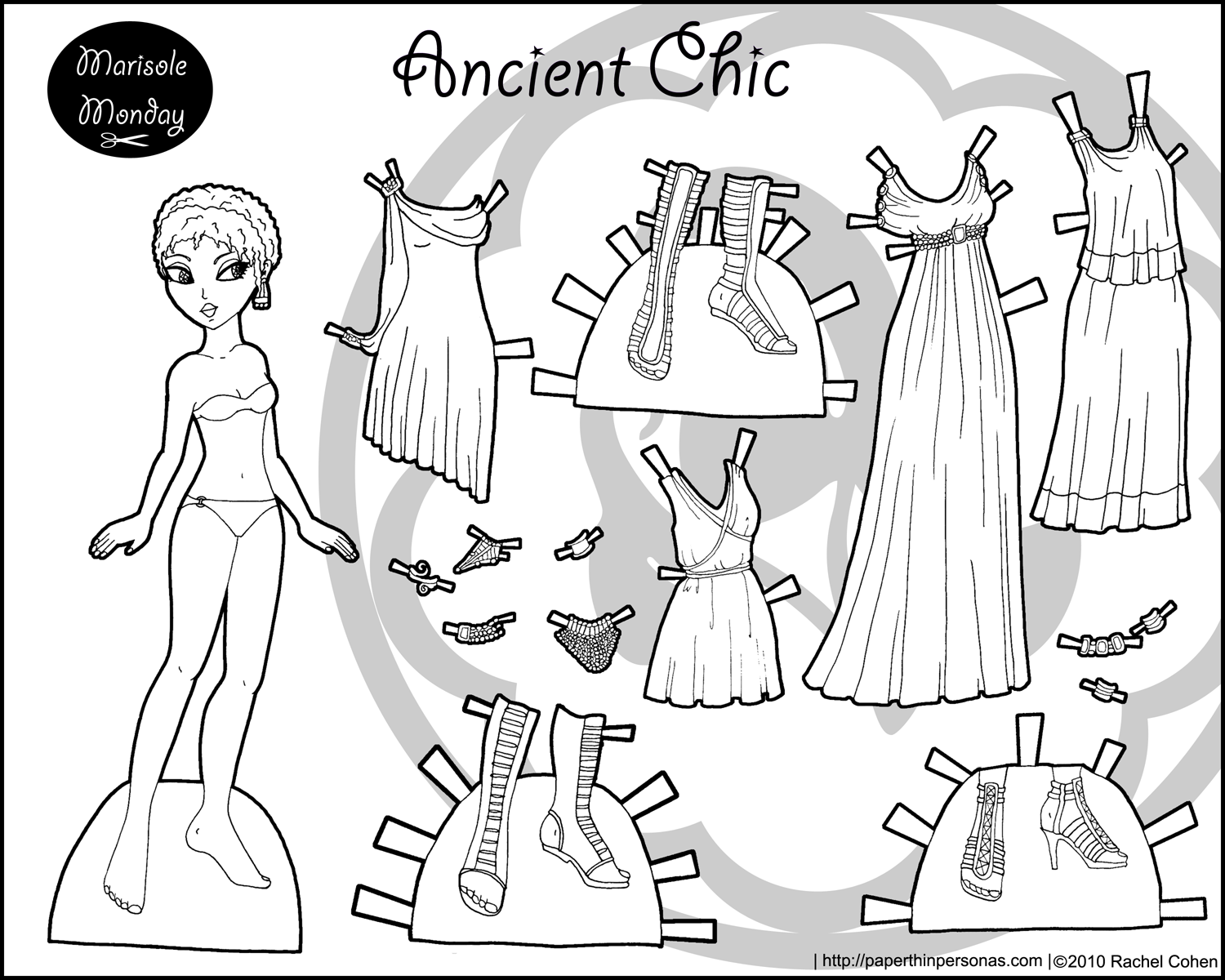
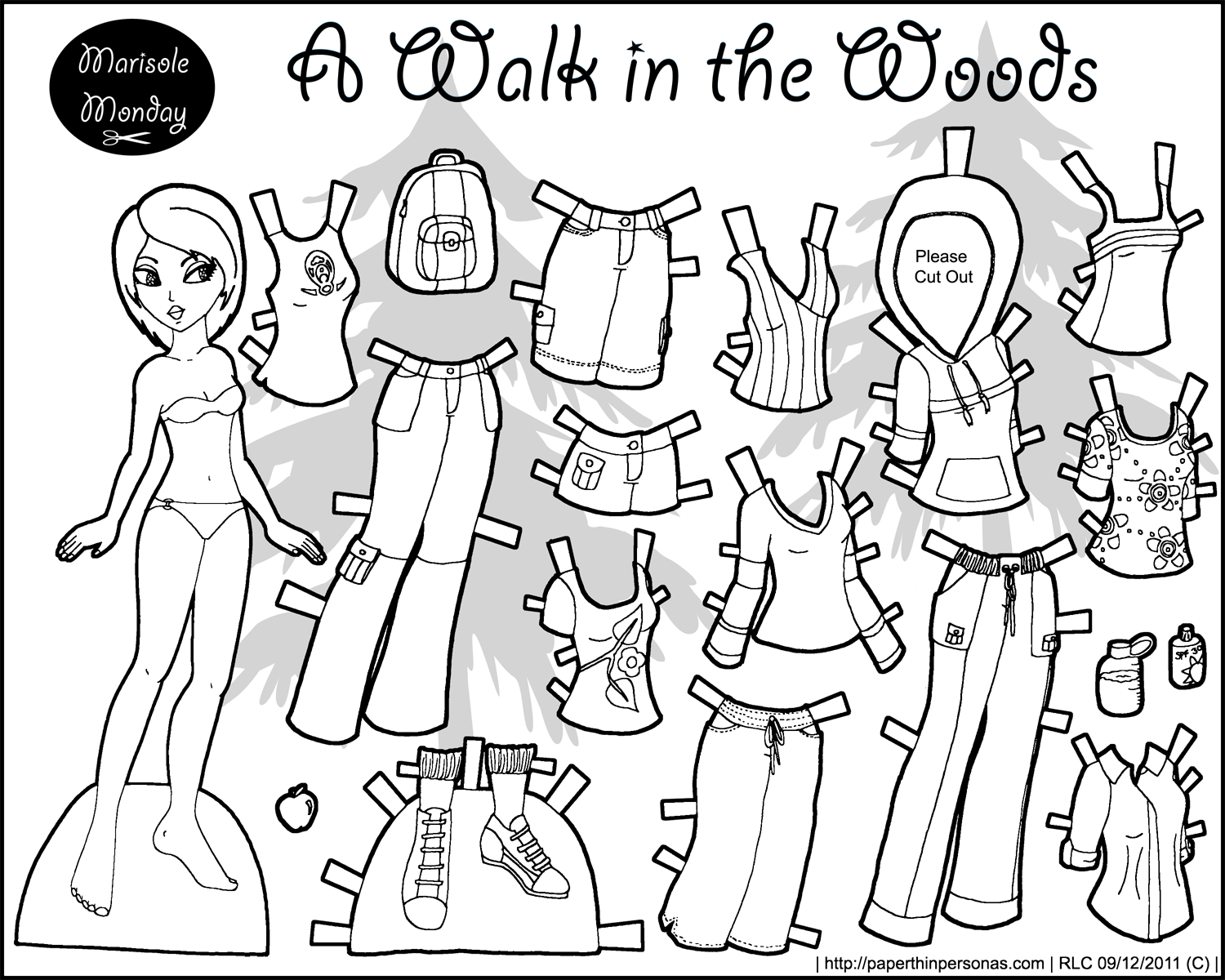
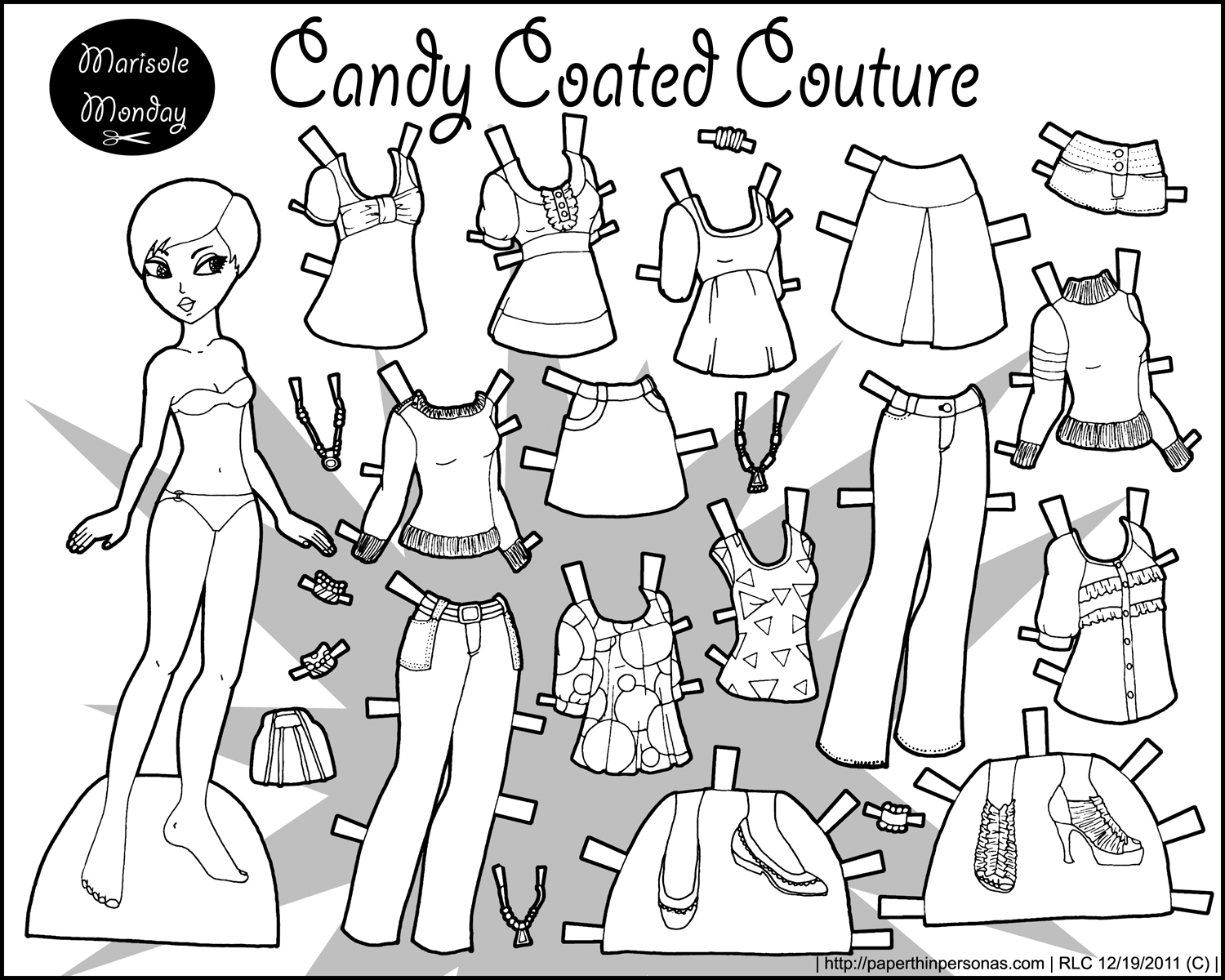
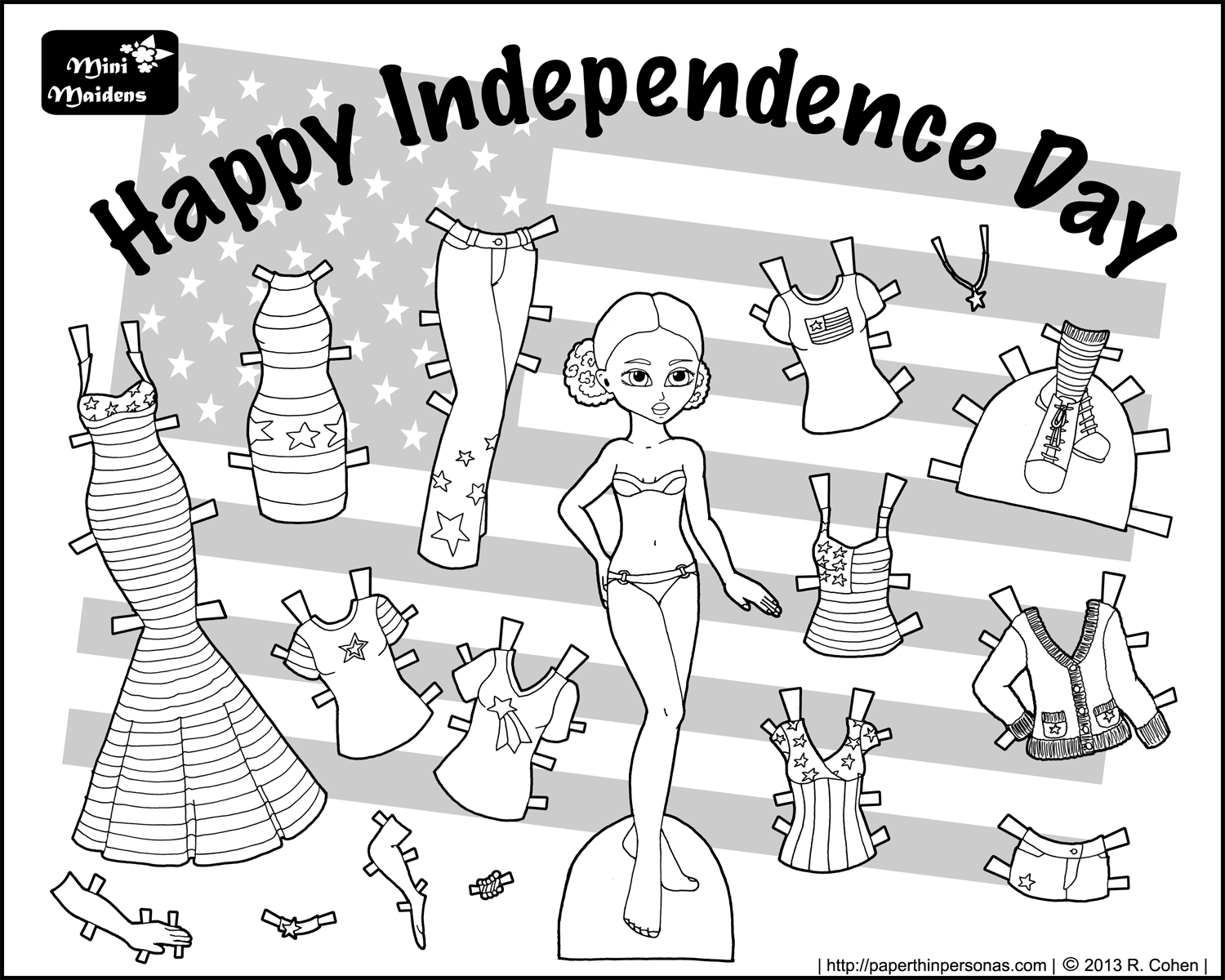
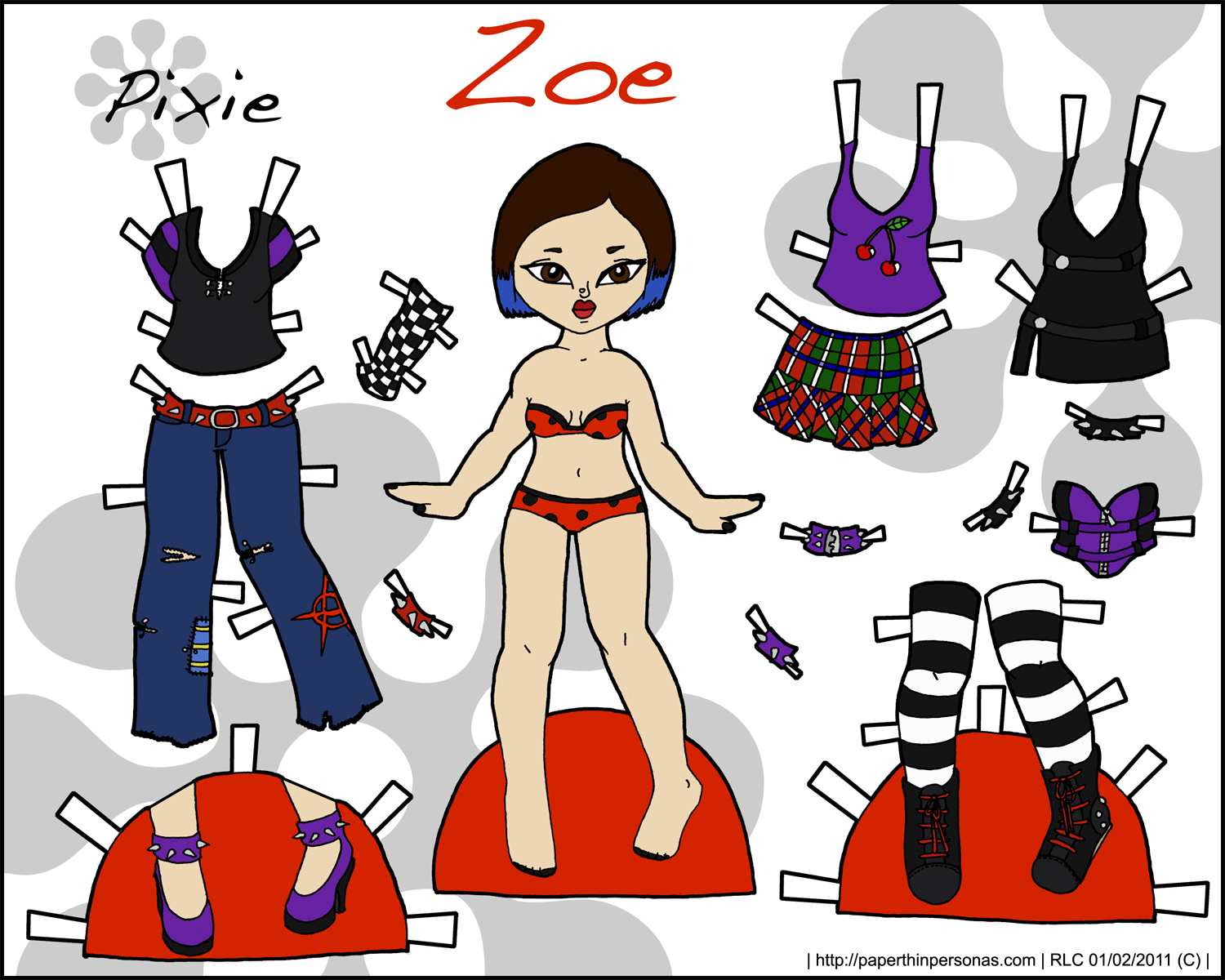
So, this is going up a little late today. Sorry about that, but life got crazy this weekend. I want to talk a little bit today about coloring last week’s paper doll and a little about diversity in the paper doll world.
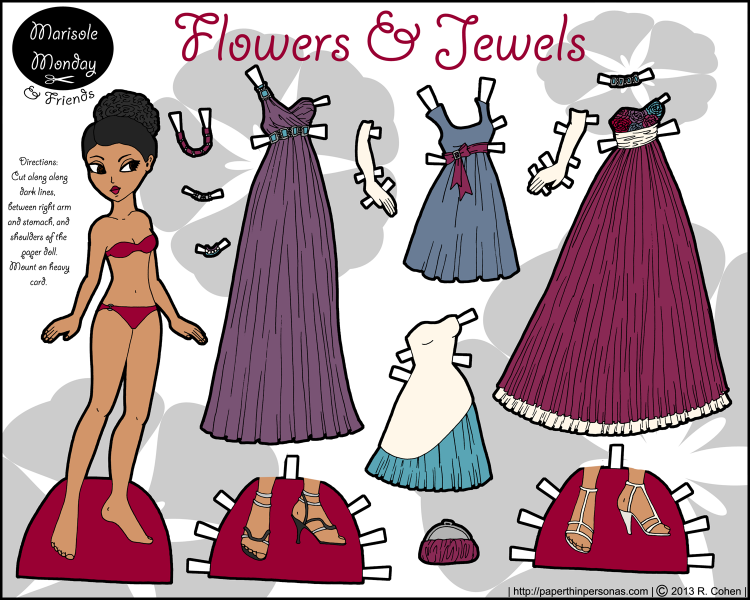
So, when I color a paper doll set, I start with a pallette. I knew I was going to be giving Monica a fairly rich brown skin tone, so that opened up and closed down certain color options. For example, I tend to avoid putting brown colored clothing on brown colored paper dolls, unless the tones are really different, since it can blend too easily. Since she was going to have a rich skin-tone, I decided that bright and color dresses made a lot of sense.
The strapless gown with the belt was based on this gown by Andrew GN and since it had a red top and a pink bottom, that informed the blues and the greens as contrasting colors in the other gowns.

I used to think I was the only one who thought this way about paper doll skin-tones until I read this post from Julie over at Paper Doll School. I was comforted to find out that we both tend to think in terms of “color” not in terms of ethnicity.
The result of coloring things, perhaps?
What I do know is that no matter how I think about skin-tone, it is crucial to me that I offer readers of all backgrounds and colors paper dolls that reflect them. People should be able to see themselves in the toys they play with.
Yes, I know a lot of my readers are adults, but adults play with toys, too. At least, they should. 🙂 I do.