1970s Fashion Paper Doll- Sapphire

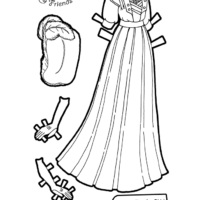
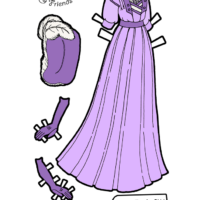
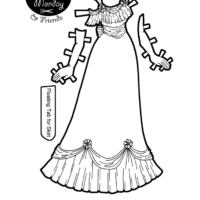
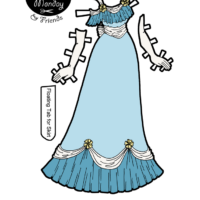
Occasionally, I ask Patrons to vote on what they would like to see. Last time I did it, there was a three way tie between Tudor, 1970s and 1890s. Today’s creation is a 1970s fashion paper doll. When I usually think of the 1970s, I think of psychedelics prints and bellbottoms. When I actually spent some time looking at images from the era, I noticed quickly that while that was one trend of the era, it wasn’t the only trend of the era.

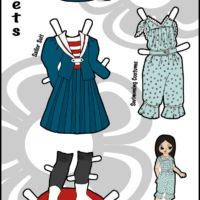
I fell in love a little with the more conservative business attire I kept seeing for women. Well and one jumpsuit, because the 1970s is full of amazing jumpsuits. I couldn’t exactly draw the clothing of the period and not include a jumpsuit. My sources were vintage sewing patterns (this one and this one) and several books I have on 20th century fashion.
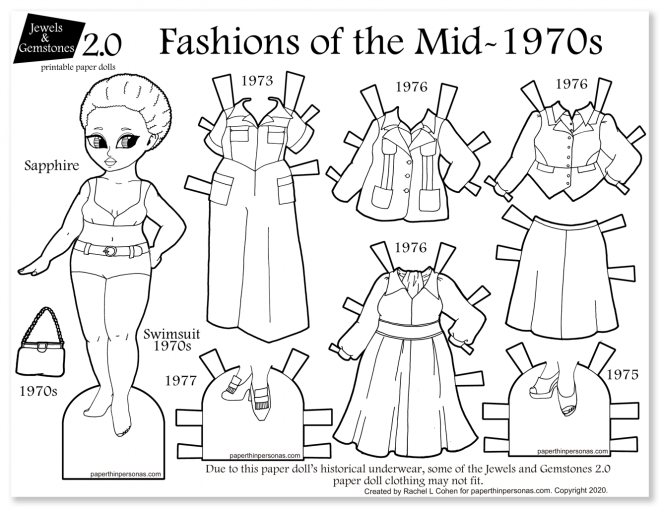
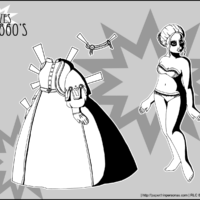
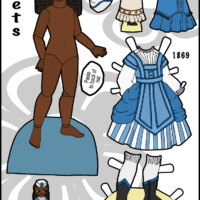
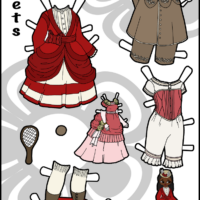
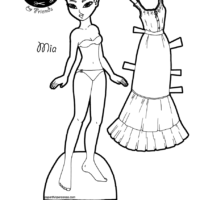
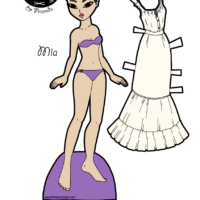
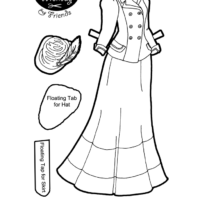
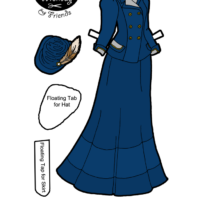
A 1970s fashion paper doll coloring page for printing out and playing with. Fun vintage fashion activity for kids featuring a black paper doll and her work wardrobe from the mid-1970s.

Download Black and White PDF | Download Color PDF | More Jewels & Gemstones 2.0

I decided to go with a swimsuit rather than traditional underwear for this paper doll and my other 1970s paper doll. I just kept seeing swimsuit vintage sewing patterns. I settled on this one as my source material. The hip hugger boy-short bottoms with the belt felt very period appropriate.

The closer you get to the current era, the more it is small things that define a period style. For the 1970s, some of those small things include the shape of the collars, skirt length and pant shape. The last is color and that’s a big one too. Speaking of color, I chose avocado green (such a classic of this era), burnt orange and some deep coral. For the dolls makeup, I tried to keep with the “natural look” of the 1970s which required like 57 products, but was supposed to look like it didn’t.
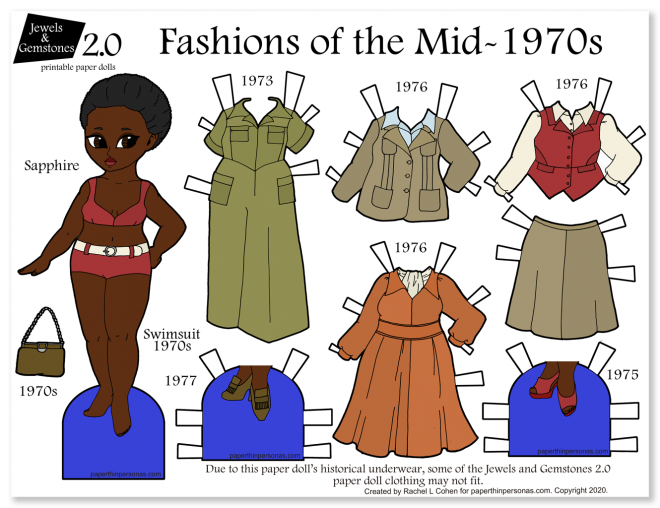
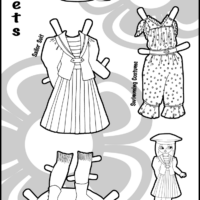
A 1970s fashion paper doll printable. Fun vintage fashion activity for kids featuring a black paper doll and her wardrobe from the mid-1970s.

Download Black and White PDF | Download Color PDF | More Jewels & Gemstones 2.0

I chose Sapphire for the model here, because before the 1970s, you almost never seen black women in mainstream catalogs or magazines. During the 1970s, there’s a wave of diversity. Also, I love 1970s afros. Sapphire’s was inspired by Pam Grier and her amazing curls. I tried to make this look like a looser afro than some of the others I have drawn, but I am not 100% sure it was effective. I’m still practicing my hair drawing skills a decade into this blog.

There is another 1970s fashion paper doll forth coming, but until then you can check out my other 1970s paper dolls or join Patreon if you want to get to vote in my next “time period for Rachel to work on” poll.
Topaz With 12th Century Clothing

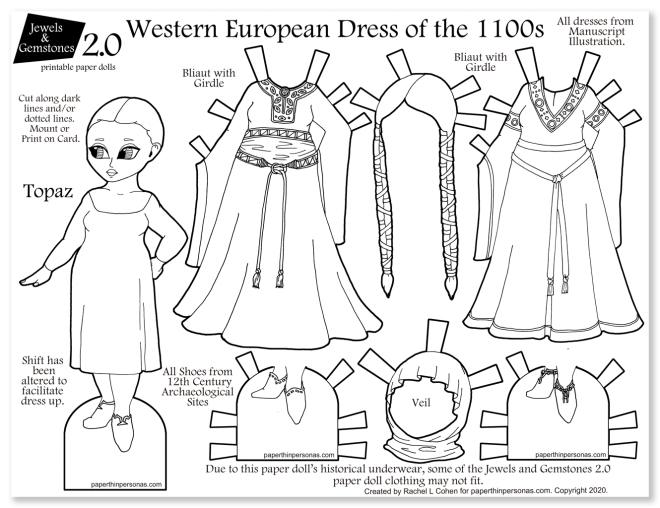
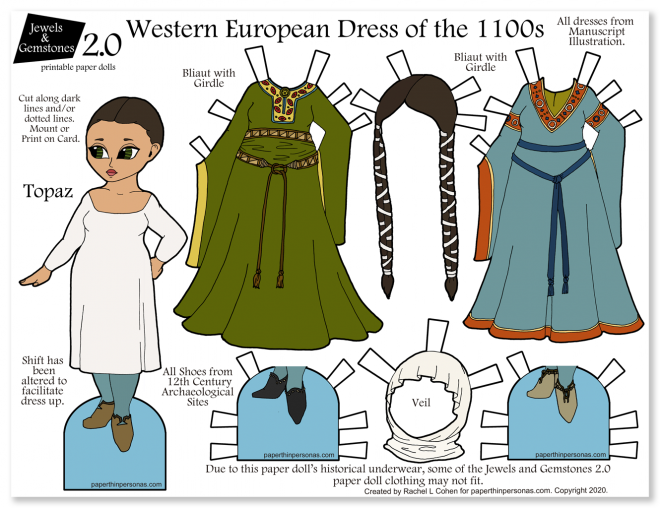
In my second Topaz paper doll of the week, here’s some 12th century clothing to go along with the Tudor paper doll from Tuesday. If I had a chose a period of fashion I both really like and know very little about, it would be the 12th century aka 1100s. 12th century clothing in Western Europe is both super interesting to me (I love the sleeves) and very alien.

As much as possible, I try to work from primary sources, ideally illuminated by well written analysis by scholars who know more than me. However, the books I have tend to start in 1200 which is more well documented period and leave 1100s out entirely.

Perfect historical accuracy is impossible, so knowing that I did my best on this paper doll and her 1100s dresses.

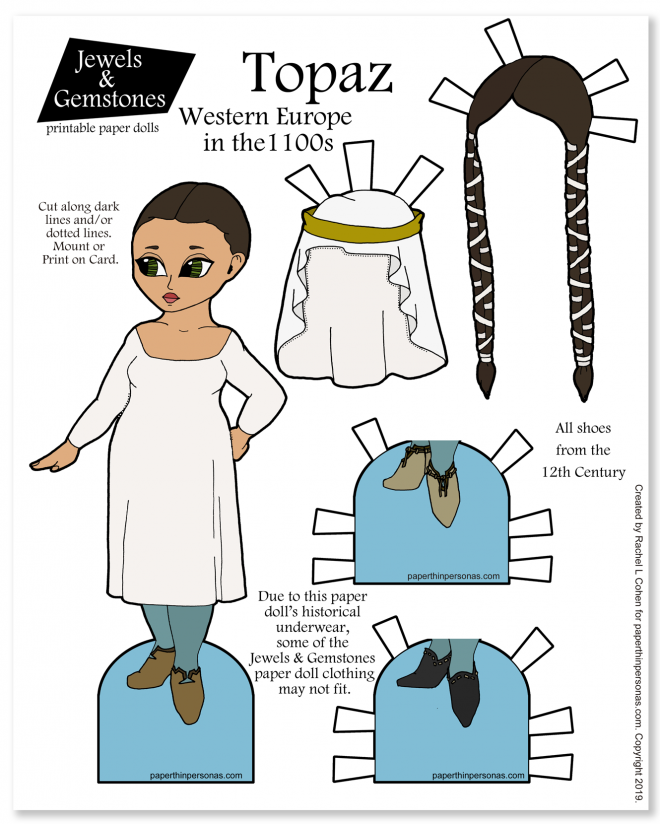
A printable paper doll coloring page of 1100s dresses with a paper doll and two gowns.

Download Black and White PDF | Download Color PDF | More Jewels & Gemstones 2.0

Topaz is wearing a shift based one illustrated in Roman de Giron le Courtois on Folio 87v. The manuscript dates from between 1370-1380 even though this is 200 years after the 1100s. Illustrations of women in shifts are just super rare, so you have to use what you can find. I made my version shorter and tighter than the originals, because paper dolls have to layer. Paper doesn’t fold like fabric.

Additionally, Topaz’s shoes all come from Stepping Through Time by Olaf Goubitz, a book on archeological footwear finds. It’s fascinating, but very densely written work. Her hair and headdress are based on illustrations from Women’s Hats, Headdresses and Hairstyles by Georgine de Courtais. Her veil is based on the one seen on the Ushaw Virgin, a brass from the British Museum, as is the dress on the right. The statue, Enthroned Virgin and Child, from The Met, was another source for the dresses. I also used some of the manuscript images from this German site on the Bliaut. All the illustrations are properly cited and that always makes me happy.

A printable paper doll with clothing from the 12th century. Great homeschooling history idea.

Download Black and White PDF | Download Color PDF | More Jewels & Gemstones 2.0

The bliaut is the subject of a lot of debate. Statues of the time show a very wrinkled, almost pleated fabric effect (like this), but illustrations by and large don’t. When they do show horizontal wrinkles across the abdomen they tend to be more subtle. I went with the more subtle option and the no wrinkles option. Inevitably, drawing fashions from history requires making editorial decisions, but I try to capture the silhouette of the period.

Books consulted in the creation of this paper doll included Stepping Through Time by Olaf Goubitz, Women’s Hats, Headdresses and Hairstyles by Georgine de Courtais, Medieval Dress and Fashion by Margaret Scott and Fashion in the Middle Ages by Margret Scott, though this last one was not helpful, particularly.

This is an era I’d like to learn more about. So, if anyone has a book recommendation I’ll happy accept it. Most of my books don’t cover this early period very well.

Today’s set was put together from pieces posted here on the blog last year and on Patreon.

A Celebration of Tudor Clothing

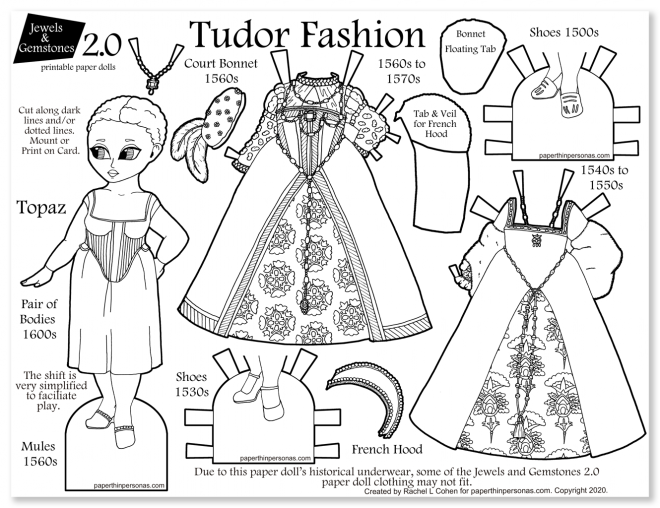
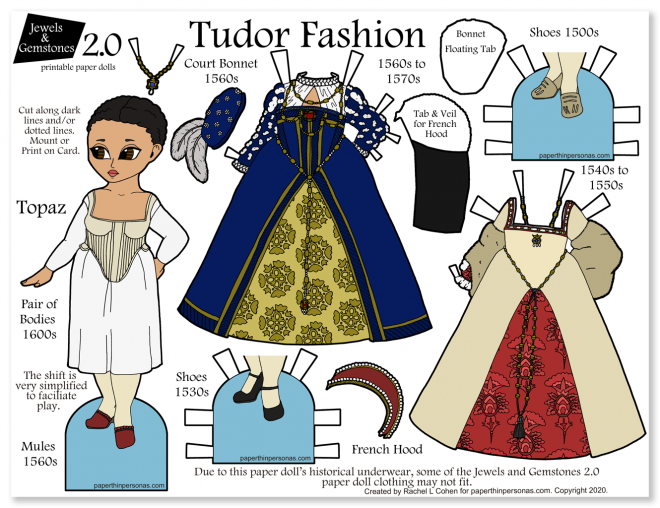
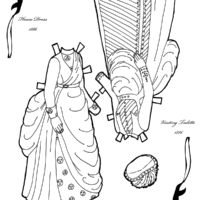
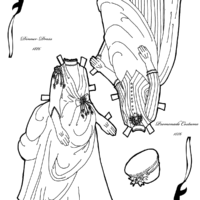
Today’s paper doll is my second Tudor clothing paper doll. My amazing patrons voted for Tudor as a historical era to explore, hence the focus on Tudor. Also, I realized I still didn’t know a lot about the clothing of this time period. My first Tudor clothing paper doll from the Jewels and Gemstones was Ruby and today’s paper doll is Topaz.
A little about this Tudor clothing- this portrait of a young woman from 1567 and this portrait of Susan Bertie inspired the dress on the left. The dress on the right is a Henrician gown. This portrait of Mary I and this portrait of Katherine Parr feature this style of dress in lighter colors than you usually see it. These portraits also show off French Hoods, a very popular headdress style. This portrait, often identified as Helena Snakenborg, is where I saw the court bonnet. I should note that the identification as Helena Snakenborg has never been proven.

Download Black and White PDF | Download Color PDF | More Jewels & Gemstones 2.0

First rule, I gave myself was that I was not going to make any dresses black. Don’t get me wrong, black fabric was wildly expensive in the 1500s and therefore very popular for portraits and people of wealth. Black is, however, one of my least favorite colors. It obscures line work, so I only used it for her hair and the veil for the French Hood. I didn’t see any French Hood’s that had veils of other colors. Also, I have no idea if French Hood is a proper noun and should be capitalized, but I am anyway.

I wanted to use colors I knew were common/referenced in source materials. According to sumptuary laws of the time only nobles could wear blue and there’s references in The Art of Dress by Jane Ashelford to tawny colored gowns. That’s why I chose to make one gown blue and the other a sort of beige color.

Download Black and White PDF | Download Color PDF | More Jewels & Gemstones 2.0

Topaz’s underwear is based on illustrations from the Tudor Tailor by Ninya Mikhaila and Jane Malcolm-Davies. The bodies are based on the famous Pfaltzgrafin Dorothea Sabine von Neuberg’s pair of bodies from around 1598. All of her shoes come from Stepping Through Time by Olaf Goubitz. Her underwear, as I noted on the paper doll, has been simplified to facilitate playing with the paper doll. An actual extant 16th century shift is at the V&A and you can see it here.
Other books I consulted about Tudor clothing were, in no particular order, were Tudor Fashion, The History of Underclothes, In Fine Style: The Art of Tudor and Stuart Fashion, and Tudor Costume and Fashion. And you can see some of my reference image so on my 16th Century Dress Pinterest board.

You can see all my Tudor paper dolls here. Up next on the historical paper doll front will be the 1970s and the 1890s. That was the other winners when I polled my Patrons.

A Tudor Clothing Paper Doll

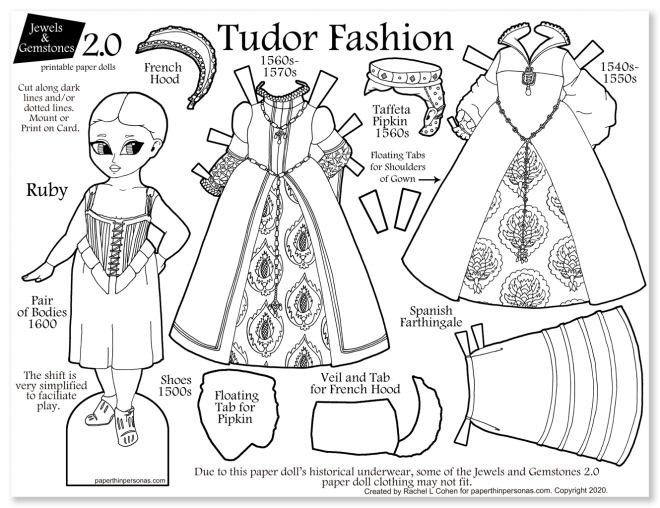
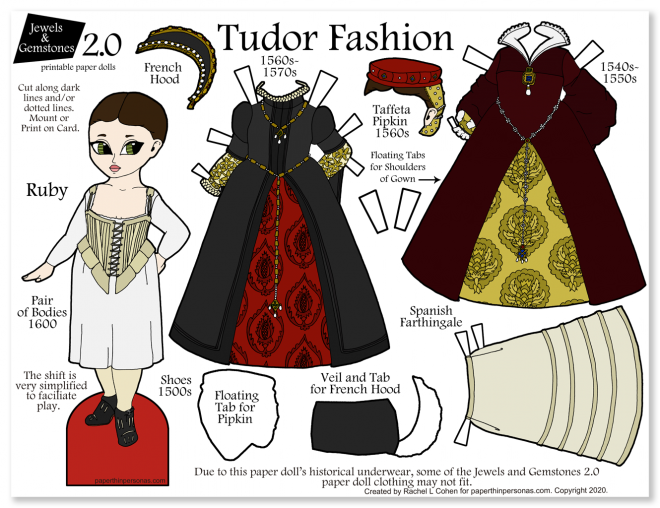
The last time I did a Tudor clothing paper doll, many years ago, I focused on Henrician gowns. You can see that paper doll here. This time, however, I wanted draw a few other styles from that period. So, along with the Henrician gowns I drew several later styles which were popular in second part of the 1500s, but don’t have easy names (or if they do, I don’t know them.)

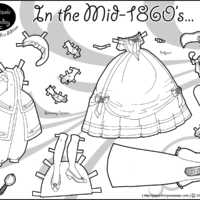
Today’s Tudor paper doll has two dresses. The dress on the left is from the 1560s to 1570s. I could find a name for this style of robe with hanging sleeves over petticoat, but you can see styles like this in this portrait of a Lady of the Wentworth Family from 1563, this portrait of an Unknown Lady from 1565-1568 and this portrait of Elizabeth Hardwick, Countess of Shrewsbury circa 1560s. Her dress on the right is a Henrician gown with a matching partlet filling in the low square neckline. These portraits of Queen Mary 1 and Lady Mary Dudley (c.1530–1586) show Henrician gowns with parlets.

Her underwear is a shift, which has been extremely simplified to deal with the sleeves of gowns (the sleeves would have been much fuller and ended in a ruffle/cuff.) Her pair of bodies are a combination of a set from an effigy of Queen Elizabeth in 1603 and those in a famous portrait of Elizabeth Vernon circa 1600. A well cited article about Queen Elizabeth I’s effigy bodies is Sarah Bendall’s Elizabeth I Effigy Bodies Reconstruction. The paper doll has a Spanish farthingale- cone shaped hoops to support skirts that is separate. Spanish Farthingale’s gave dresses their distinct triangular look.

A printable tudor clothing paper doll coloring page with two dresses and period underwear. A great homeschooling history project.

Download Black and White PDF | Download Color PDF | More Jewels & Gemstones 2.

For much of Europe’s history, women covered their hair. In the Tudor era, women wore headdresses called “hoods”. As far I can tell from my reading, the popularity of hood styles switched in and out depending on the current Queen. With Henry the 8th, that’s a lot of queens. While the French Hood was worn before (and after) Anne Boleyn, it is definitely most closely associated with her. I chose go with the French Hood, but there was also the English (or Gable) Hood and several other styles.

Her hat is a taffeta pipkin- a narrow brimmed cap made of paper and covered in thin silk taffeta. To cover the hair a jeweled cap was worn, which is a style that was also common in Germany.

A printable tudor clothing paper doll with two dresses and period underwear.  A great way to introduce kids to Tudor history and clothing.

Download Black and White PDF | Download Color PDF | More Jewels & Gemstones 2.0

So, let’s talk colors for a moment.

Black was one of the most expensive colors to dye fabric (in part because it look a lot of dye). Crimson and scarlet were also popular colors. I made one of her dresses primarily black and the other a very deep dark red, but it looks black depending on the computer screen settings I realized after I finished.

So, why a Tudor clothing paper doll, you might ask? Because my Patrons voted for it! The poll I shared with my patrons had a three way tie- Tudor, 1970s and 1890s. I’m still working on the 1890s and the 1970s.

I finished the Tudor clothing paper dolls first, because I had already been working on her underwear. Next up will either be 1970s or 1890s… I haven’t decided which one yet. Both are in progress.

If you’d like to get to vote on things like which paper dolls I draw, join us over on Patreon.

Victorian Fashion Paper Dolls From 1830-1900

I love Victorian clothing. It is one of my favorite eras of fashion, in part because of the dramatic silhouette changes throughout the century. I haven’t drawn much Victorian stuff lately, but I should. It is a fun time period to explore. I really want to do some Victorian dresses for the Jewels and Gemstones, I’m just trying to decide which decade. I’m leaning towards the 1870s, though they don’t have the best pose for the era.

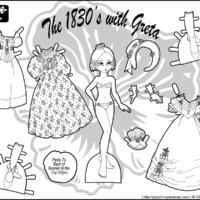
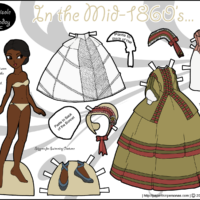
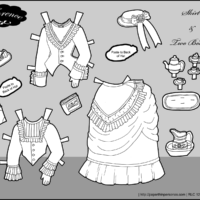
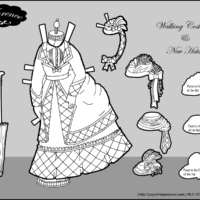
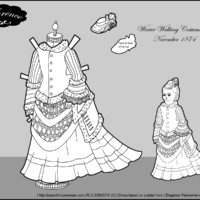
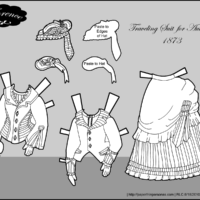
I am working with ta client on a Victorian gentleman paper doll and it’s been great fun. It made me think about all my Victorian paper dolls and how I had never gathered them all up and put them in one place for folks. So, here they all are (as of today anyhow.)

Victorian Printable Paper Dolls: 1830 to 1910

For me, Tom Tierney’s historical paper dolls were, perhaps, the largest influence on my own fascinating with historical clothing. I learned so much from his paper dolls- both history and artistry. Collecting all these together has made me think about how long it has been since I’ve dabbled in all things Victorian. I should do some more in this time period.

My OPDAG Paper Doll: A Foray Into Home Sewing Patterns of the 1940s

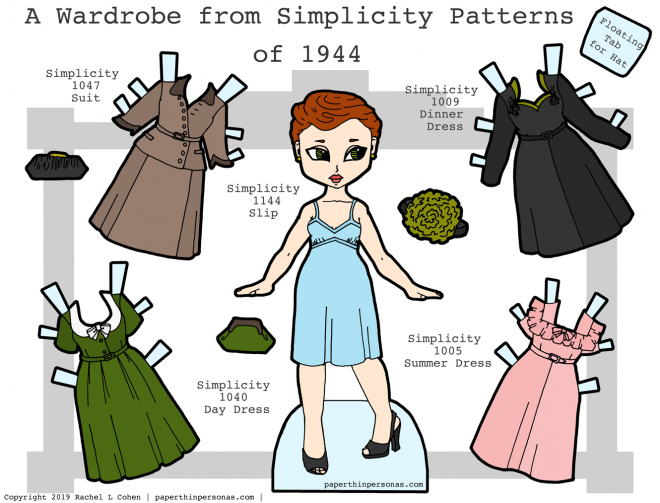
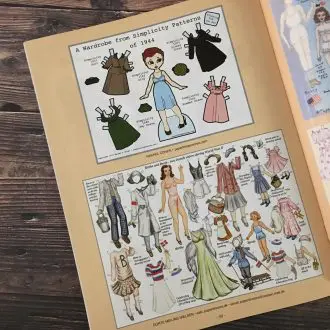
A paper doll with dresses from home sewing patterns from the year 1944 produced by Simplicity Patterns.

|PDF of My 1944 Paper Doll To Print |

I wanted to create a 1940s fashion paper doll around a theme, because honesty, I work better when I think in terms of theme, but I struggled a little to come up with an idea. After the paper doll was published in Paper Doll Studio Magazine, I had a great conversation with Julie of Paper Doll School and she suggested I should add some sort frame or something in the background. I have to admit, I do think it makes for a much more visually compelling paper doll.
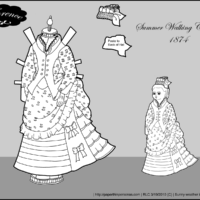
My 1944 Simplicity Patterns Paper Doll

After some thought, I settled on picking a single source for the doll’s wardrobe and what source could be better than sewing pattern covers?

Anyone whose followed the blog for any length of time knows how much I love sewing pattern covers.
Sewing patterns are a great source for vintage clothing, because they often take the high end designs that were showing up on runways and tone them down for a home audience. In a time where it really was cheaper to sew your own clothing, sewing pattern companies competed to bring the trendiest designs to market.

I chose to focus on Simplicity, because I find Simplicity designs of this era tend to be less high fashion than some of the other brands.

My source patterns were Simplicity 1005, view 2, Simplicity 1047, view 1, Simplicity 1009, view 2, and Simplicity 1040, view 2. Her slip comes from Simplicity 1144, view 2. Additionally, her hats and other accessories were drawn from the illustrations on these pattern covers.

I’m currently working on my contribution for the Renaissance theme for Issue 126. For those of you who know my paper doll poses well, while this 1944 uses the same base pose as my Spites paper dolls, I scaled her differently and I don’t think she can share clothing.

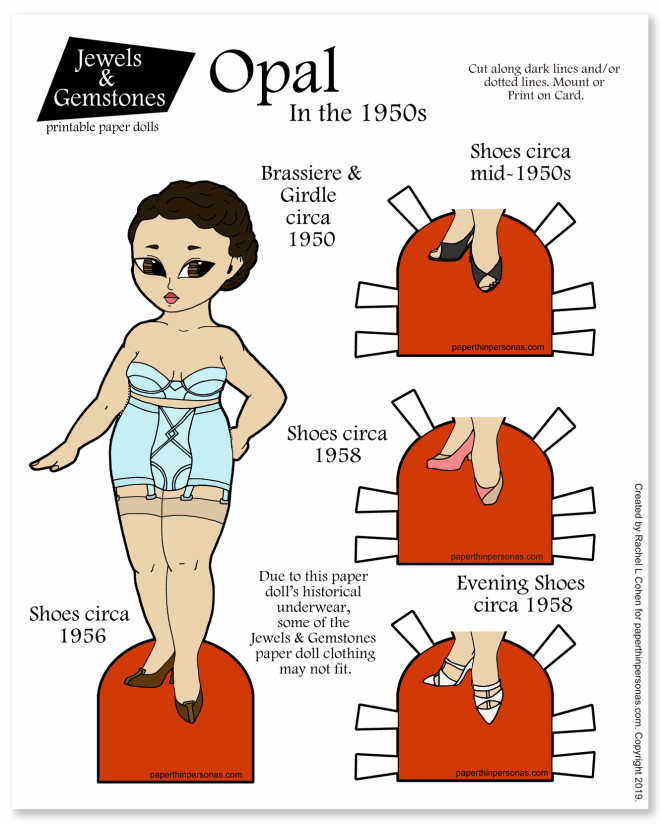
Opal in the 1950s

A 1950s fashion paper doll in period underwear with three pairs of shoes. She can wear any of the Jewels and Gemstones paper doll clothing including the 1950s outfits.

Black and White PDF | Color PDF | More Jewels & Gemstones Paper Dolls

Thoughts on Today’s Paper Doll
I love 1950’s fashion. So, clearly I wanted to make a 1950s fashion paper doll. I think it is one of the most beautiful eras of women’s clothing and probably that’s because I have a very 1950s figure myself. I tend to look good in 1950s dresses. Besides that, I think it’s sort of the last era where there’s really an idea of dressing for an occasion. There’s very clear lines in what is “casual” and what is “formal” and where things can be worn.

While I very much don’t want to live in the 1950s (I like that I can’t be fired from my job for getting pregnant), I really do love the idea of having outfits for different activities. Maybe it’s because I never feel like I know what to wear to anything and would love it if it was more clear cut.

I chose Opal for the model, in part because I never saw non-white historical paper dolls as a child and I try to be more diverse, especially in my historical paper doll creations.

Inspiration for Today’s Paper Doll
Okay, let’s start with shoes, because I love shoes. The sources for these shoes were all from the Met except one pair. So, these shoes, these ones and these ones all come from there. The middle pair is the outlier and it comes from LACMA and these are the source image.

Now, let’s talk underwear. Our 1950s fashion paper doll, Opal, is wearing a girdle and strapless bra combination. In order to make sure she could share clothing with Sapphire from the 1950s, I matched the shapes of their underwear. Opal’s girdle is based on this 1950’s American one and her brassier is based on this 1950s French model, both from The Met.

Opal’s hair is a nod to Ava Gardner’s short hair style (she had a few) which you can see here and here. I’ll confess I don’t think it came out quite as I’d hoped it would.

Specific Source Images:There’s a lot here, so here we go- this girdle, this brassier, these shoes, these shoes, these shoes, these shoes and this hair.

Learn/See More
On the Blog: More Jewels & Gemstones paper dolls & More 1950s Fashion for Paper Dolls
Around the Internet: Claricia Psalter from the Late 12th Century

Last Thoughts
I wanted to collect up all the 1950s paper doll dresses I’ve created for the blog and put them together, so you can easily grab some clothing for poor Opal here whose just in her undergarments. If you’re a 2 dollar and up Patron, there’s two more- a suit and a day dress both from the 1950s.

1950s Fashion Paper Dolls for the Jewels & Gemstones

Do you like the 1950s? Let me know in a comment. It is one of my favorite eras. Do you have a favorite decade for 20th century fashion?

What Is a Bliaut? 12th Century Dress with History & Paper Doll Download

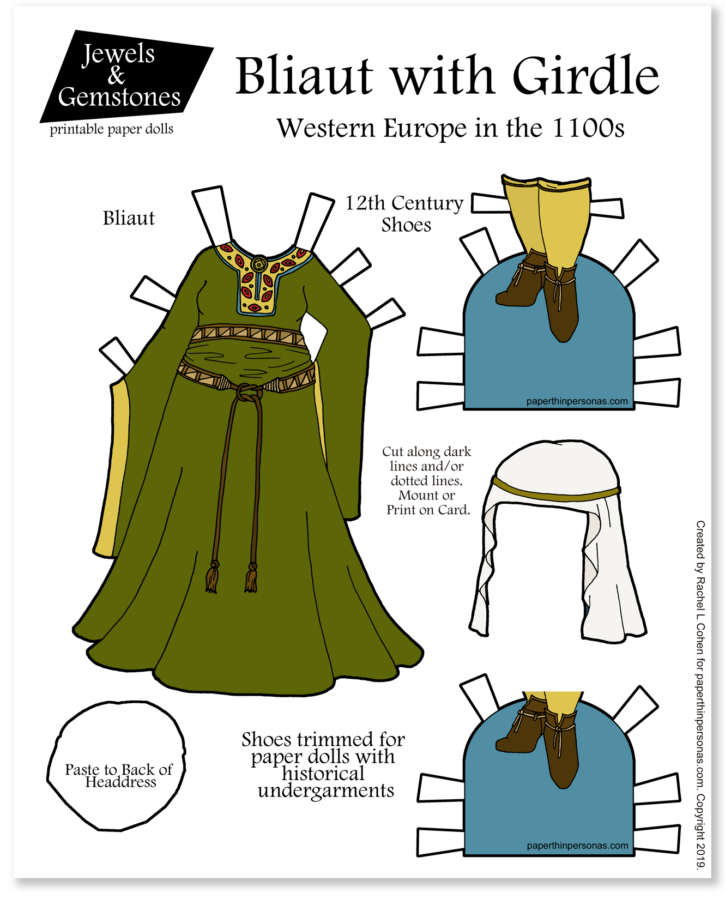
A printable paper doll with 12th century clothing including a bliaut, girdle, headdress, stockings and shoes. A great homeschooling history activity or just a fun paper doll for anyone who likes medieval fashions.

Black and White PDF | Color PDF | More Jewels & Gemstones Paper Dolls

So, I’m still deep in the world of medieval paper dolls, specifically the 1100s and 1200s. The 1300s dolls haven’t even made it to the sketchpad yet, so for now, I’m sticking with what’s drawn and researched.

In the meantime, let’s talk about a fascinating 12th-century garment: the bliaut. (Can I admit I’m still not totally sure how to pronounce that word?) It’s that wide-sleeved gown that most people associate with medieval ladies. A gown with long, dramatic, and richly draped sleeves. While it’s iconic in pop culture (and the Victorians loved painting it), there’s actually a lot of debate about it.

The bliaut was worn by both men and women, often layered over a kirtle (under dress) or under a cloak. Its length varied by region. In France, they were long and flowing, while in Germany, illustrations often show a shorter bliaut over a longer underdress. These variations hint at distinct regional styles across medieval Europe.

Inspiration for Today’s Paper Doll

Okay, so I looked at a lot of pictures and a lot of statues and I read a bit. Here’s what I understand: The bliaut is the subject of a lot of debate, as I mentioned above. Statues of the time show a very wrinkled, almost pleated fabric effect (like this), but illustrations by and large don’t. When they do show horizontal wrinkles across the abdomen they tend to be more subtle (like this). Additionally, smaller statuary (like this one) doesn’t show wrinkles across the abdomen.

So, what’s going on with the wrinkles?

Costume historians have a few theories:

  • Cutting fabric on the bias and lacing it at the sides to create horizontal tension.
  • Constructing a separate bodice and attaching it to the skirt.
  • Complex pleating or gathering techniques that we no longer use or fully understand.

For my illustration, I chose a more subtle wrinkled look, aligning with the manuscript art. The extreme wrinkles seen in large French cathedral sculptures don’t appear as consistently in other sources, and I’m a librarian, so I decided to go with what I’m most comfortable with, manuscript illustration.

Specific Source Images: Cathedral of Notre-Dame de Chartres Statuary (see this picture) & Stuttgart WLB, cod. bibl. fol. 57, origin: Zwiefalten abbey circa 1125-1130, f. 55 as pictured here (retrieved 9/9/2019).

Learn and Explore More

Final Thoughts on the Bliaut

While I don’t claim to have a definitive opinion on how bliauts were constructed, I do find the ongoing debate fascinating. The theory I find least plausible is the “separate bodice and skirt” construction. I’ve seen it floated online without solid citations, and it would require bodices to appear centuries earlier than we typically see them, then disappear again for 300 years. Not impossible — but definitely implausible.

Still, I’d love to hear from readers who’ve researched this more deeply! Feel free to share your thoughts in the comments. But kindly, please. I’ve received oddly intense and aggressive emails over medieval fashion debates, and I just don’t want to deal with that.

And if you need a paper doll with proper hair and undies for this era, grab Topaz in her 1100s underwear. The 1200s Lapis can also do in a pinch, if you’re more partial to redheads.

Topaz in the 1100s Undergarments and Shoes

A 12th century fashion paper doll with shoes, wigs and historical underwear.

Black and White PDF | Color PDF | More Jewels & Gemstones Paper Dolls

Thoughts on Today’s Paper Doll
I am super excited about this collection of paper dolls. I love costume history. Sometimes, I feel like despite my love of the topic (or perhaps because of it), I get a little paralyzed feeling like I have to do so much research before I can create something and worrying about the quality of my sources. This worries me less in eras I am confident in, such as the 19th and 20th century, and worries me more in eras I am not confident about.

But then I won’t learn or get better if I don’t practice drawing these periods, so I think it is okay to not be perfect. Even more importantly, I think you have to start with in perfection or you never move forward.

Inspiration for Today’s Paper Doll
Like last week’s Lapis, this week’s Topaz is wearing a shift based one illustrated in Roman de Giron le Courtois on Folio 87v. The manuscript dates from between 1370-1380. Illustrations of women in just shifts are exceedingly rare, so even though this is 200 years after the 1100s, I am still using it. I made my version shorter and tighter than the originals probably were to facilitate the paper doll layering clothing over the shift. Paper dolls have to layer.

Additionally, Topaz’s shoes all come from Stepping Through Time by Olaf Goubitz, a book on archeological footwear finds. It’s fascinating, but very densely written work. Women’s Hats, Headdresses and Hairstyles: With 453 Illustrations, Medieval to Modern by Georgine de Courtais was the book I used for her hair and headdress, along with this statue, Enthroned Virgin and Child, from The Met.

Specific Source Images: Roman de Giron le Courtois Bibliothèque nationale de France. Département des manuscrits. NAF 5243 (f.87v) &  Enthroned Virgin and Child ca. 1130–1140, The Met, Accession Number:47.101.15.

Learn/See More
On the Blog: More Jewels & Gemstones paper dolls & More from the Ballet and Dancing collection
Around the Internet: Claricia Psalter from the Late 12th Century

Last Thoughts
I’d like to give a shout out to my Patreon supporters, because without you all, the blog wouldn’t happen.

Additionally, later this week there will be a gown from the 12th century (aka the 1100s) and I am excited to share that though I am also nervous about how little I know about this era. However, this is how I learn, so there you go!

13th Century Sleeveless Surcoat over Dress

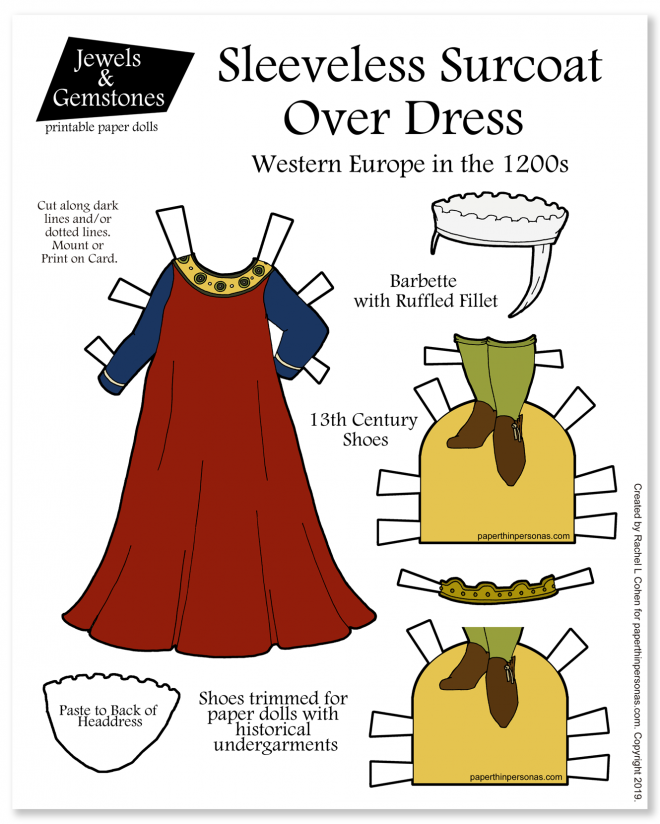
Free to print, a historical paper doll outfit from the 13th century surcoat design with a headdress and shoes with stockings.

Black and White PDF | Color PDF | More Jewels & Gemstones Paper Dolls

Thoughts on Today’s Paper Doll
Today’s paper doll dress is a surcoat (over-dress) over another dress. As far as I can tell, this style came into fashion in the second half of the 13th century and sticks around in various forms for over 100 years. As I said when I was showing off Lapis and her 13th century undergarments, I am not an expert on this time period. At best, I am a dabbling amateur. However, one thing I did notice as I looked at many many pictures was that the 13th century is similar to the 14th century, if they hadn’t yet mastered curved seams and tailoring techniques.

So, while in the 14th century they have sideless surcoats over fitted kirtles, that is not what you see in the 13th century. You see their predecessors- a sleeveless surcoat over a dress where just the sleeves are visible and there’s no waist as far as the eye can see. This style does continue into the first part 14th century- here is an example. Later the armholes lengthen, these surcoats are in the later 14th century style.

Clothing rarely confines itself to neat time ranges, but rather tends to ease over years and decade markers.

Inspiration for Today’s Paper Doll
As usual, the shoe designs come from Stepping Through Time by Olaf Goubitz, an excellent, in exceedingly dry, book on historical footwear. The surcoat is based on this illustration and this illustration while the headdress comes from here, but also from all the looking at headdresses I did when drawing Lapis.

Specific Source Images: Biblia Porta, Lausanne, Bibliothèque Cantonale et Universitaire, U 964 (fol.178r),  Collection of poems in Old French, Bibliothèque de l’Arsenal- Arsenal 3142 (f.292r), Romance of Alexander, England, Cambridge University Library- Cambridge MS O.9.34 (f.25v), this recreation of 13th century dress & this recreation of 13th century dress

Learn/See More
On the Blog: More Jewels & Gemstones paper dolls, Lapis with her 13th century underwear & Everything I’ve Drawn from the 13th Century
Around the Internet: Illumanu (a tumblr devoted to manuscript illustrations of clothing & dress is one of my goto places for illustrations), Manuscript Miniatures (a website that collects manuscript miniatures) & the amazing Gallica, the digital library of France

Last Thoughts
I previewed a lot of this collection over on Patreon. So, thank you to all my Patrons to encouraged me to continue even though I was a little nervous. Reminder: There’s an extra paper doll outfit every Friday, plus previews of what I’m working on and polls and things. Check it out!

Rarely have I wished I knew more medieval Latin, but when I am looking for primary source illustrations of clothing I do. It’s very hit and miss, but I do my best with my limited knowledge. I respect people who do recreations of these garments, but I wish more of them properly cited their source images. It’s very frustrating to find a great illustration from an illuminated manuscript, but have no way of knowing where it came from. I won’t use anything that doesn’t properly cite a source. I’m a librarian, after all. I have some standards.

Lapis in the 1200s

Black and White PDF | Color PDF | More Jewels & Gemstones Paper Dolls

Thoughts on Today’s Paper Doll
There are time periods where I feel like I know a fair amount and then there are time periods of fashion history where I feel (and I am) quite ignorant. The 1200s are one of those time periods. It’s not an era I have a great deal of natural interest in (sorry 1200s) and I don’t really feel like devoting the long hours of research to it. Also, I think the headdresses look funny.

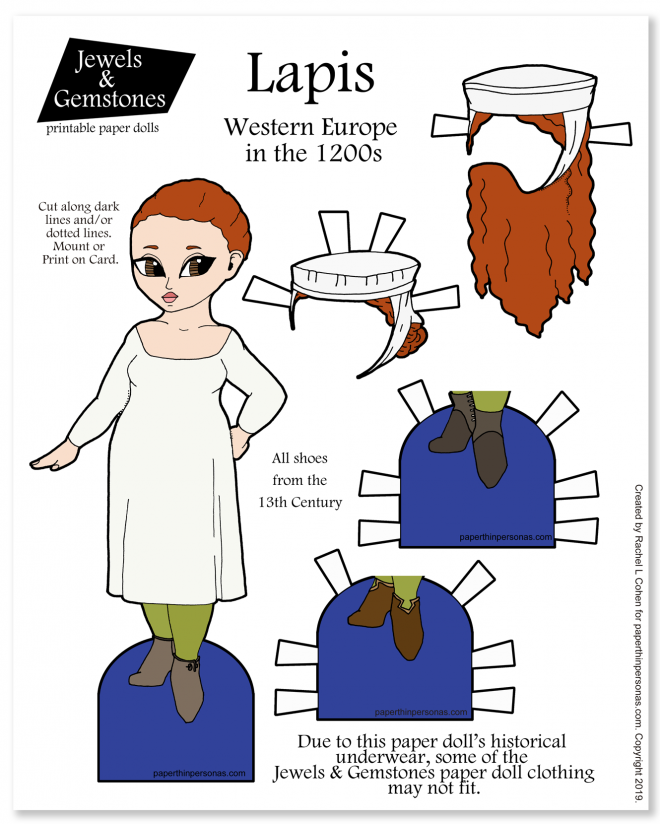
So, all of that is to say that I noticed the basically the only different from the 1100s through the 1300s was headdresses and the undergarments all stayed pretty much the same. There are some documented differences in the 1400s, but I’ll get into that when I get around to drawing it. The result of this discovery was excitement when I realized I could draw the same shift and basically have a period underwear wearing paper doll for a 300 year time period.

This was very exciting. (Listen, I know this wouldn’t be exciting to normal people, but I make my own fun.)

So, this is the first of a series of paper dolls from the 1100s, 1200s and 1300s.

Inspiration for Today’s Paper Doll
Lapis is wearing a shift based one illustrated in Roman de Giron le Courtois on Folio 87v. The manuscript dates from between 1370-1380. Yes, I realize that’s like 100 years later than this paper doll, but here’s the thing- illustrations of women in just shifts are exceedingly rare, so I am going to take what I can get. A few differences in my rendition are that the length is a little shorter and the style is quite fitted. Both of these changes were done to facilitate the paper doll layering clothing over the shift.

Her headdresses are in the style of the barbette and fillet. The barbette is the piece that goes under the chin and the fillet is the pillbox hat looking piece that wraps around the head. One point I couldn’t quite sort out was whether the fillet was open or closed at the top. This manuscript illustration looks closed while this manuscript illustration it could go either way. These ones look closed while this one is definitely open.

In the end, I went with Women’s Hats, Headdresses and Hairstyles: With 453 Illustrations, Medieval to Modern by Georgine de Courtais where fig 13 on shows it closed and that was my decision. I maybe totally wrong. The book was originally published in 1986, which while not super current, is current enough for me to feel fairly confident in it. Unlike, for example, books on historical costume first published in the 19th century when I have serious doubts about the quality of the scholarship.

The designs for her shoes come from Stepping Through Time by Olaf Goubitz, an excellent, in exceedingly dry, book on historical footwear.

Specific Source Images: Roman de Giron le Courtois Bibliothèque nationale de France. Département des manuscrits. NAF 5243 (f.87v), Lausanne Bibliothèque Cantonale et Universitaire, U 964 (f.93v),  The Old Testament The Pierpoint Morgan Library, MS M.638 (f.33v) & Decretals by Gregory IX, with the apparatus of Bernard of Parma, University of Oxford, Bodleian Library,  MS. Lat. th. b. 4 (f.168r)

Learn/See More
On the Blog: More Jewels & Gemstones paper dolls
Around the Internet: Illumanu (a tumblr devoted to manuscript illustrations of clothing & dress) & a beautiful reproduction outfit here

Last Thoughts
I’m tossing this out to the audience today, because there’s a high chance someone out there knows way more about 1200s clothing than I do. That would not be hard. Was the fillet open on the top or closed? Because I can’t seem to get a clear answer on that one. Thoughts? (And if you tell me your sources on why you think one or the other, I would be eternally grateful.)

Over on Patreon, there’s an extra paper doll outfit every Friday, plus previews of what I’m working on and polls and things. Check it out!

Regency Fashions: Dress, Spencer and Bonnet

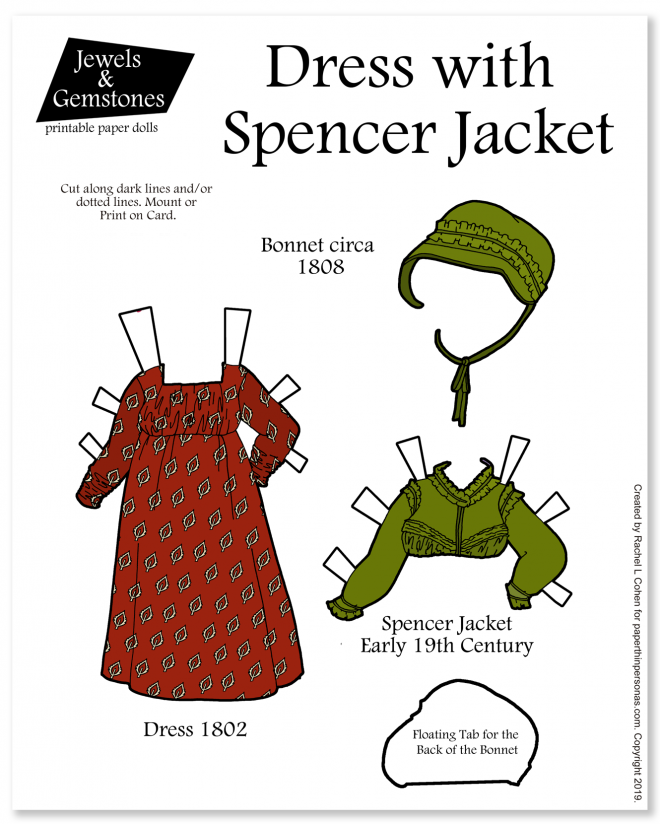
A Regency era round gown from 1802 in printed cotton with a Spencer jacket and bonnet for the Jewels and Gemstones Printable paper dolls. You can print the paper doll set in color or black and white for coloring. Free to print from paperthinpersonas.com.

Black and White PDF | Color PDF | More Jewels & Gemstones Paper Dolls

Thoughts on Today’s Paper Doll
I’ve been a on regency romance novel reading kick. I just finished the whole Pennyroyal Green Series which was okay. I confess that when it comes to my regency romance novels (or historical romances in general), I really only expect one out of five to be really good. Two out of five usually fail the 50 page test. (This is, for the record, where I read 50 pages and if I don’t want to continue I stop reading.)

It’s just that there are so many regency (and historical, I’m flexible on time period) romances in the world that I don’t see any reason to waste my time with ones that don’t engage me.

Anyway, since I have been enjoying this particularly fluffy genre, I remembered I had one regency dress I made a while ago that I hadn’t yet gotten around to sharing.

Inspiration for Today’s Paper Doll
So, the red dress is round gown. This was a style that was popular in the every early part of the 19th century and really evolved pretty directly out of the Chemise A La Rein . A lot of round gowns have trains, but not all. Most have very high waistlines and rounded out skirts. The style sticks around until about 1810 or so when it is replaced by more structured garments. Making things a bit more confusing is the fact that the round gown can refer to 18th century styles that fastened in the front. So, this make the terminology a bit of a nightmare.

Generally, though not always, you can sort of get a sense of the era of a garment in this period by how high the waistline is. The higher the waist- the earlier the gown. But fashion trends moved a bit more slowly than they do today and, like today, a lot of people wore what they liked even if it was a year or two out of date. After all, not everyone wears skinny jeans now.

When I was picking source images for this collection, I wanted to stay before 1810, though I wasn’t super picky about year.

Specific Source Images: This 1802 English Round Gown, This Undated Spencer (it’s undated, but the very very high waist is indicative of the very early party of the 19th century), and bonnets like these from 1808.

Learn/See More
On the Blog: More Jewels & Gemstones paper dolls & More Regency paper dolls
Around the Internet: Here’s a few nice articles I found- one on the changing Regency silhouette, 18th Century Round Gowns (earlier than this one), and another nice example from The Met of the style

Last Thoughts
While I don’t really know if I have favorite periods of fashion history, I do have periods I seem to go back to more than other periods. I think part of why I like the regency era is that there were so many amazing fashion magazines of the time that make it really fun (and fairly easy) to get a good idea of what was in style.

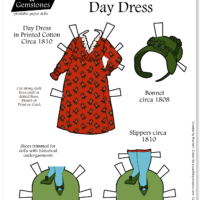
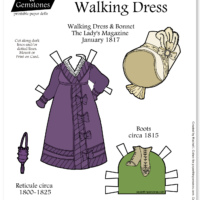
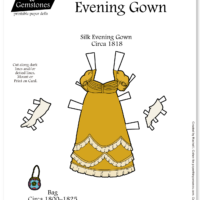
It occurs to me that some might have missed all of the Jewels and Gemstones Regency paper dolls thus far, so here they all are. There’s also a Dinner Dress and a Morning Dress for my Patrons. If you enjoy the blog than consider becoming a patron, there’s an extra paper doll dress for my Patrons on Fridays.

The Jewels & Gemstones Regency Dress Thus Far

As usual, comments are always delightful and I’d love to hear what you think about today’s regency paper doll dress. Is there an era of fashion you really love?