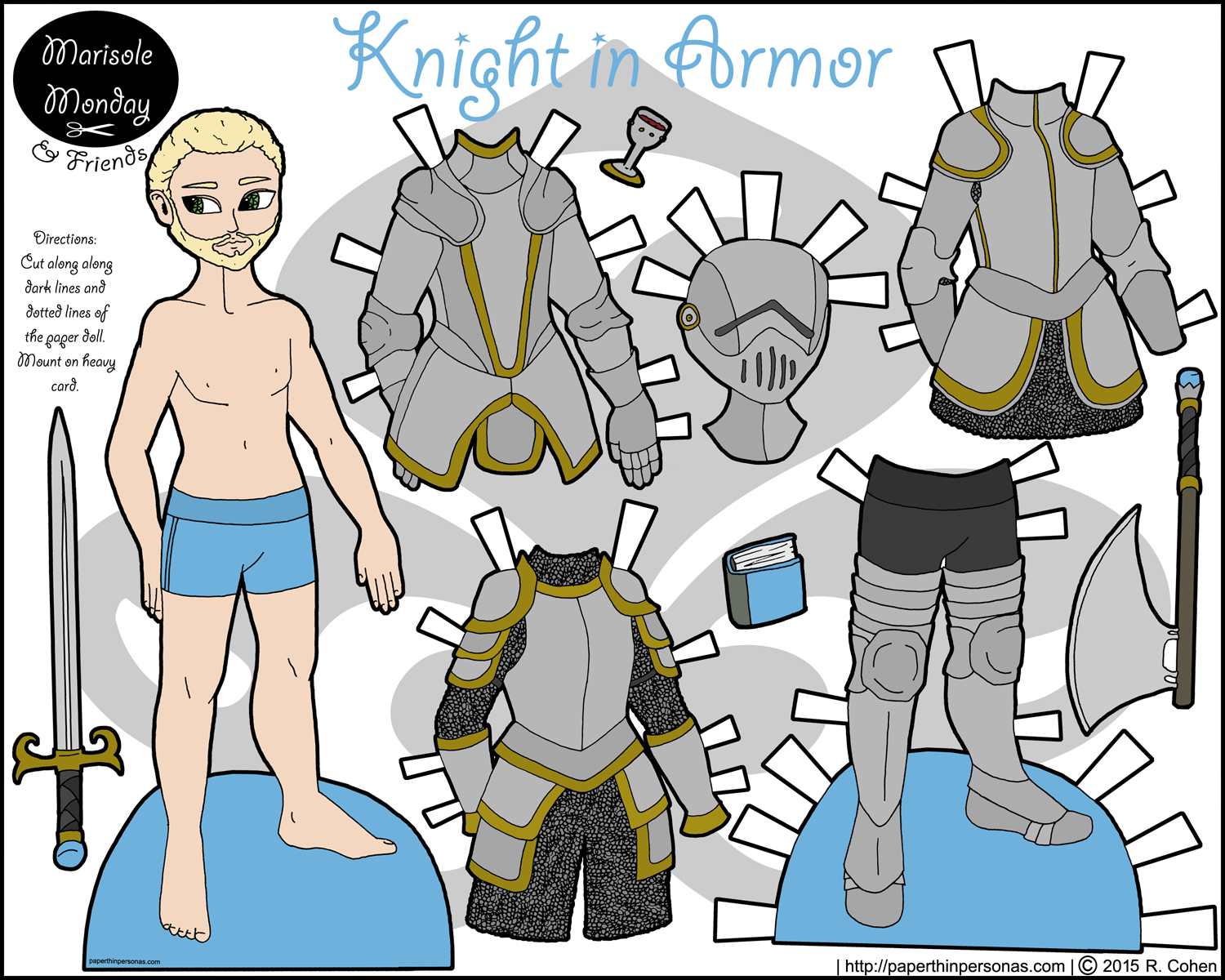
 One of my good friends has nicknamed this paper doll, “Beardy Swordsman!”. I have decided to go with the poll name winner and call him Mikhail. Personally, I was rooting for Mikhail to win and that was my vote. I feel a little guilty because Mikhail won by just one vote and that might have been me. Still, I’m allowed to vote in my own polls, right? I didn’t vote more than once…
I decided to make a knight paper doll as the first of the Mikhail paper dolls, not out of any particularly grand plan, but because I think a lot about the sort of stories you might want to play out with the paper dolls. Back when I was a kid and I played with paper dolls, the narrative provided by the paper doll book rarely worked out as written. With a wedding set, I might decide I actually liked the Maid of Honor paper doll better than the Bride paper doll and she was going to run off with the Groom and the Best Man was actually the older brother of the….
Well, you get the idea.
So, when I create paper dolls I think about the types of stories you might want to tell. Since every doll of a series can share outfits with every other doll of the same series, Mikhail and Marcus can exchange clothes. Now along with being airship mechanics or casual dates, they can also be knights who rescue princesses or knights who get lost in swamps and need to be rescued themselves.
Several years ago, I met a young lady who was four (I think) and who very much wanted to be a knight. I thought to myself, “Good for you.” I drew a knight paper doll for her, but every time I draw a knight, I think of that young lady.
In a totally unrelated note, as many of you know, I am currently conducting a survey. (At this point, my daily readers are like… Can she shut up about the Survey already?) I would ask that if you haven’t filled it out, please do so. It’s about developing products to open a Paper Thin Personas store in the next year. It should only take about 15 minutes and would be uber-helpful and I’ll send you a thank you paper doll if you leave me your email at the end. (The emails are deleted out of the survey results immediately to keep things as anonymous as humanly possible. So, don’t worry about that.)
Thanks again to everyone whose already done the survey! I’ve learned a lot from everyone’s comments and responses. Maybe at the end, I’ll do a post about some of the stuff I learned? I don’t know… does that violate the principle of an anonymous survey? Thoughts from my readers?
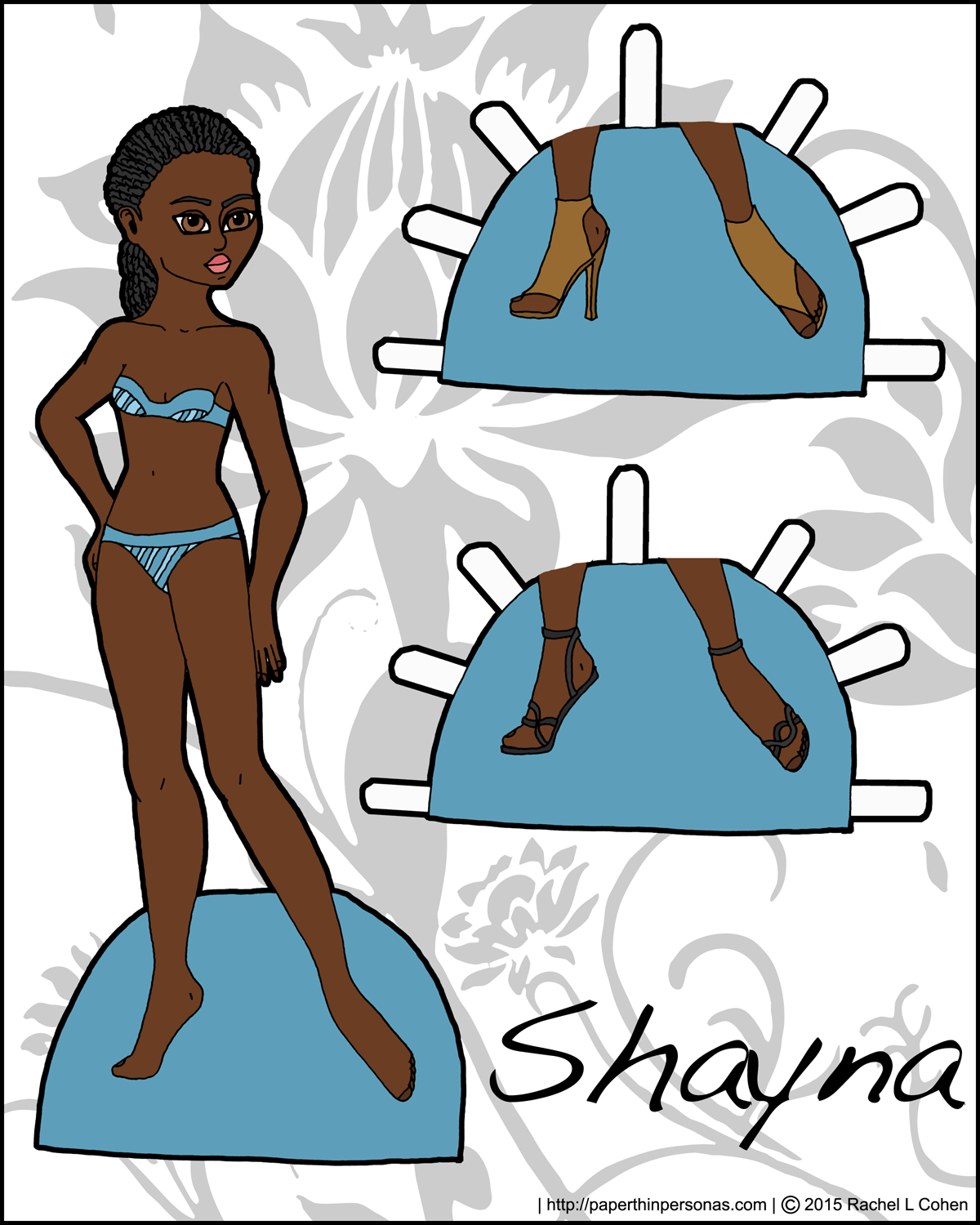
 Today’s paper doll is named Shayna. Shayna is a Yiddish name that means “beautiful”. I also liked it, because it was close to Shauna which was the name of my best friend in college and, also, one of my roommates for several years. Shauna, it should be noted, looked nothing like my paper doll Shayna. I don’t really draw paper dolls of my friends, even though I do sometimes name them after them.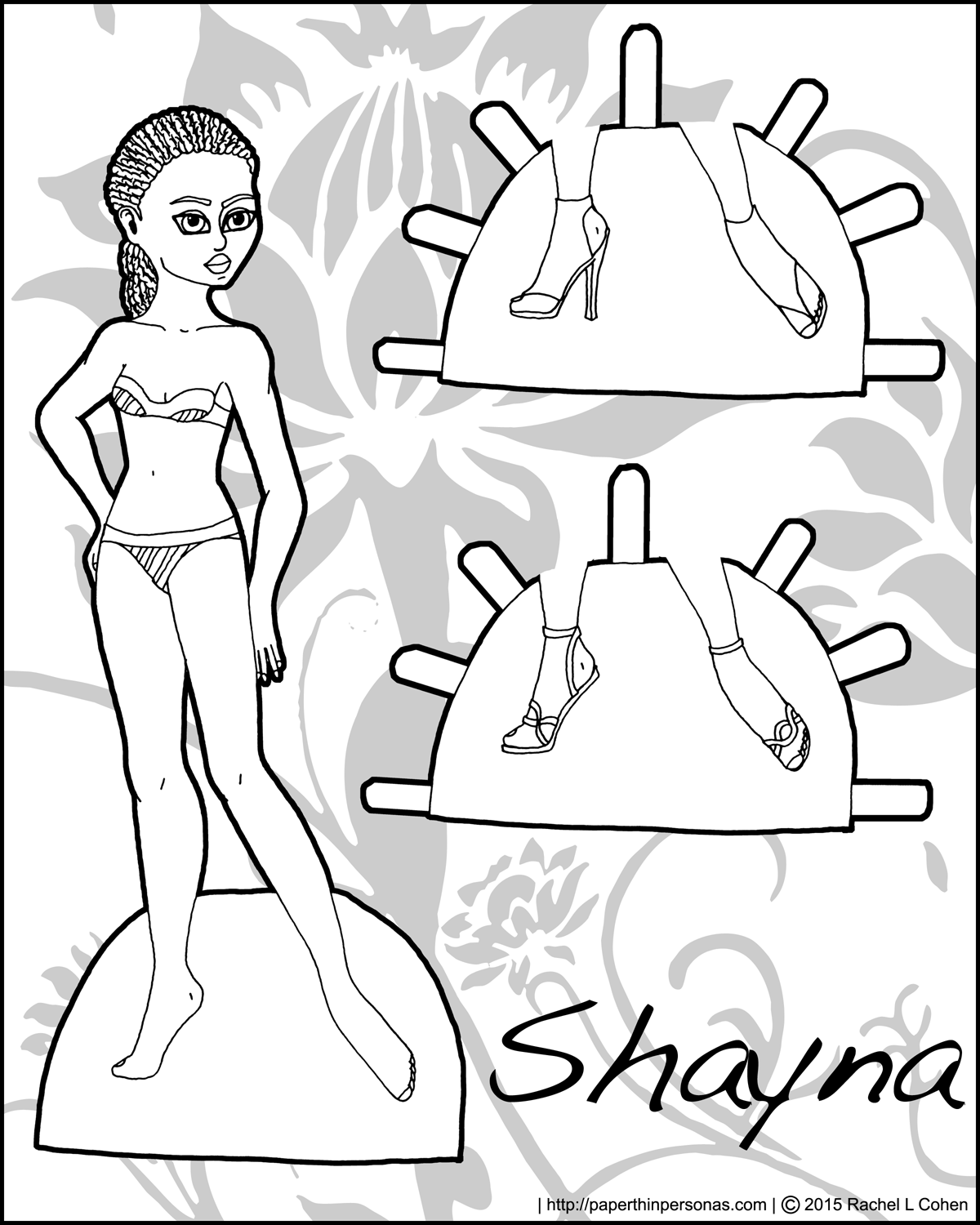

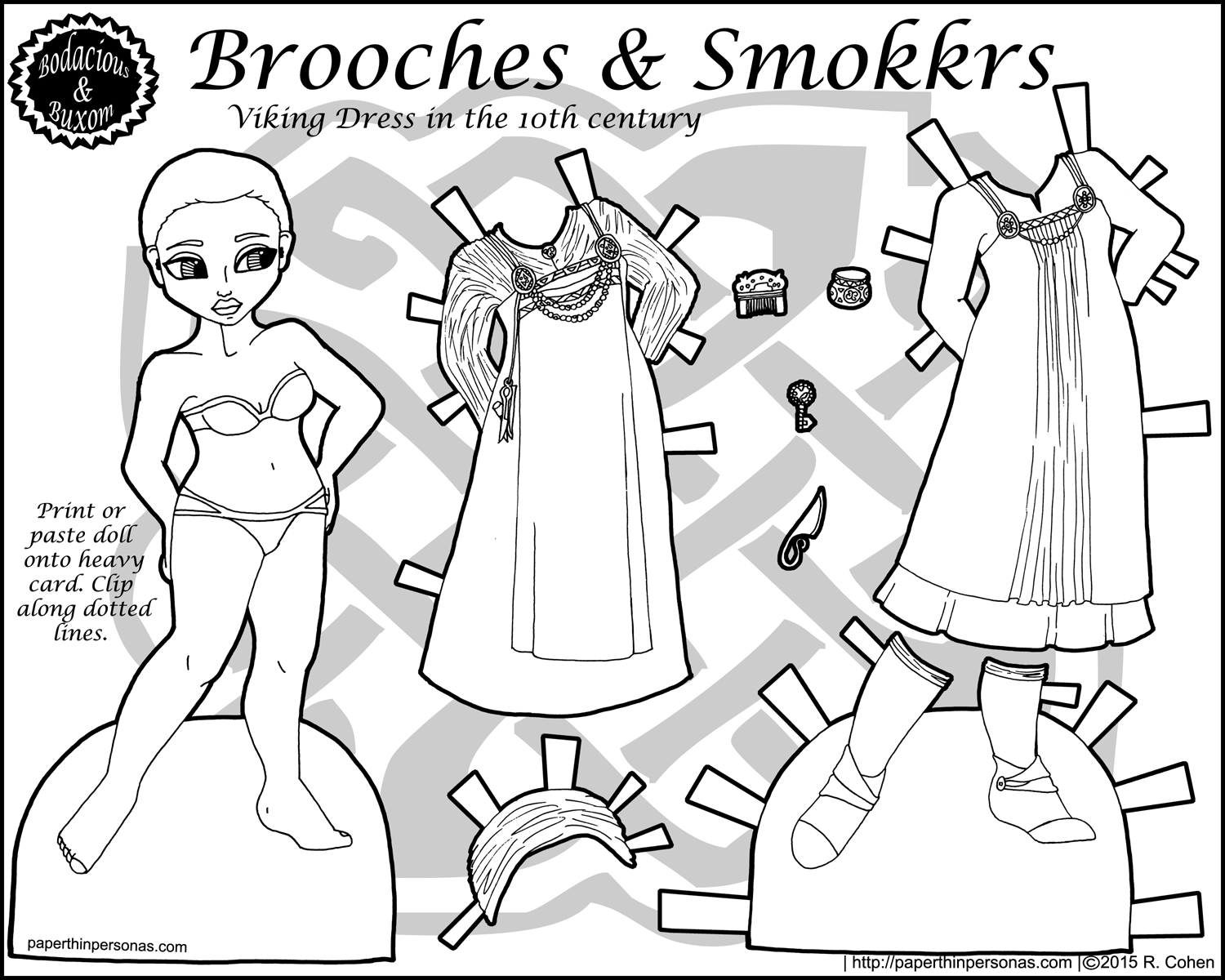
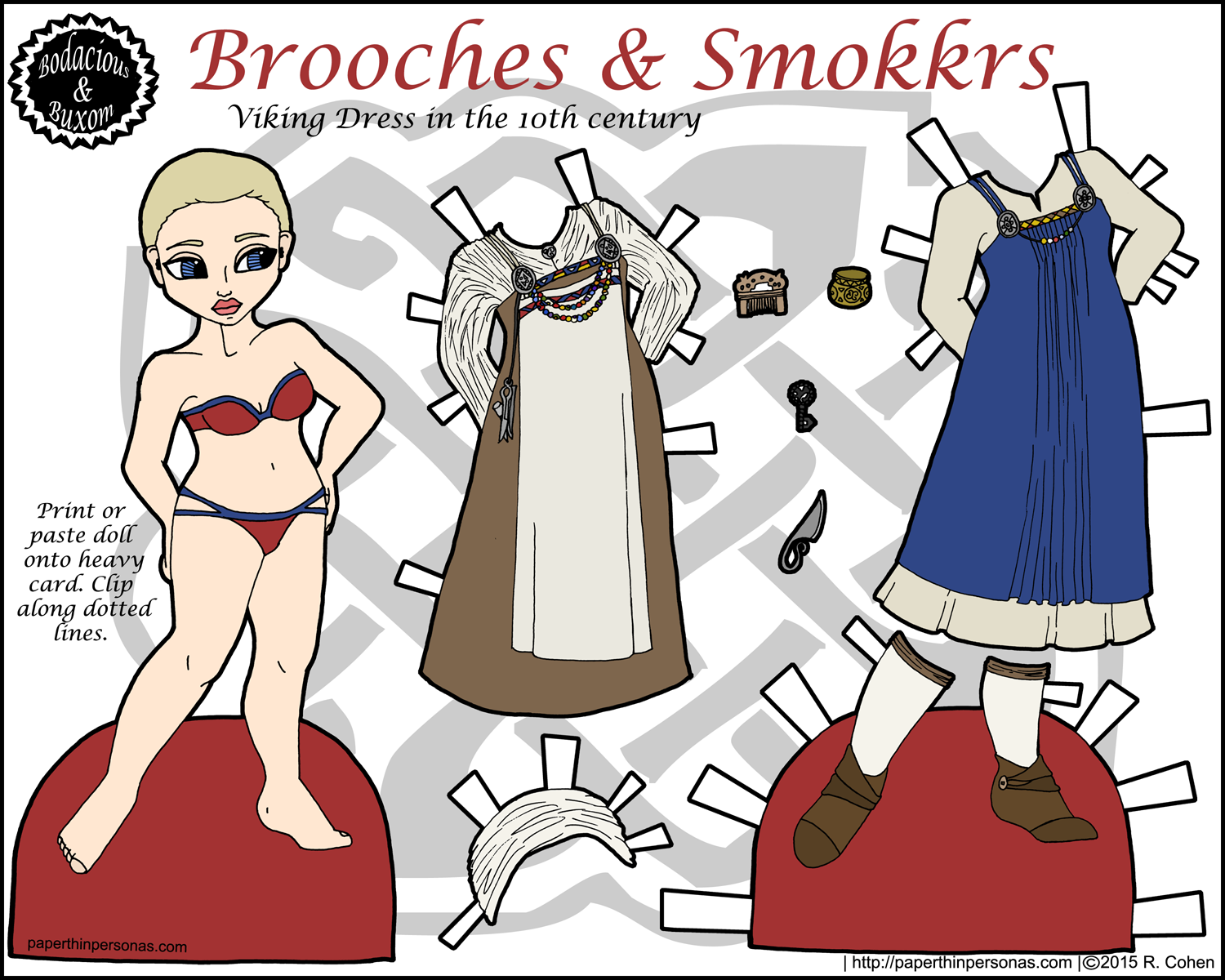
 I am so excited about this week… there are going to be a Vikings on Friday and a post about historical Viking dress on Wednesday and, of course, today we have an alien paper doll in color. What could be more fun than aliens and Vikings? (Maybe pirates and aliens and vikings, but lets not be greedy.)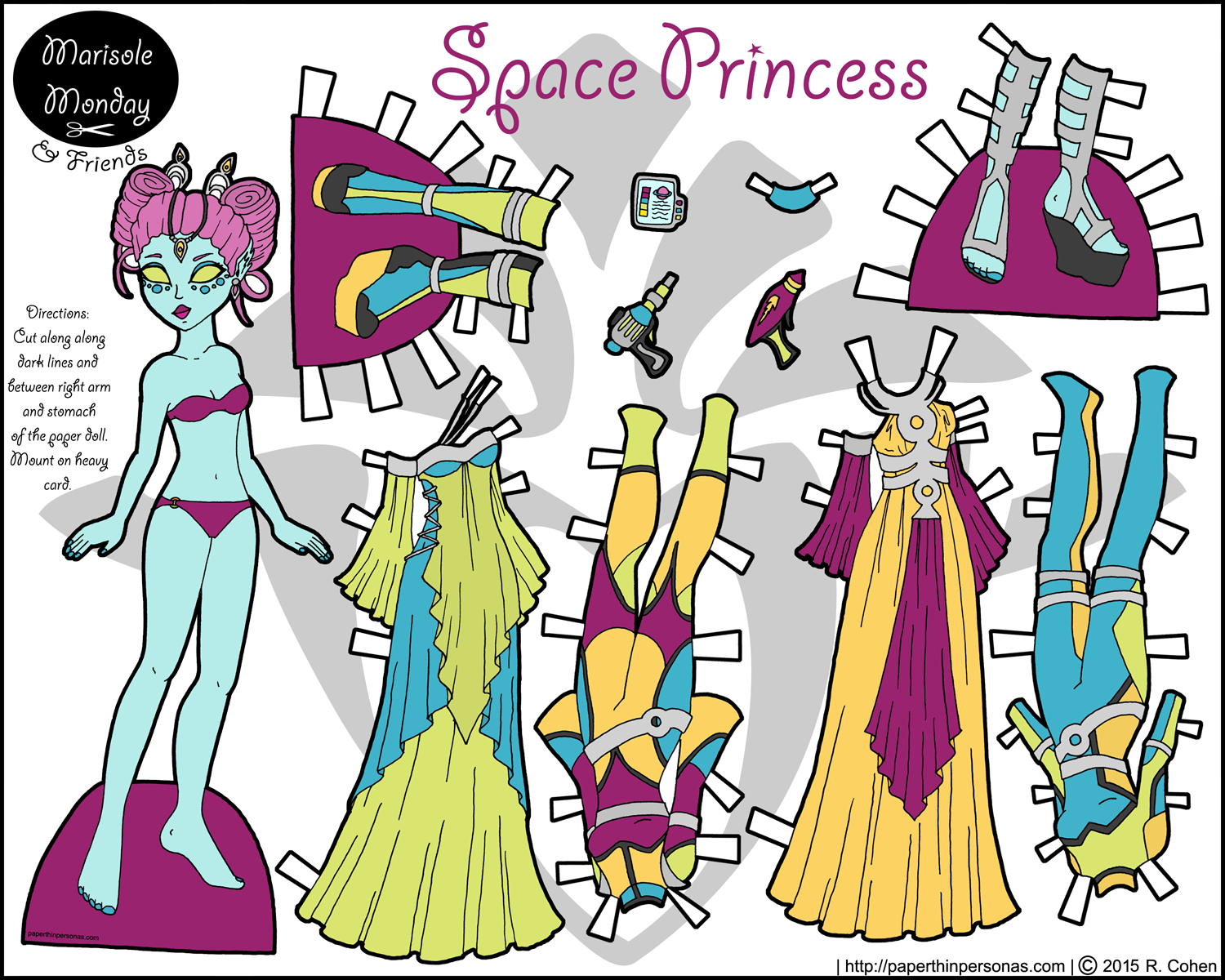
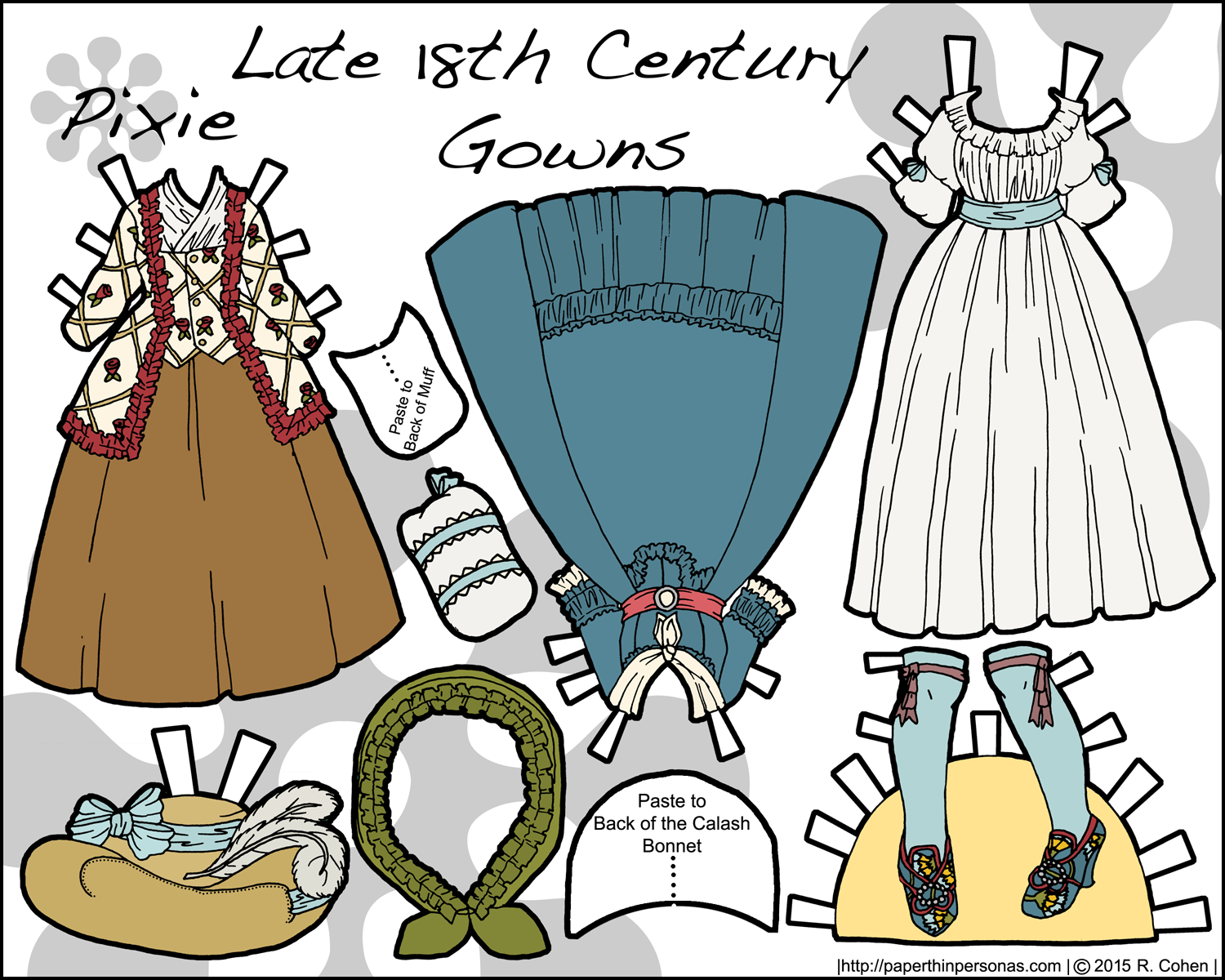
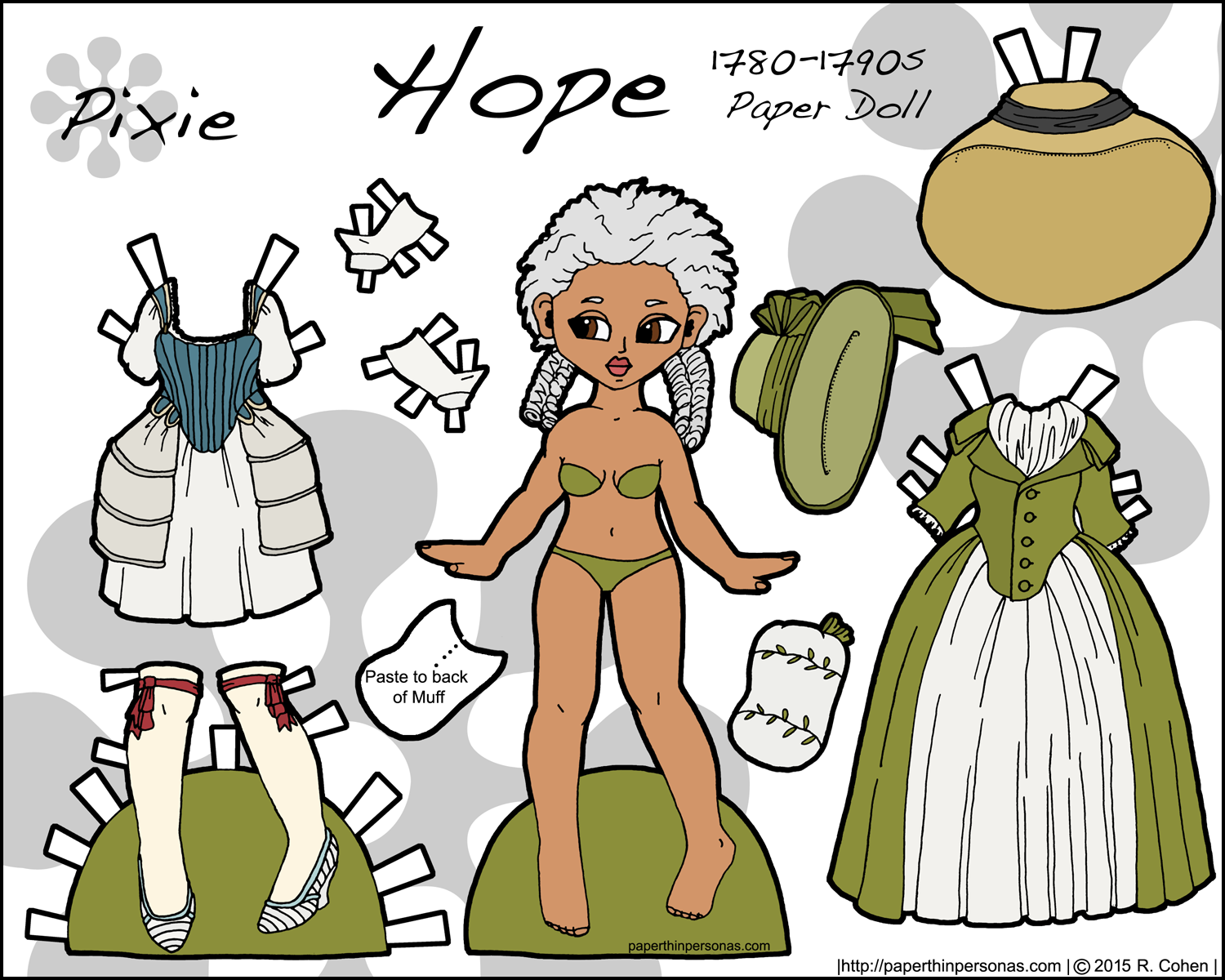
 Late 18th Century gowns before the waist begin to rise at the turn of the century are often defined by simpler lines. You can see in some of them the beginings of the aesthetic and gave rise to the Greek inspired looks of the Empire period in France and the Regency period in England.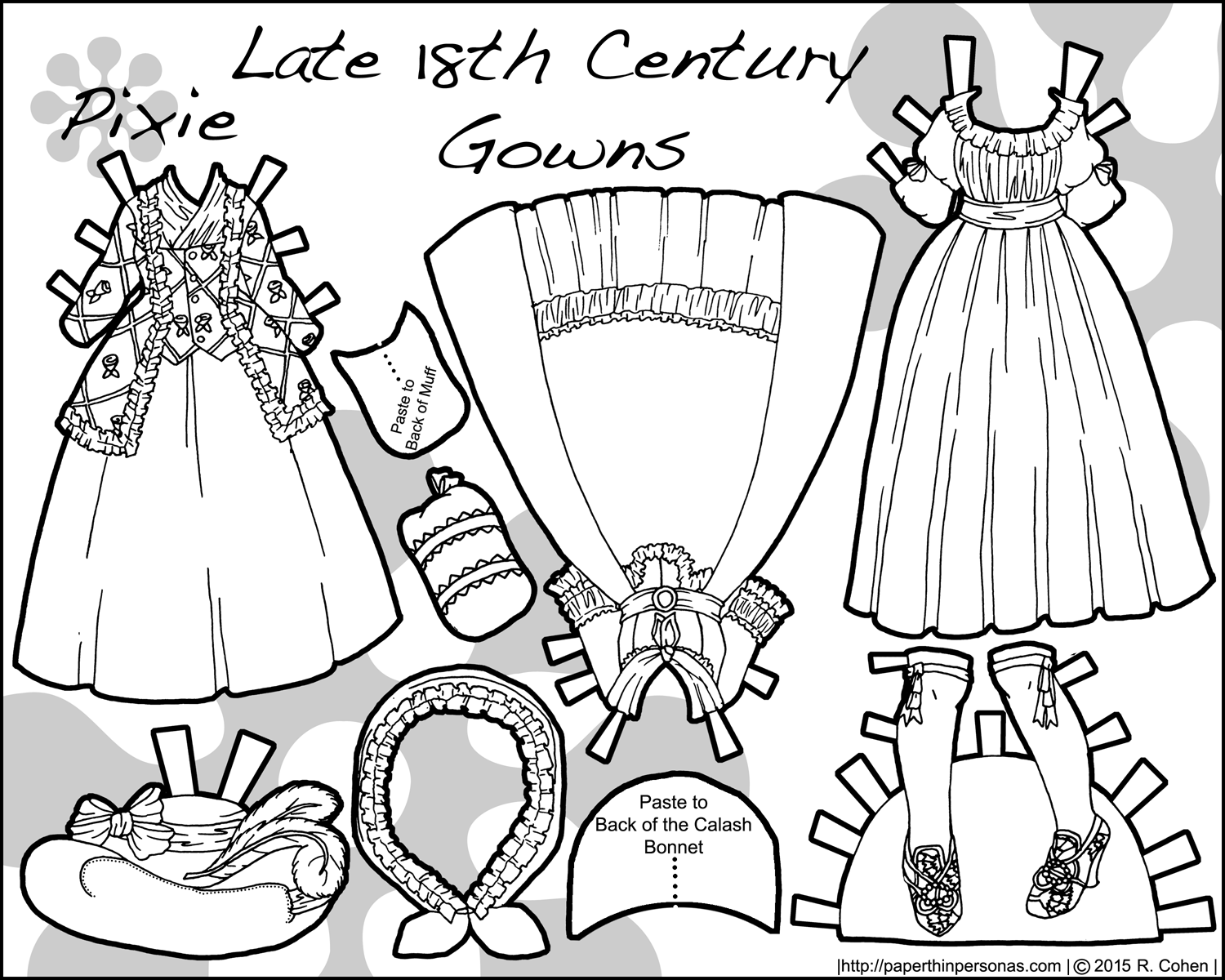
 Hope is based on the styles at the end of the 18th century. So, something major happened around the 1789 in France. It was, for those who weren’t asleep in high school history class, the French Revolution. To say that “everthing changed” wouldn’t be an understatement and the ripples of the events in France spread across Europe in dramatic ways. It is tempting when looking at the end of the 18th century to simply assume that after 1789 everyone just jumped into Empire styles and that was the end of it, but the reality is that there was a very slow evolution to the high waisted gowns we think of as “empire” or “Regency” dress.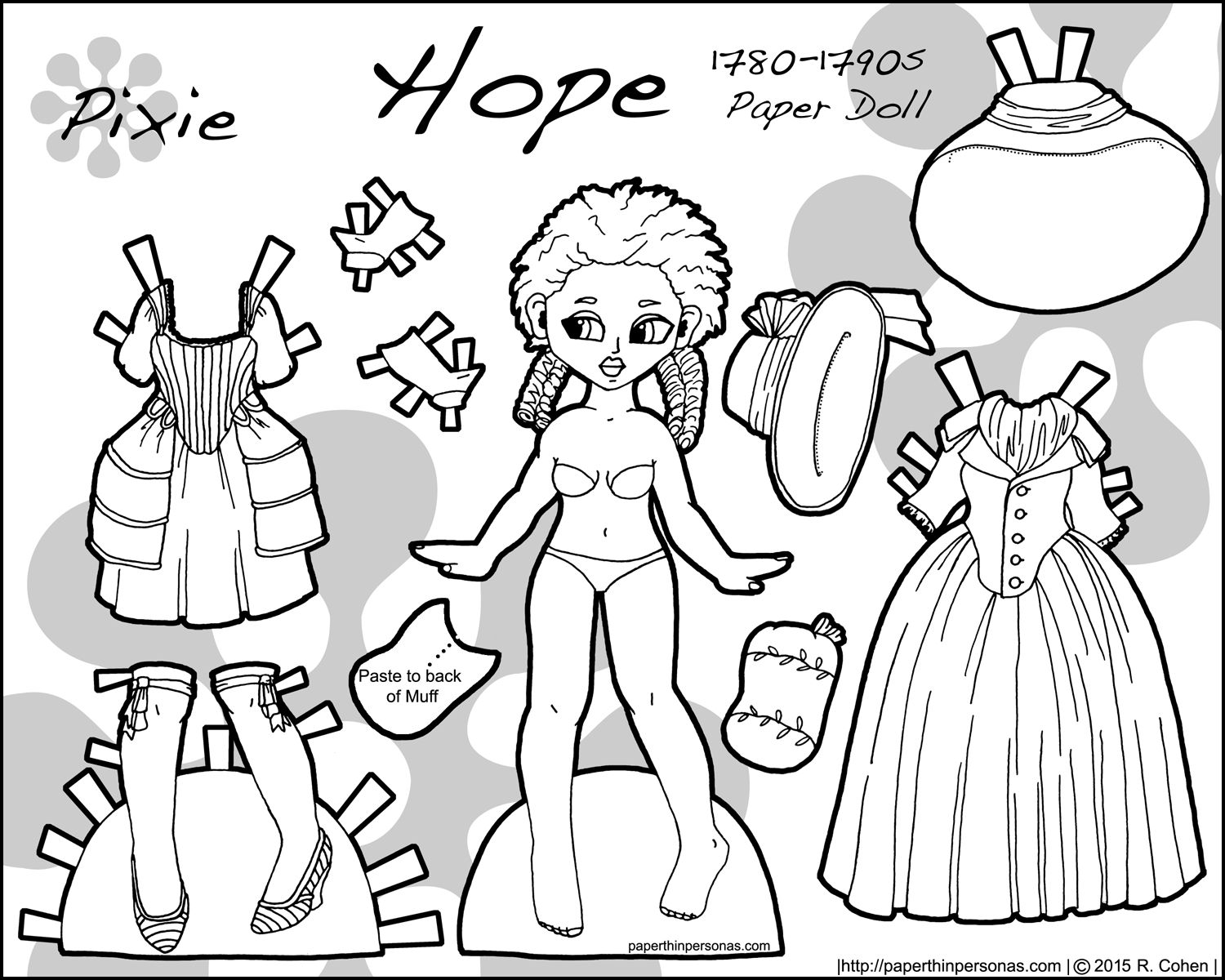
 More ballerina paper dolls!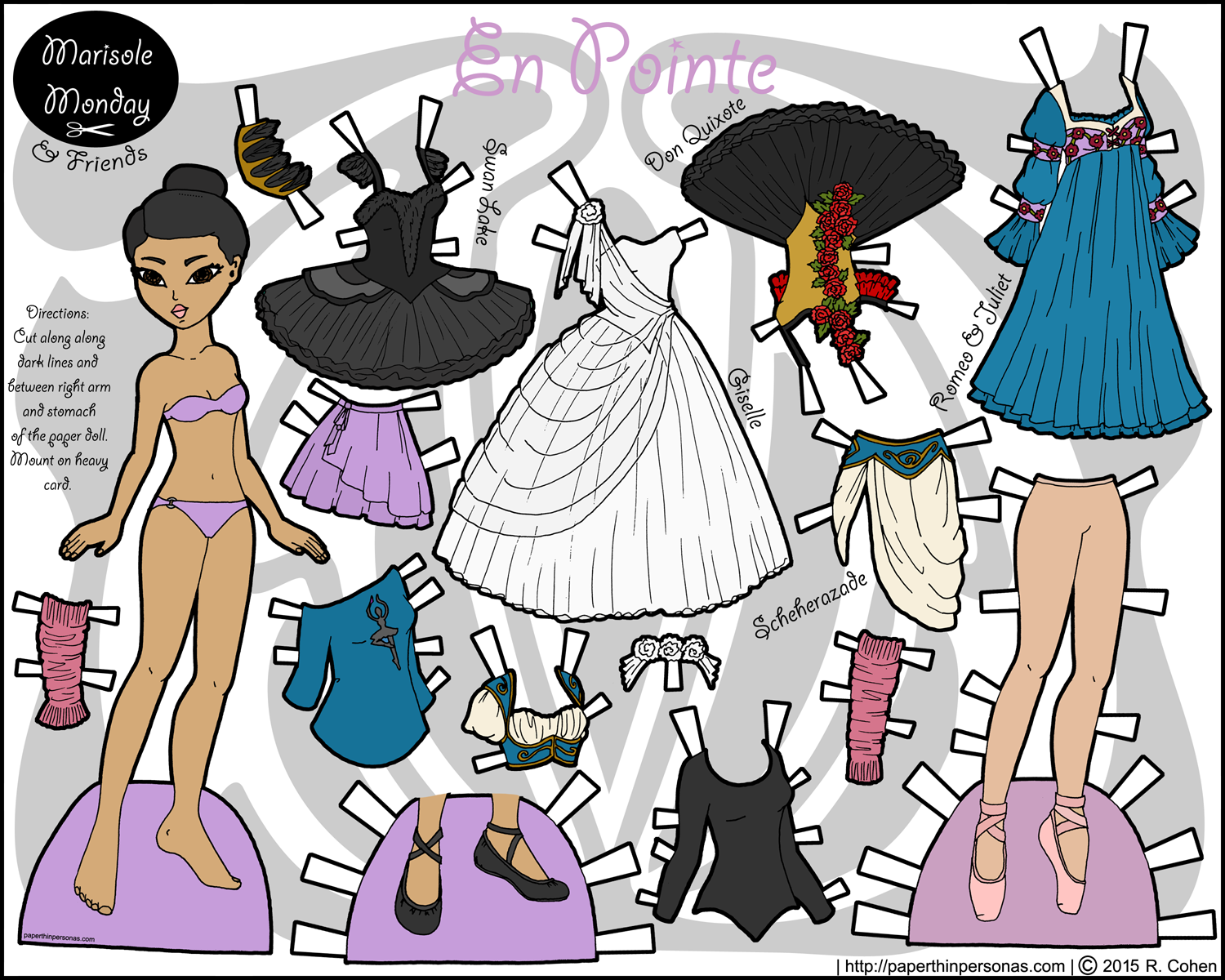
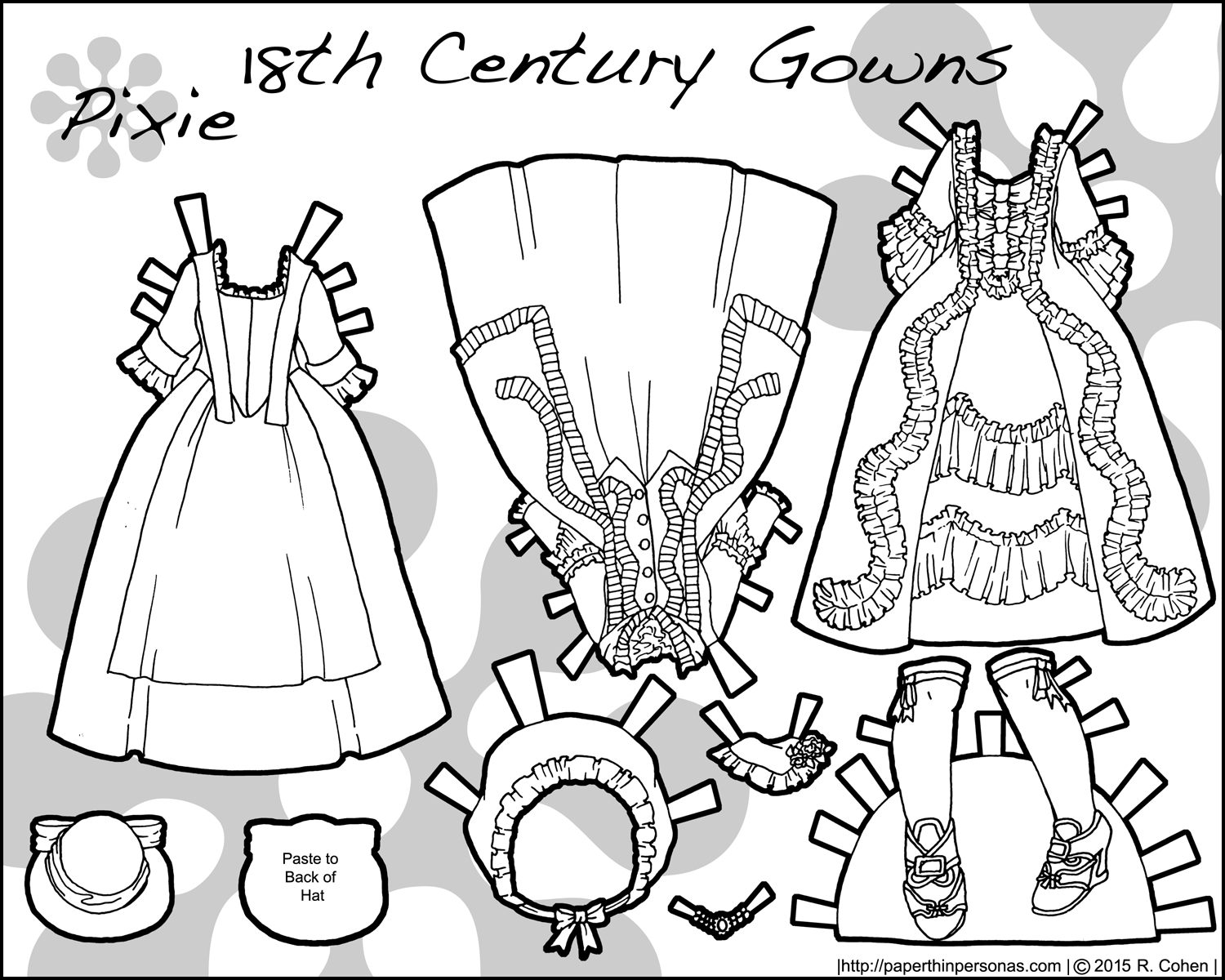
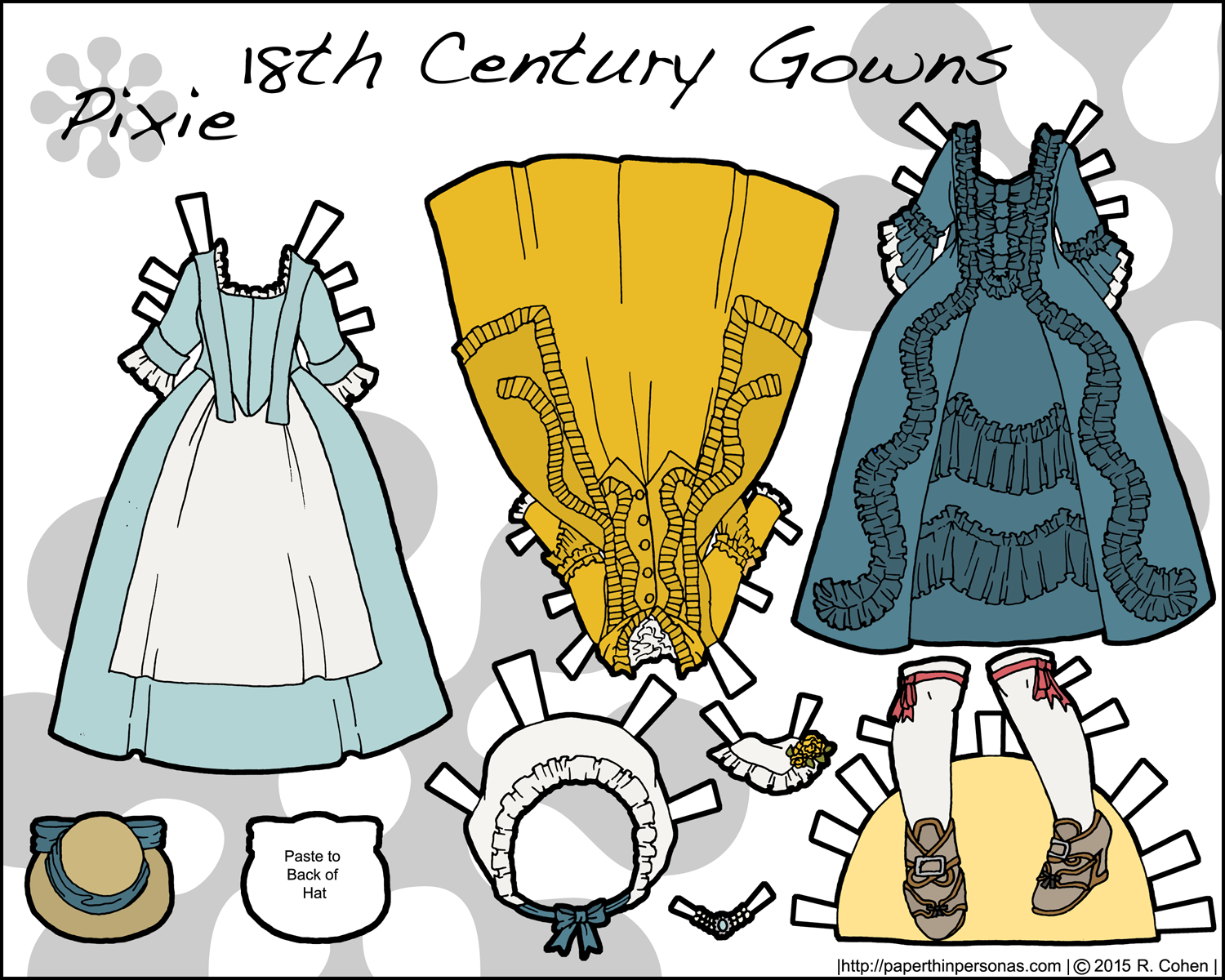
 Four more 18th century dresses for the Pixie paper dolls today. So, by now I think I’ve already covered the various sorts of gowns women wore in the 18th century with a fair bit of detail.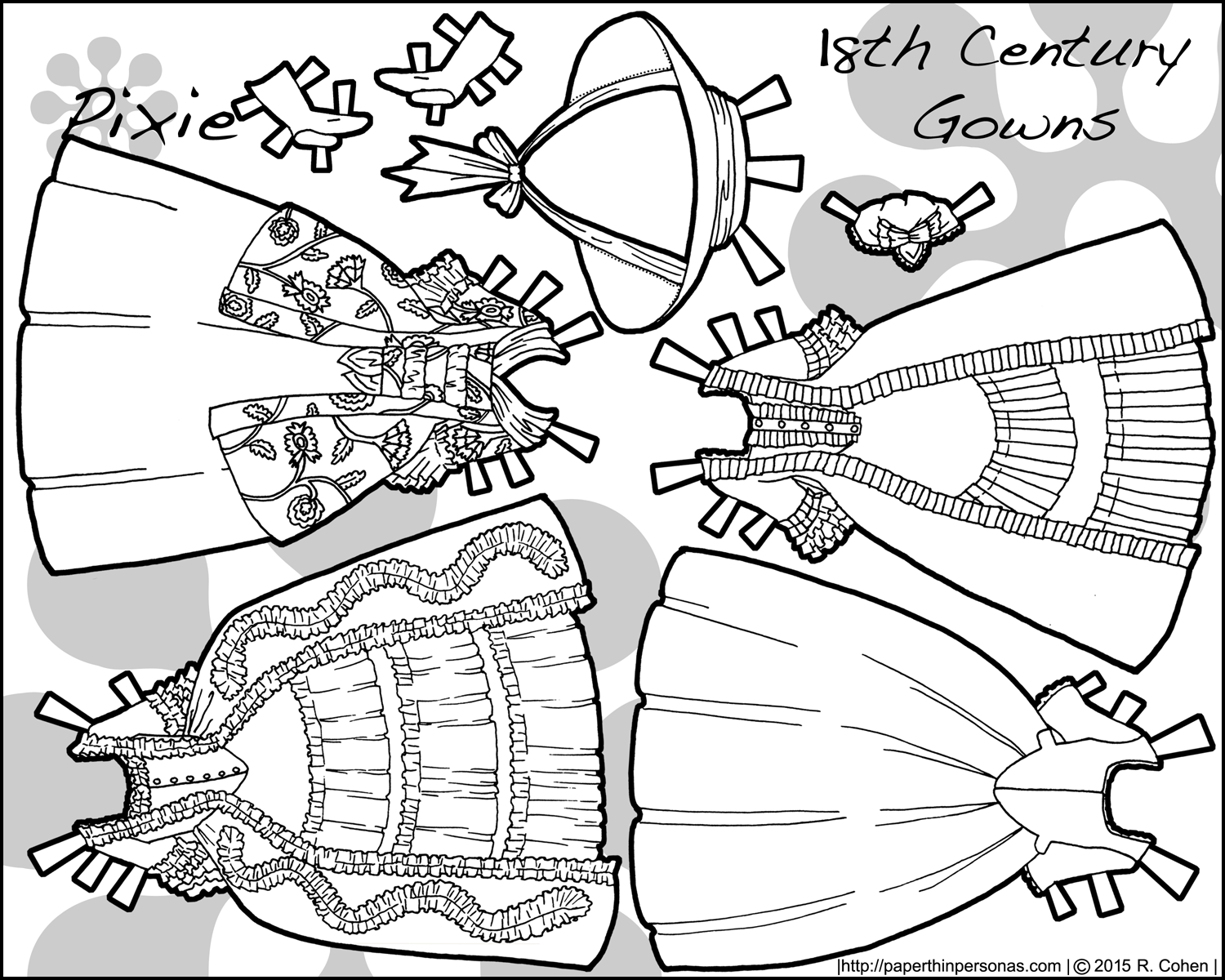
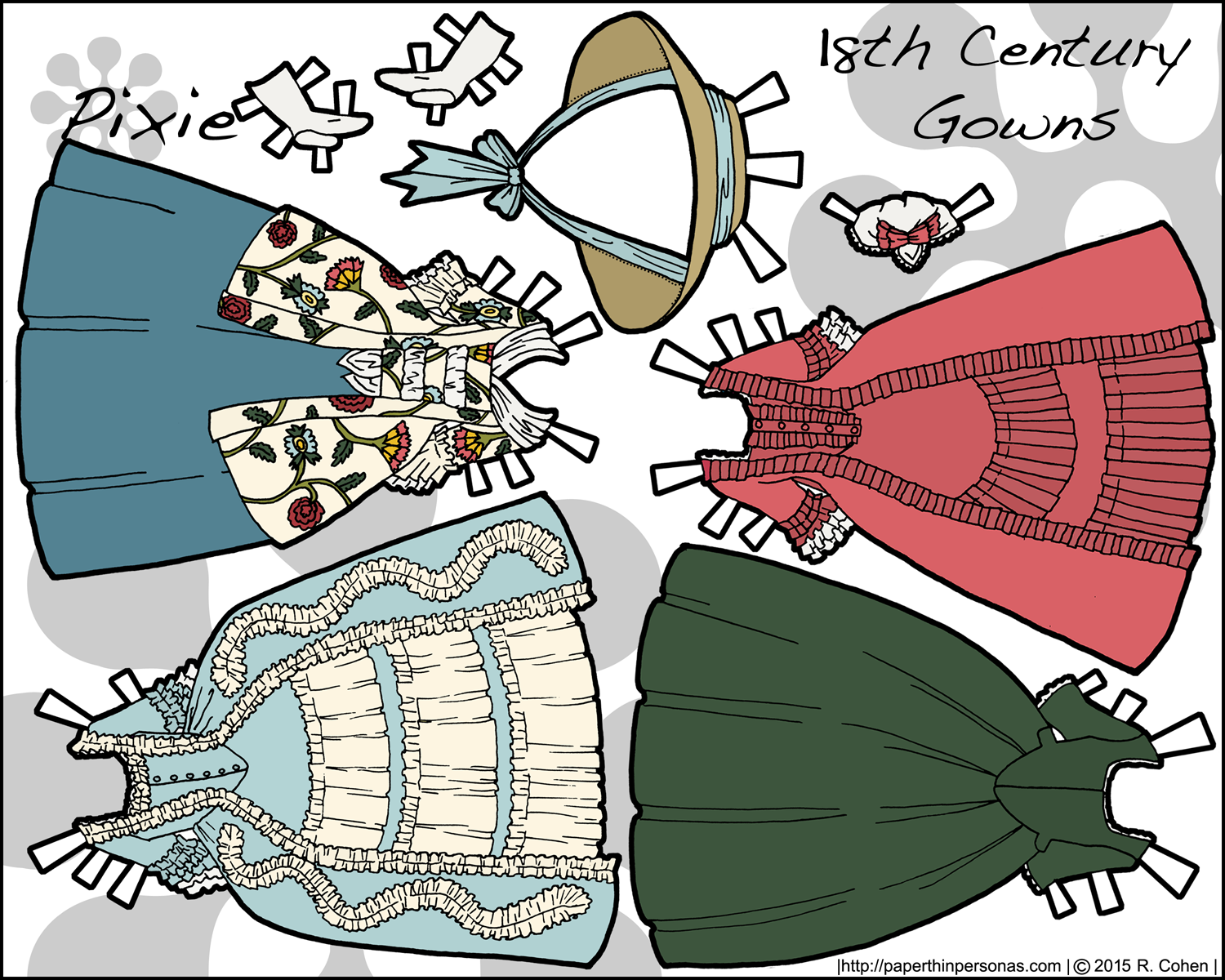
 In my first page of gowns for my 18th century paper doll series, I talked a lot about different styles of gowns. I did not, however, talk about stomachers. So, a stomacher was a triangular shaped piece of cloth that was pinned or sewn in place to fill in the bodice of gowns. Most gowns had either an actual separate stomacher or something that looked like a stomacher. In today’s collection of gowns, they all have stomachers, except the polianse gown which is front fastening.
 So, one of my first jobs while working in library school was to assist with the digitization of a massive collection of costume design drawings from a group known as the Motley Group (not to be confused with Motley Crue). This let to me eventually finishing my library degree and going onto a degree in Theater History with an emphasis on the history of technical design work.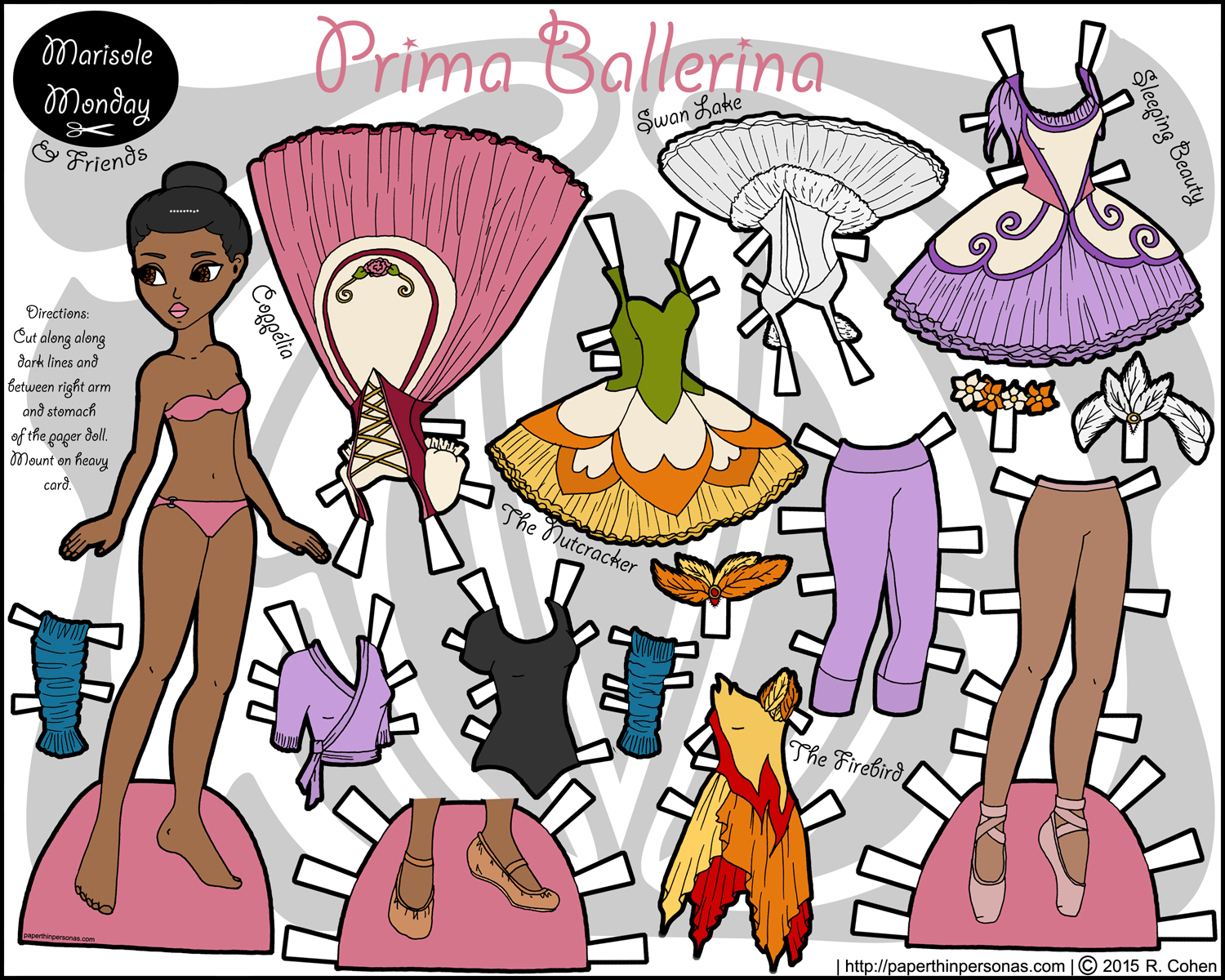
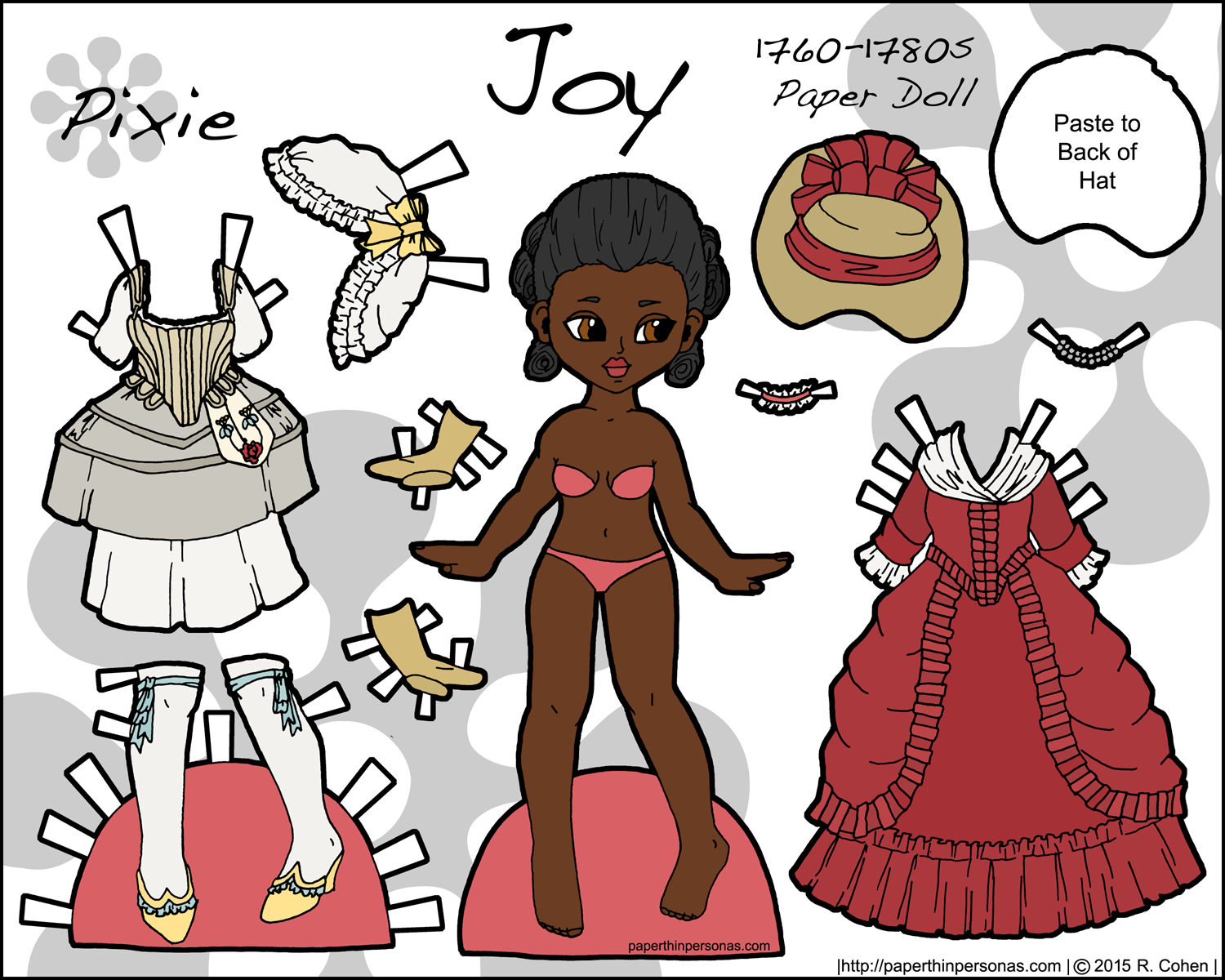
 Today’s 18th century paper dolls is my second of three. Joy, all of these paper dolls will have virtue names, is from between the 1760s though 1780s. She has underwear and a gown in the polonaise style. Poloniase gowns had a skirt that is raised up and bunched over the petticoat. Usually a gown could be worn either with the skirt looped up in the polonaise or with the skirt down- offering some versatility to the 18th century silhouette. The polonaise gown sticks around into the 19th century and is sometimes mistaken for a bustle.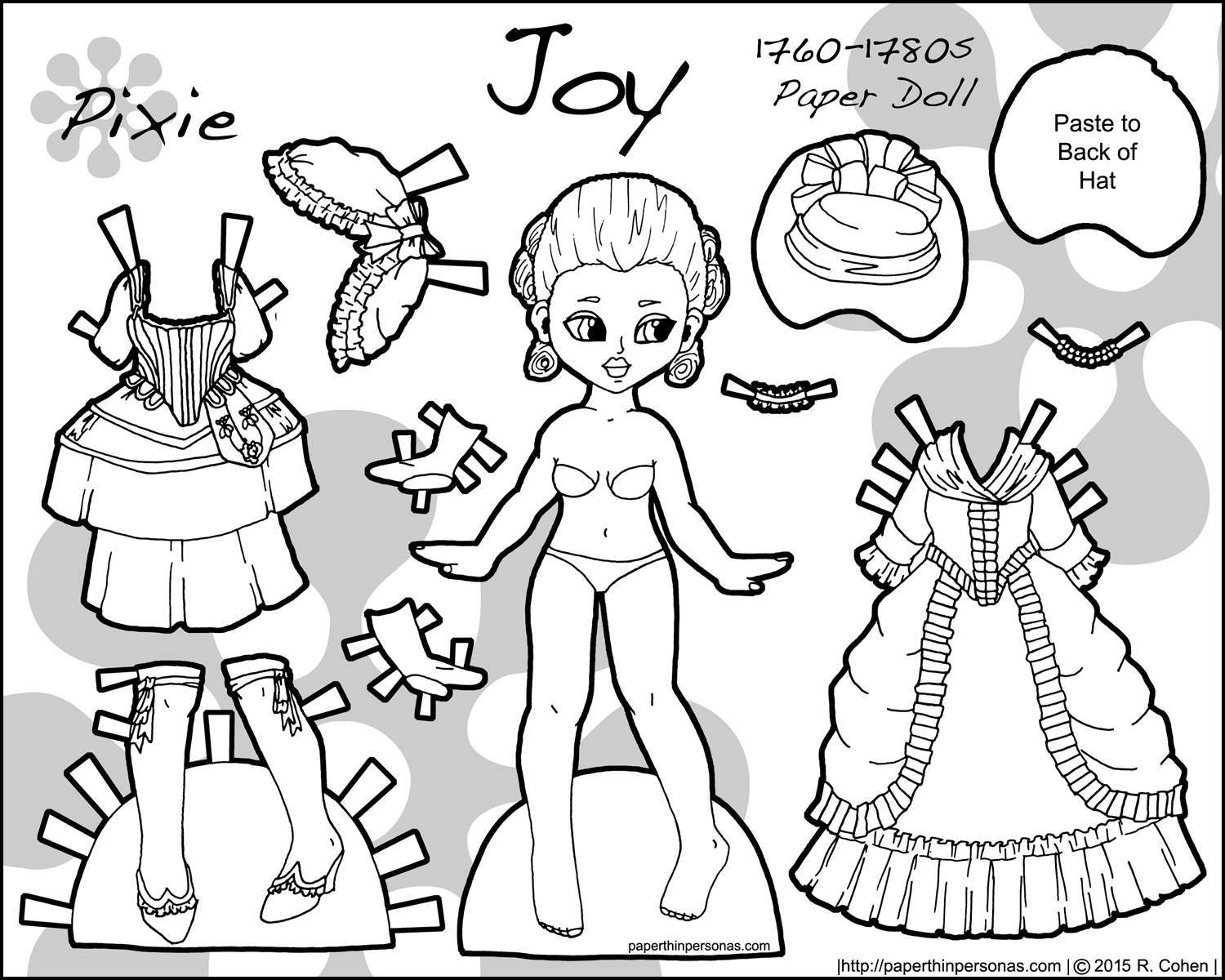
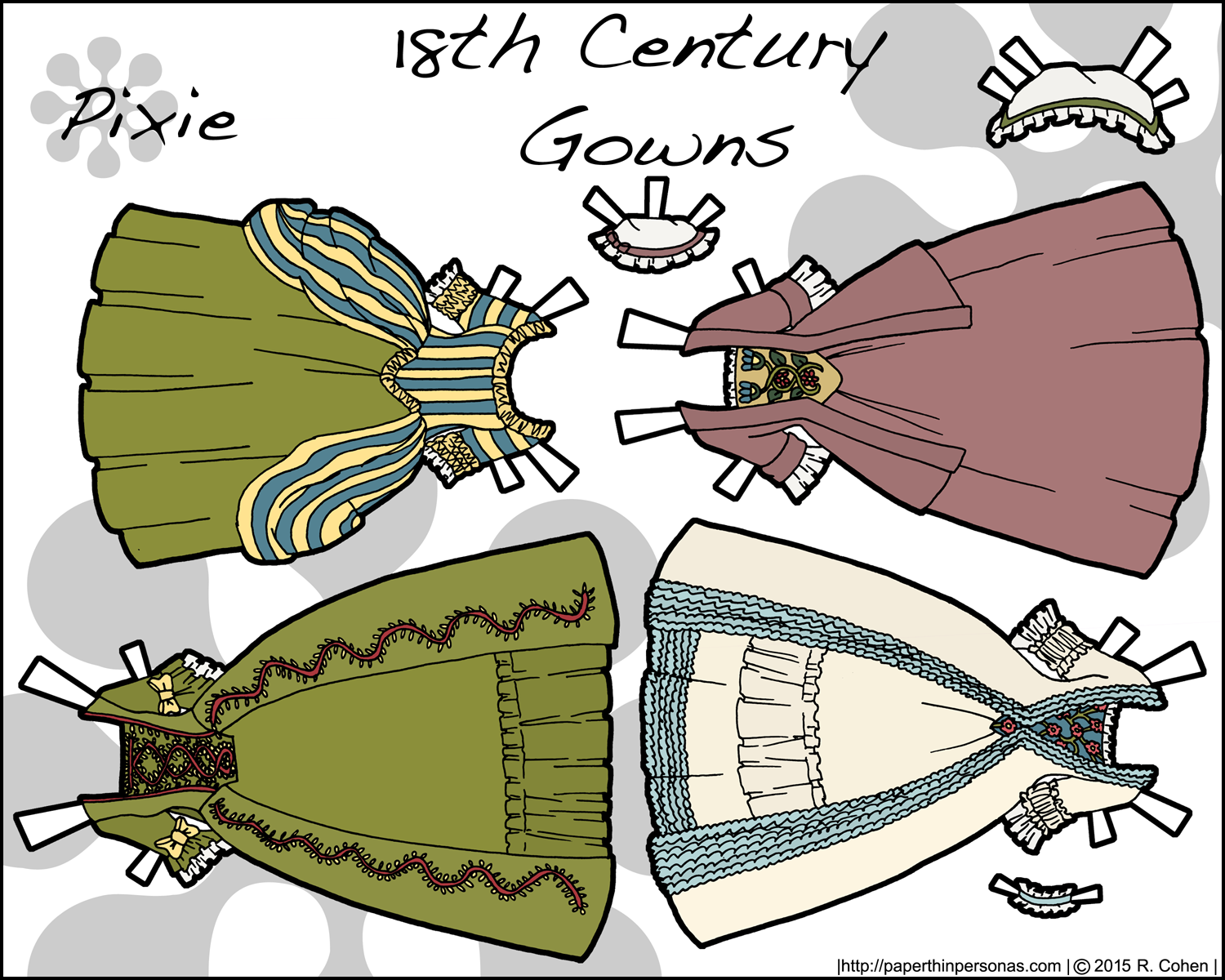
 Today, we have out first set of 18th century gowns for the paper dolls, including a round gown, a brunswick and a robe à la française.