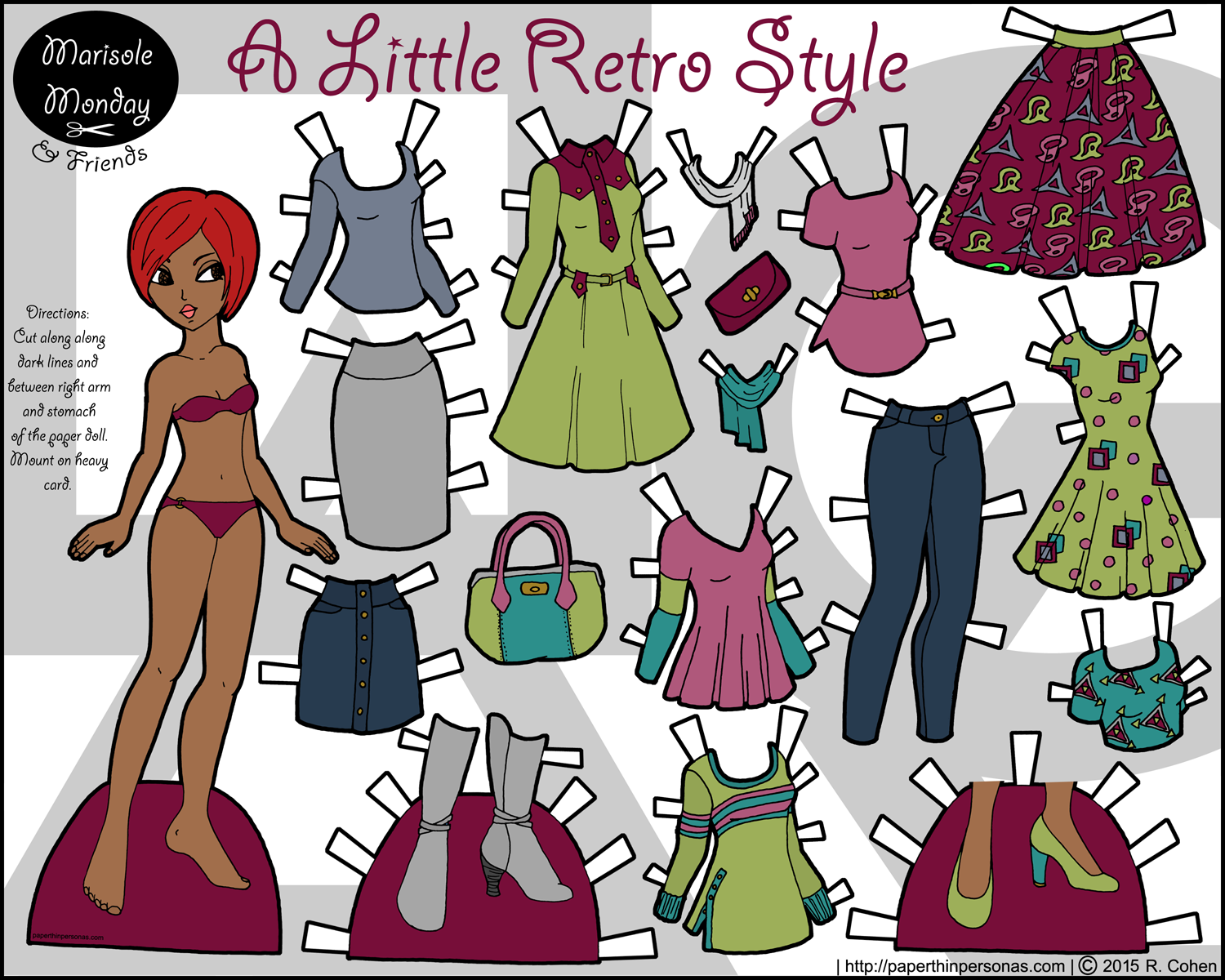
 Like any good printable paper doll should, today Marisole is showing off her full color autumn paper wardrobe complete with some sassy boots. The colors I chose are rich jewel tones for these paper doll clothes. I wanted something that said autumn to me and nothing says autumn like jewel tones.
There are color schemes I come back to over and over again in various forms and one of those is teal, dark pink, and green. I just love these colors together. I do confess that I sometimes I tell myself I can’t use “pink” or I must use “green” and that forces me out of color scheme ruts.
I confess this is a color scheme that I have done before, or at least, I feel like I have done it before. Maybe I’m wrong… anyway, it feels awfully familiar to me.
There’s a term for doing the same thing over again expecting different results. They call that, “insanity.”
Anyway, I once again tried red hair and dark skin. I think this attempt was better than several of my other attempts (Mint and Roses, I am looking at you).
There’s a big announcement coming up Wednesday, so stay tuned for that.

 Every once in a while, I imagine totally re-doing this blog. Abandoning my printable paper doll sheet format and switching to an outfit a day or something else totally different.
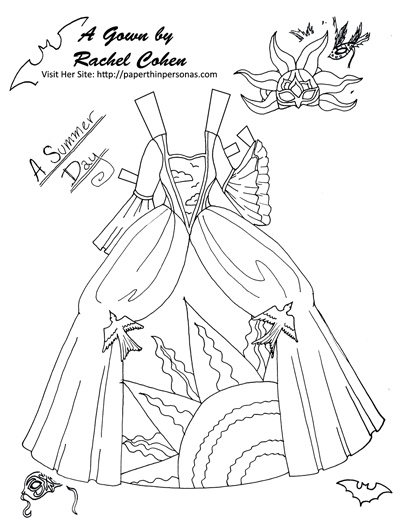
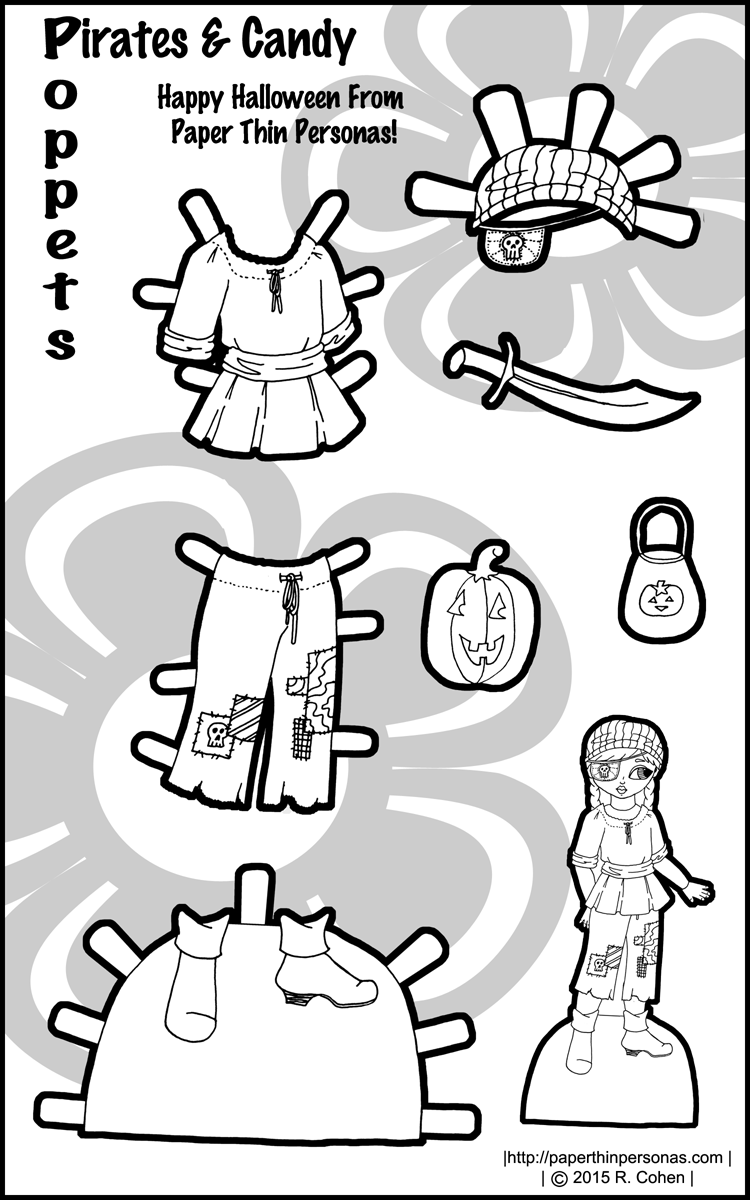
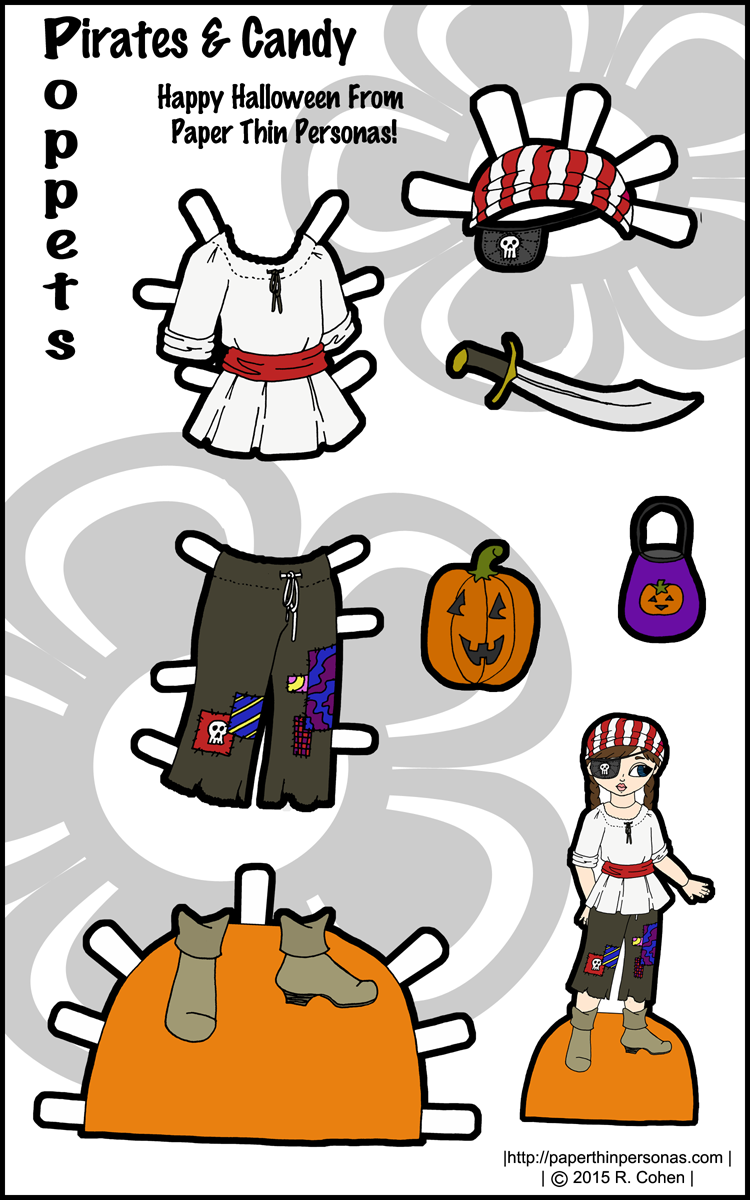
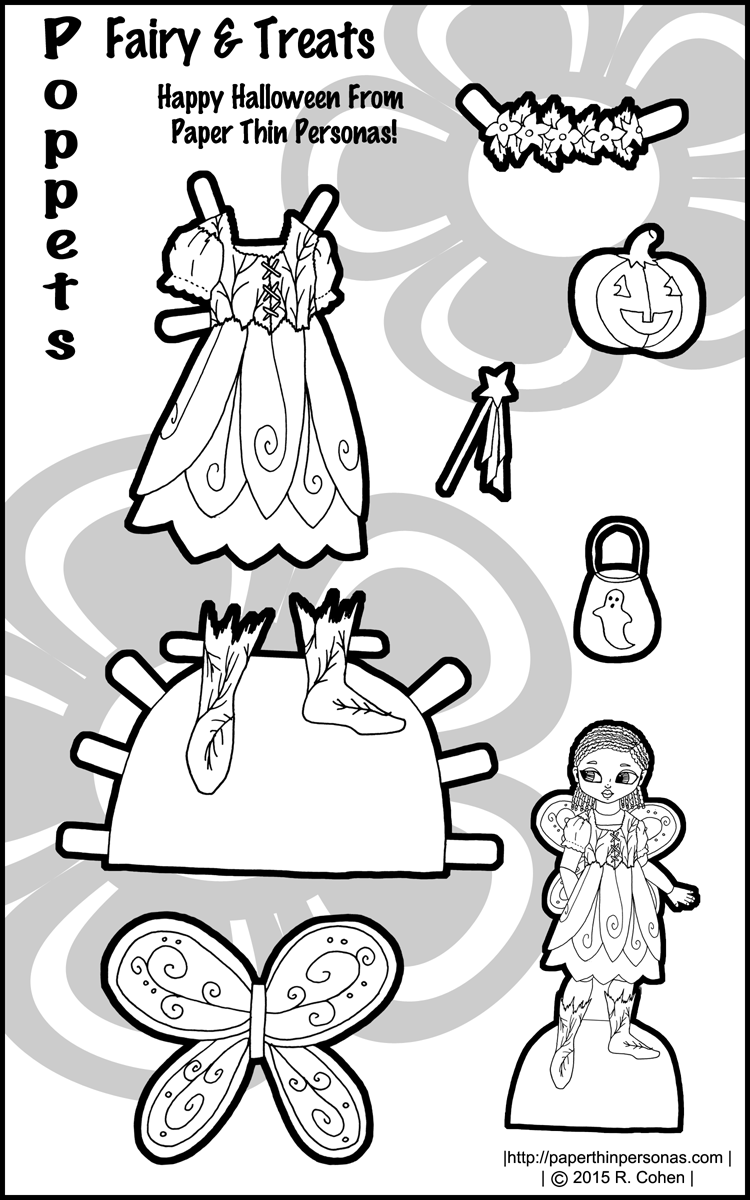
 For the next two Friday’s I’ll be giving the Poppet’s some Halloween costumes. Today, we have a fairy and next week, there will be a pirate for these printable paper dolls.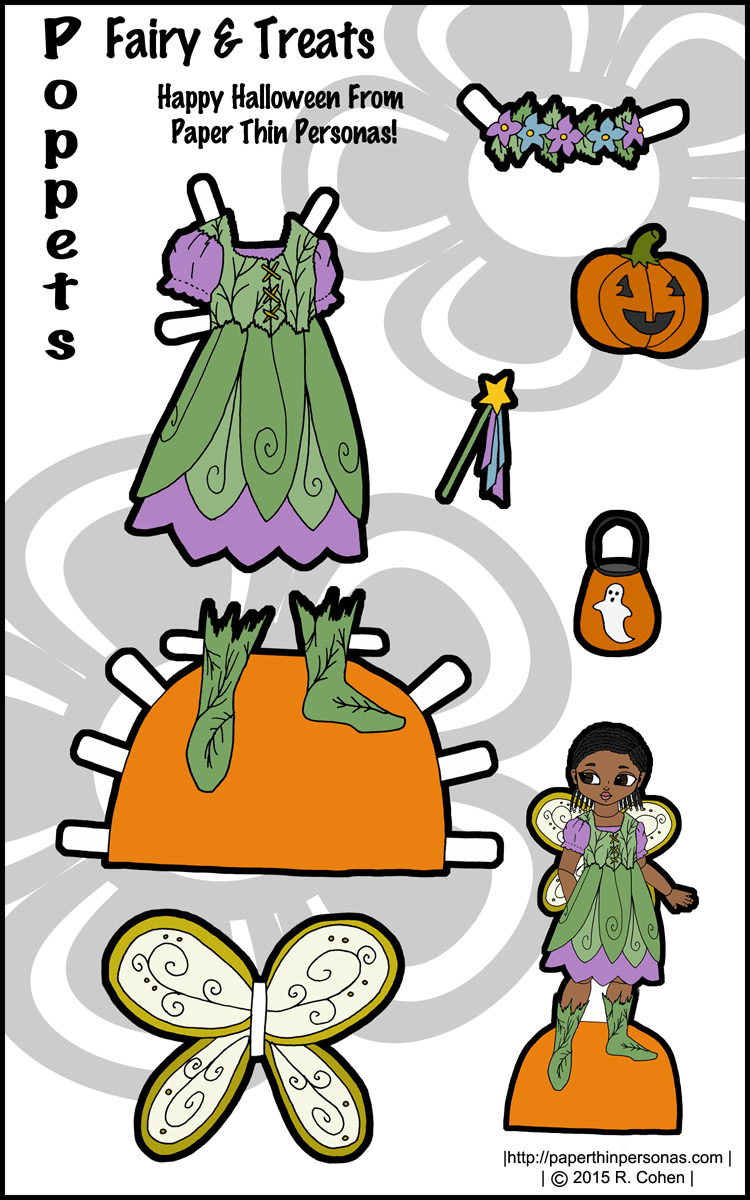
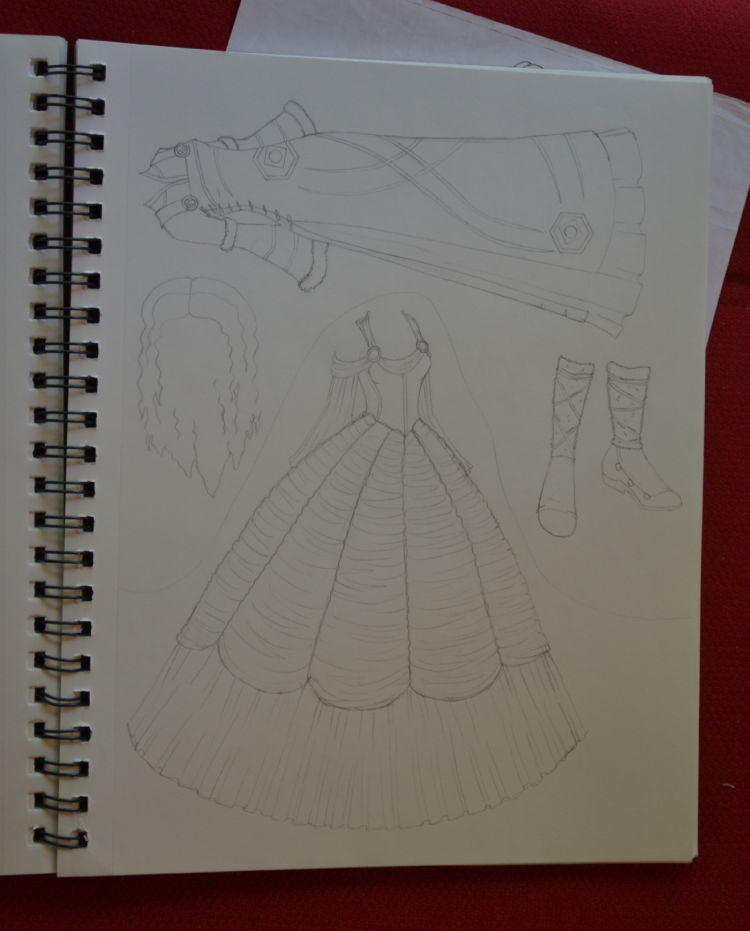

 I had a lot of different ideas about how to colors last week’s paper doll. I thought about a traditional princess scheme which would, of course, involve a great deal of pink. I also thought about something in pale blues and teals.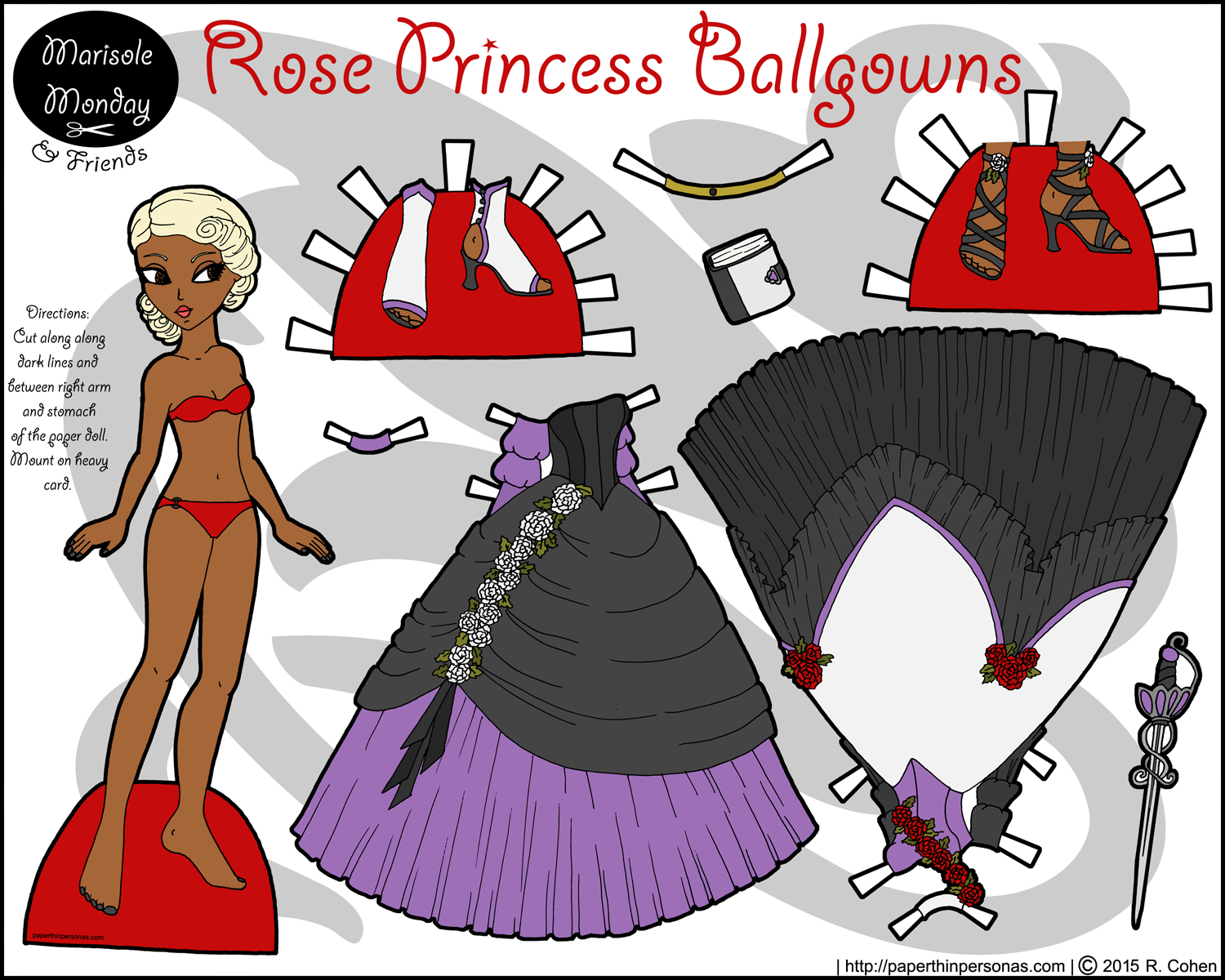
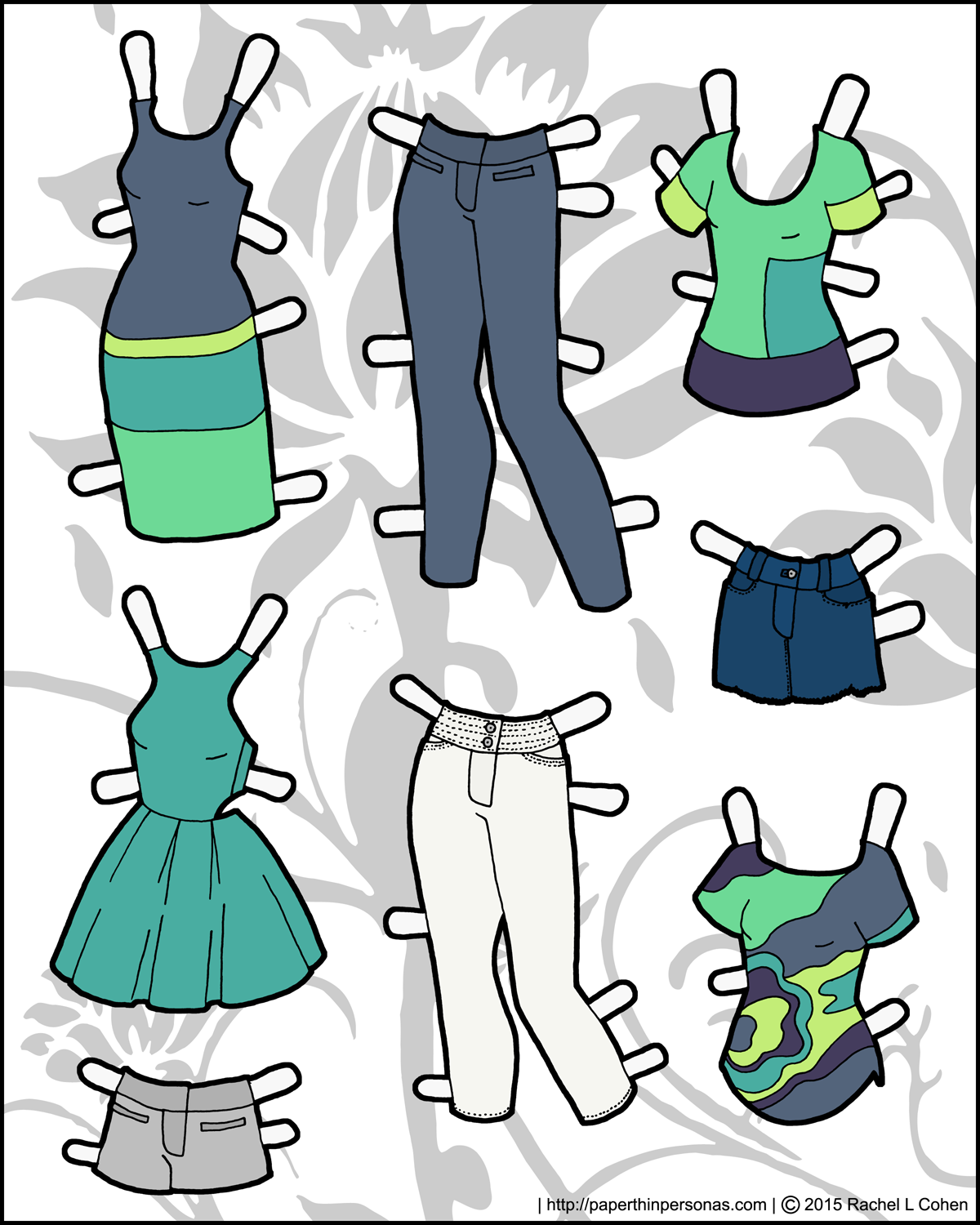
 I make a lot of tea. I don’t always finish my tea, but there is something about heating up water in a kettle, filling my cup with water, adding a little honey and then slowly stirring it. So, I settled down last night with my cup of hot tea next to my usual spot on the couch and I tried to think about what to write tonight about this set of paper doll outfits.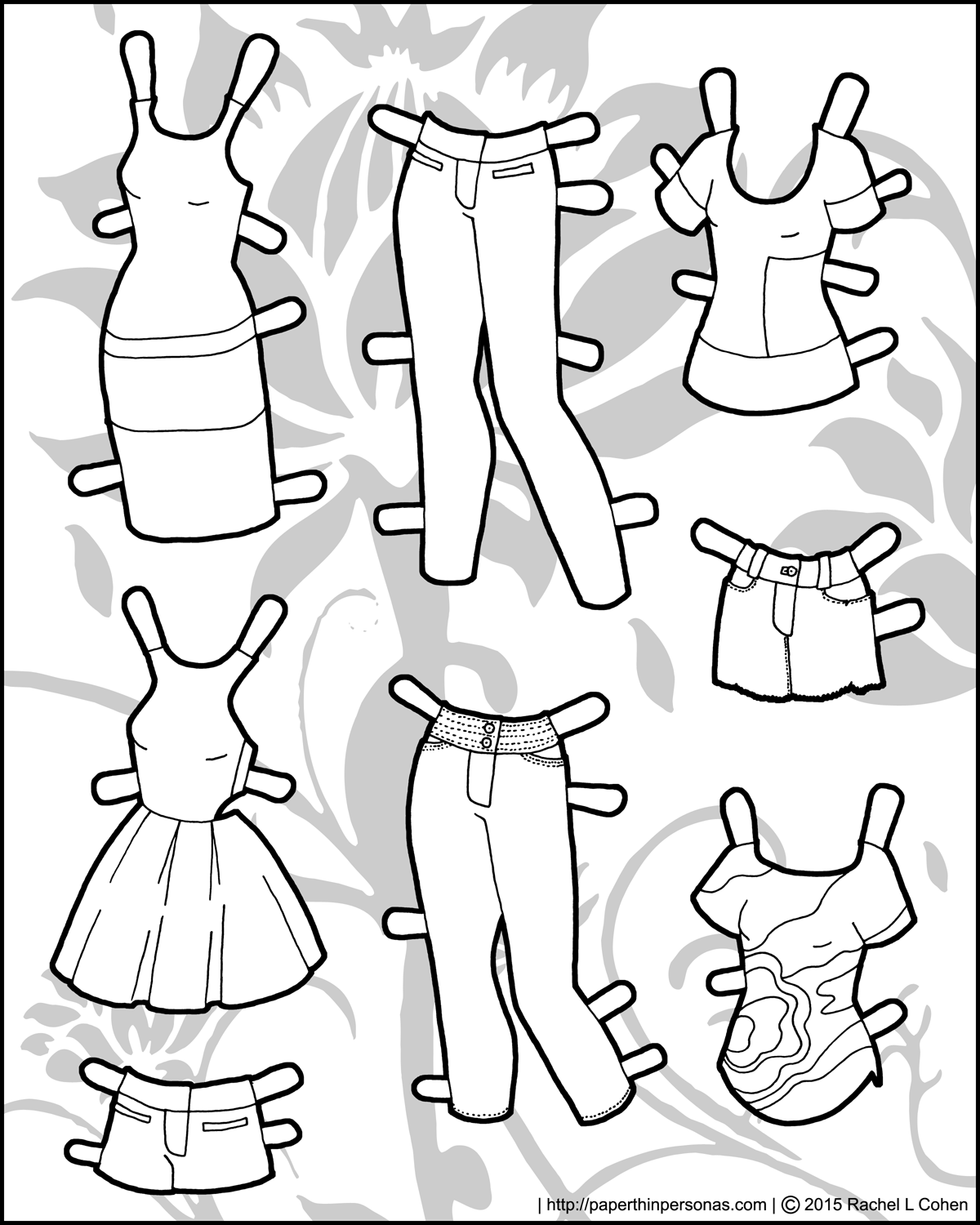
 Back when I
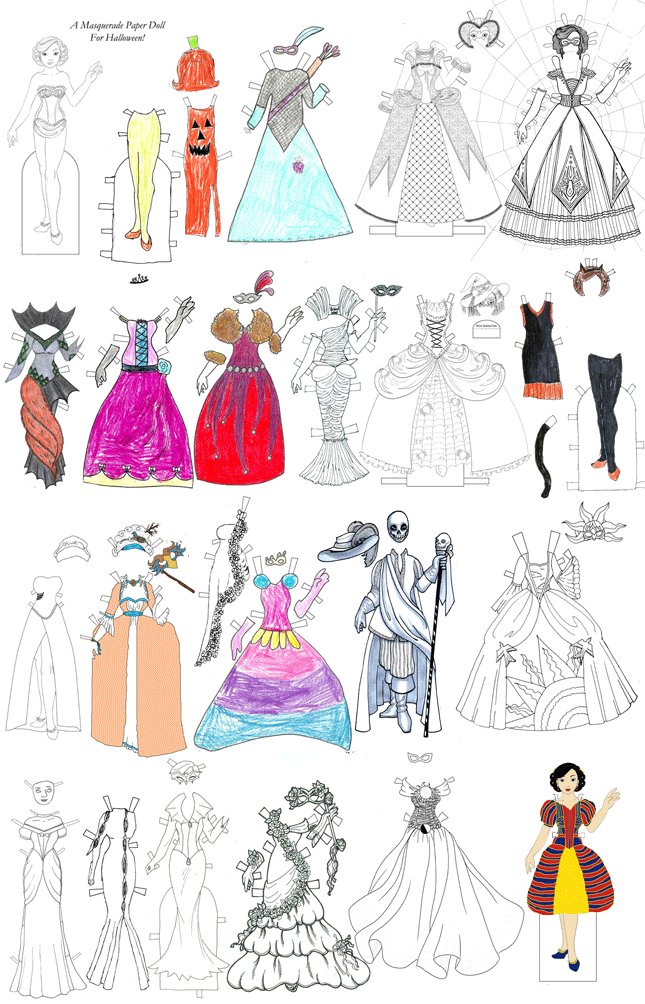
 Once in a while, I host little drawings for custom paper dolls. I do them rarely, because frankly they are time consuming.